How Artists Painted Their Mothers
‘Madame Roulin and Her Baby,’ by Vincent van Gogh. 1888. Source: the Metropolitan Museum of Art.
Across art history, the figure of the mother appears in the work of major artists as both a personal presence and a deeply human subject. From Vincent van Gogh’s longing for his distant mother and Picasso’s restrained but realistic portrayals, to Dalí's transformation of loss into surreal symbolism and Lucian Freud’s lifelong engagement with painting his mother, these narratives are bound by a shared question: how artists represent their mothers not as literal likenesses, but as figures shaped by memory, emotion, and lived experience.
In the autumn of 1888, in Arles, Van Gogh received from his sister a faded photograph of his mother Anna in the Netherlands. The grayness of the photograph disturbed him, and he wrote to his brother Theo that he could not stand its coldness and that he wanted to paint her as his memory preserved her, in colors rather than rigid gray tones.
The painting Portrait of the Artist’s Mother was created from this desire. Not a polite keepsake, but a face immersed in sharp yellows, greens, and reds, as if the color itself exposes the distance between an anxious son and a conservative, devout mother who always felt his life and choices conflicted with what she wanted for the family.
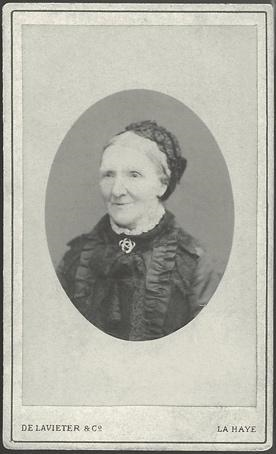
‘Photo of Anna van Gogh Carbentus (mother of Vincent van Gogh).’ Source: Wikimedia Commons.
Behind this painting lies a longer history shaped by a complex and often tense relationship. Anna, the wife of a pastor and the daughter of the royal bookbinder, believed deeply in discipline, order, and what she understood as a “proper” life. Vincent, by contrast, rebelled against these values in both thought and action, confiding to his brother Theo: “Pa cannot empathize or sympathize with me, and I cannot settle into Pa and Ma’s routine; it is too constricting—it would suffocate me.”
Yet within the limits of her own world, Anna remained a supportive mother. She painted flowers and plants in watercolor, filled notebooks with careful studies, and shared with her son an early attentiveness to nature. The portrait brings these tensions into a single image: a mother who outwardly embodies the values of the religious middle class, rendered in restless colors that bear the imprint of a bond suspended between love and disappointment, intimacy and distance.
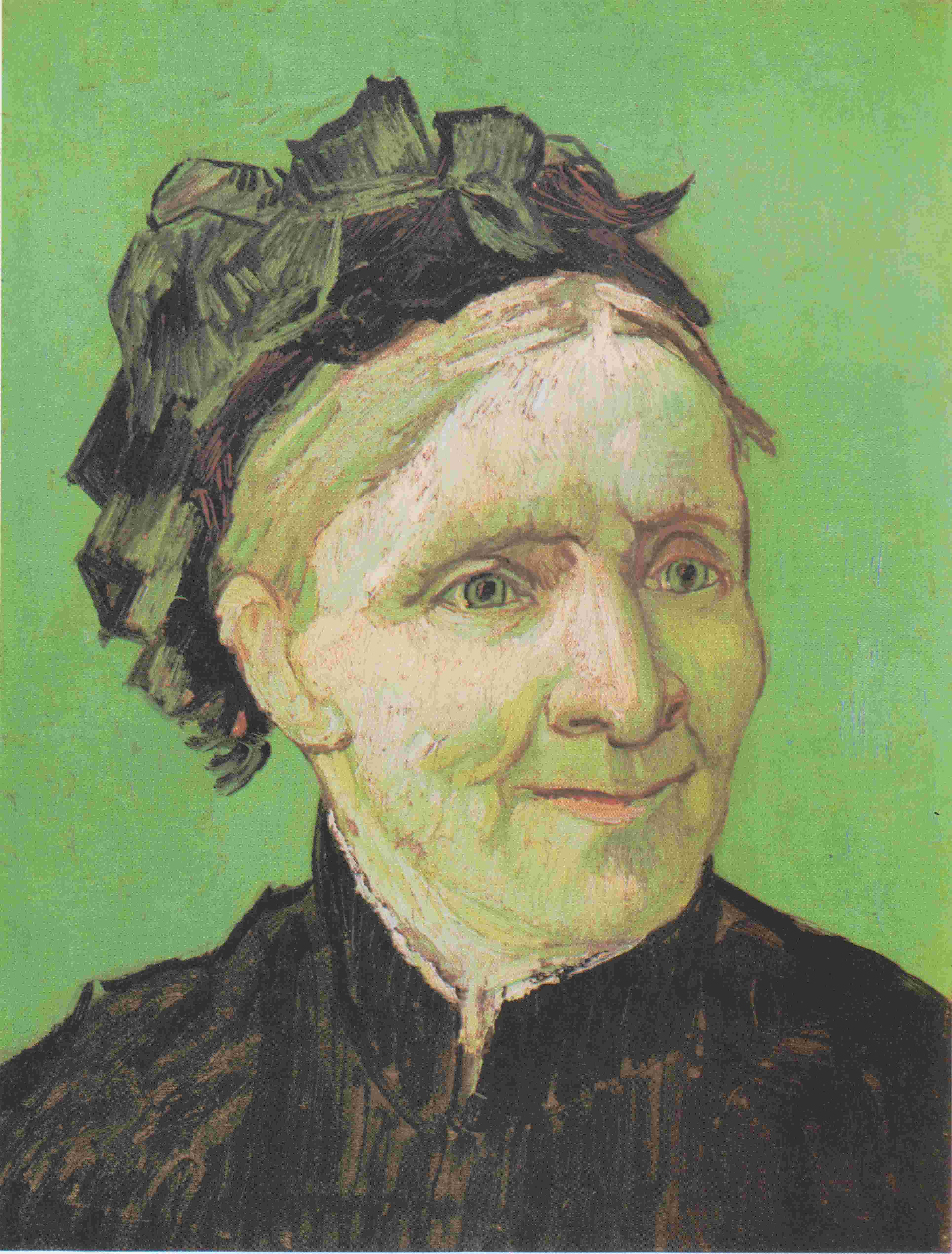
‘Portrait of the Artist’s Mother,’ by Van Gogh. 1888. Source: Wikimedia Commons.
In Picasso’s early life, his mother was the most stable presence. María Picasso López had trust in his talent, encouraged his father to support him, and believed that he would live from his art. She was a source of early confidence in his abilities, more than a traditional domestic figure. Emotionally attached to her in childhood, at the age of fifteen he painted her in a calm, realistic portrait: a seated mother in a fixed pose, with exact features, soft lighting, and academic structure.
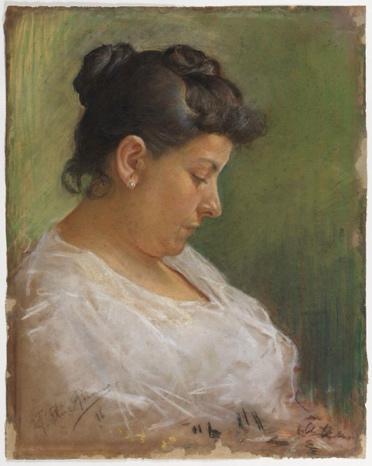
‘Portrait of the Artist’s Mother,’ by Pablo Picasso. 1896. Source: Picasso Museum Barcelona.
Decades later, in 1923, he painted her in an oil portrait as an elderly woman, shown in profile with gray hair and a simplified classical style that combines dignity with a quiet presence. Between the works, María remains outside his Cubist adventures. In a way it was as if Picasso chose to preserve her image in his memory and paintings within a realism untouched by fragmentation.
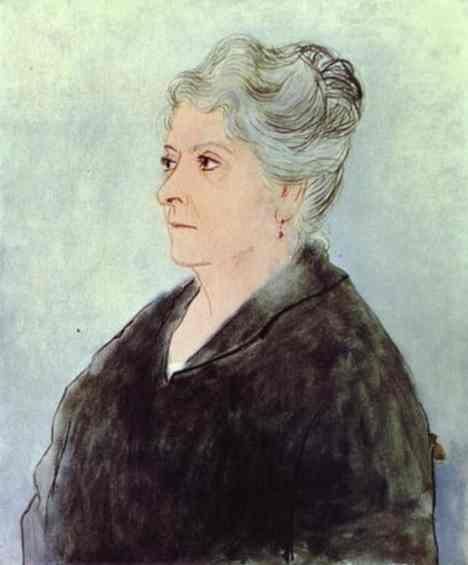
‘Portrait Of María Picasso Lopez,’ by Pablo Picasso. 1923. Source: Arthive.
In his childhood, Salvador Dalí was exceptionally attached to his mother, Felipa Domènech Ferrés; a bond he continued to reference throughout his life. She was the emotional center of his world, and he described her death from cancer when he was 16 as the greatest blow of his life. Dalí adored her. In his early works, his attachment appears in dignified, realistic portraits: a half-length portrait against a dark background, precise features, and calm, earthy colors. The painting reads as a tribute to a woman he saw as the pillar of the family and the person who encouraged his talents from an early age.
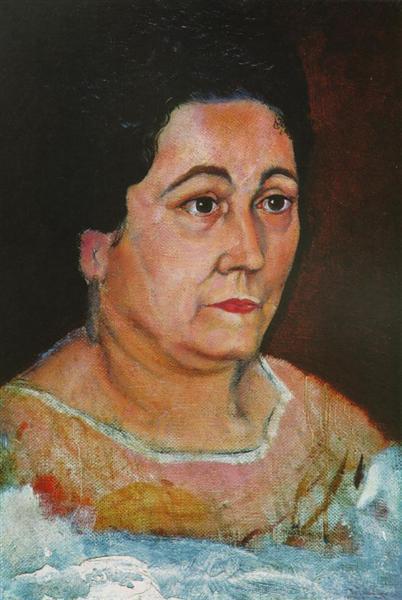
‘Portrait of the Artist’s Mother,’ by Salvador Dalí. 1920. Source: WikiArt.
After her death, the image transformed. The mother no longer appears as a defined face, but becomes, in surrealist works such as The Enigma of My Desire, or My Mother, My Mother, My Mother, a symbolic mass in which the word “mother” repeats within a barren space, alongside feminine symbols and organic forms. In this surreal symbolic world, Dalí expresses his longing for his mother and the wound left by her loss.
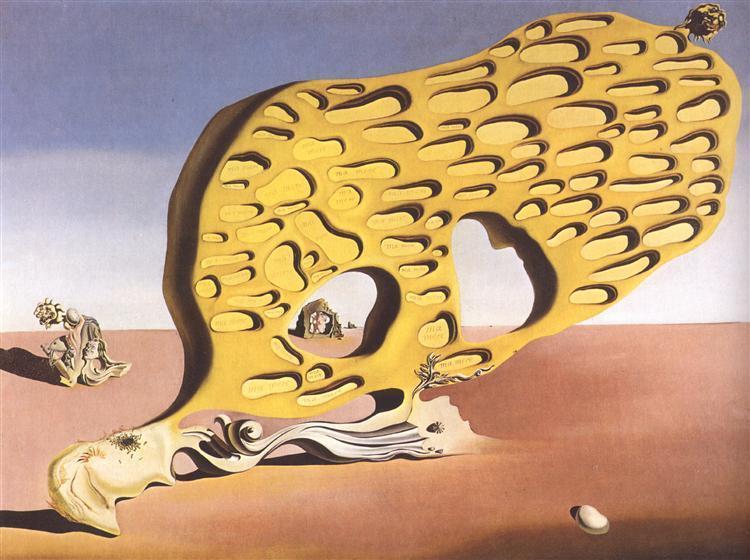
‘The Enigma of My Desire,’ by Salvador Dalí. 1929. Source: WikiArt.
The story of Lucian Freud and his mother is among the richest in modern art. A complex relationship, emotionally distant in his childhood, that transformed after the death of his father into a long series of portraits that became almost his life’s project with her.
Lucie Freud lived in her husband Ernst’s shadow for many years, before psychologically collapsing after his death in 1970. At that point, her son began to summon her as a model to sit before him almost daily. This was an attempt to rescue her from depression, and to turn the distance between them into a working relationship and long hours of companionship.
From this routine came a series of paintings that are among his most important works, with titles such as The Painter’s Mother, The Painter’s Mother Reading, and The Painter’s Mother Resting. In these works, he paints an aging body without beautification — sagging skin, dense wrinkles, and an exhausted look — yet with intense light and a large portion of frame devoted to her, like she was the center of gravity of the visual world.
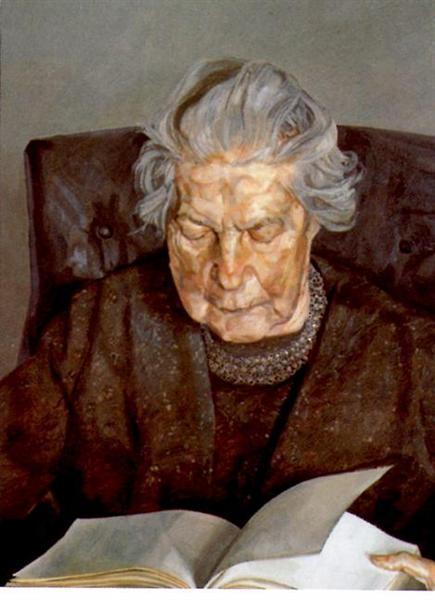
‘The Painter's Mother Reading,’ by Lucian Freud. 1975. Source: Bridgeman Images.
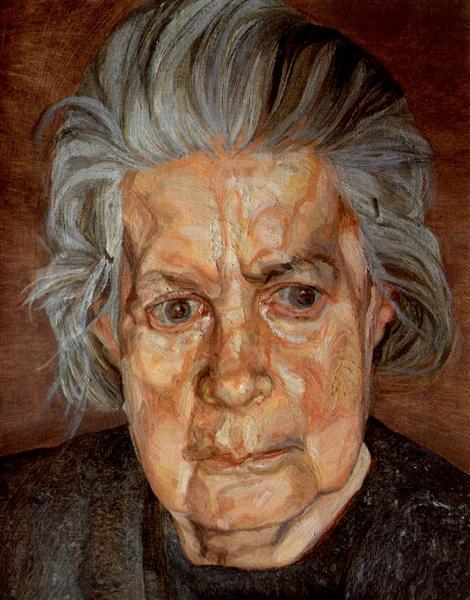
‘The Painter’s Mother II,’ by Lucian Freud. 1972. Source: Bridgeman Images.
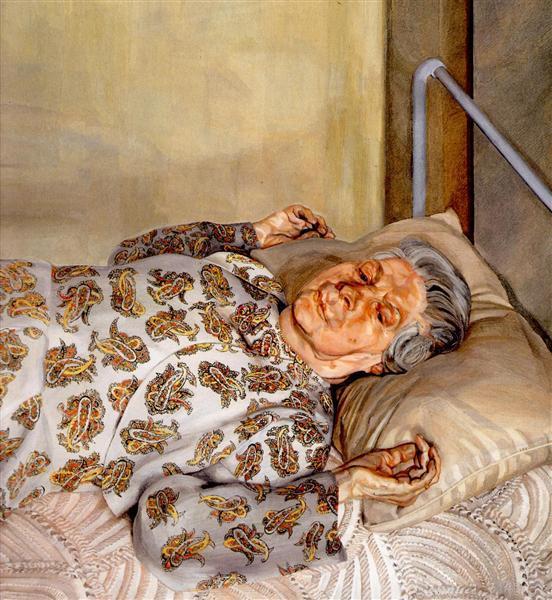
‘The Painter’s Mother Resting I,’ by Lucian Freud. 1976. Source: Bridgeman Images.
After her suicide attempts, he almost completely stopped painting anything else and focused on painting her daily. From many critics, these portraits were a harsh exercise in confronting her slow death and his part with her at the same time, and they made his body language more truthful because he was painting someone he could not hide from.