Picasso, Napoleon and Faten Hamama — Great Letters to Mothers
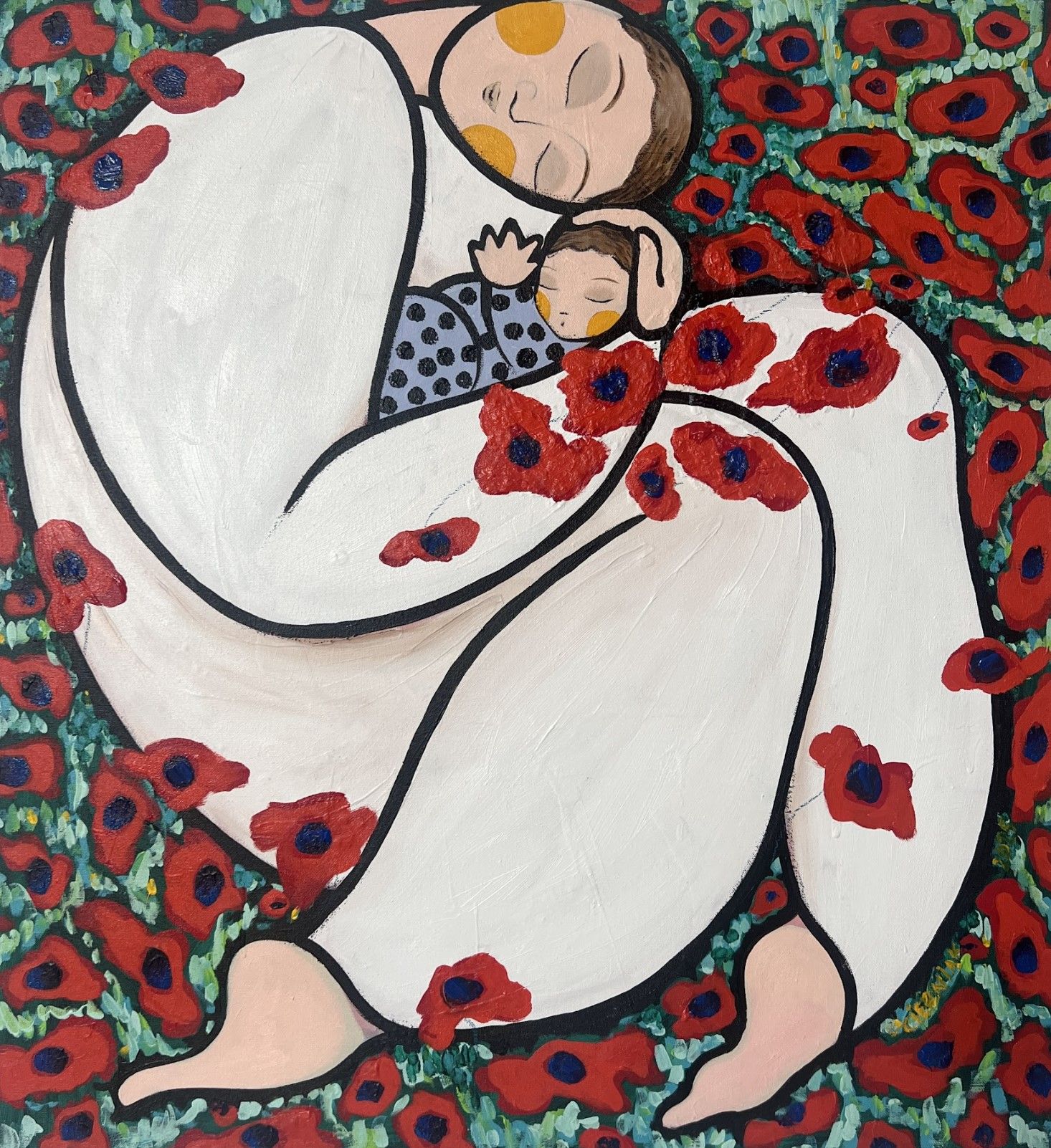
‘The Mother,’ by Pablo Picasso. 1901. Oil on cardboard mounted on a panel. Courtesy of the Saint Louis Art Museum.
The mother is always the first audience.
Before their words circulated in courts, studios, or lecture halls, many of the people we now associate with authority and innovation were writing to one reader alone: their mother.
Writing to a mother alters tone. It narrows the distance between ambition and uncertainty. The reader is not abstract, and she cannot be impressed easily. She remembers the writer before the work, before the posture, before the argument learned how to stand on its own. That history presses quietly against every sentence.
Sigmund Freud’s correspondence with his mother reflects this shift. The man who would later insist on detachment and analysis signs his letters with the childhood name she preferred. He reports his successes carefully and his failures more openly than he ever would in print. The letters don’t contradict his theories; they complicate them.
Albert Einstein’s letters to his mother, Pauline, carry a similar tension. They are filled with ordinary worries: money, employment, and health. He explains his decisions patiently, sometimes defensively, as if brilliance alone were not enough to justify risk. The figure we now associate with intellectual certainty sounds, in these letters, tentative and practical. Genius appears not as confidence, but as persistence under scrutiny from someone whose approval mattered long before the world’s did.
Franz Kafka’s letters to his mother are more restrained than his famous confrontation with his father, but no less revealing. He clarifies himself to her, attempting to make his inner life legible. He writes as someone aware that she stands between him and a household structure he finds unbearable. These letters are careful, almost apologetic. Kafka does not present himself as a writer of consequence, but as a son trying to justify a way of being that refuses robustness.
Virginia Woolf’s relationship to maternal address is more complex. Her mother died early, yet Woolf continued to write toward her indirectly through memory, essays, and fiction. Rather than idealizing motherhood, Woolf examined its weight, how it shapes women’s silences as much as their care. Her engagement with maternal absence became a method for thinking rigorously about inheritance, obligation, and intellectual freedom.
Power reshapes itself differently in political figures, but it does not disappear. Napoleon Bonaparte’s letters to his mother, Letizia, are notably unadorned. He discusses money, logistics, and family matters. There is little attempt at grandeur. Letizia had little patience for excess, and Napoleon seems to adjust accordingly. The correspondence suggests that his public theatricality was learned elsewhere; with his mother, efficiency mattered more than spectacle.
Artists often allow themselves more emotional exposure. Pablo Picasso’s letters to his mother shift over time, from early assertions of certainty to later expressions of doubt and distance. His confidence reads less like arrogance than insistence, an effort to convince someone whose belief preceded evidence. Even as his reputation grew, he continued to explain himself to her, as though success required translation.
This maternal audience is not confined to Western correspondence. In Arab cultural memory, it appears through memoir, testimony, and literary address, often without the formal structure of letters but with equal intimacy and authority.
The Egyptian actress Faten Hamama addressed her mother repeatedly in reflective passages that function as intimate letters. Though not a literary letter-writer in the conventional sense, Hamama spoke to her mother directly in tone and intent, particularly in her later memoirs and interviews. Her mother was not only emotional support but an ethical anchor.
She addresses her mother with unembellished clarity: “My mother, you taught me that fame means nothing if one loses respect for oneself. You watched my steps in silence, gave me the freedom to choose, yet you were always the compass that never failed.” Elsewhere, she admits: “When I stood before the camera, I was never afraid of failure, because I knew there was a mother who would hold me if I fell.” To her success is framed not as achievement but as permission, granted quietly by maternal trust.
A more literal form of maternal address appears in the letters of Gibran Khalil Gibran, written to his mother, Kamila Rahmeh, during his years in exile in the United States. These letters, later published among his correspondences, reveal a voice stripped of prophetic distance. To Gibran, the mother was homeland, memory, and moral refuge. He writes without disguise: “My beloved mother, I am still a child when I write to you, even as gray hair visits my head. I am not ashamed of my weakness before you, for only you understand that strength is born of tenderness.” In another letter, he confesses: “Mother, if you knew how many times your voice saved me from loneliness, how often your image was stronger than this harsh world.” These letters do not seek admiration; they seek survival.
Taken together, these letters show how even the most commanding voices are adjusted when the listener is someone who remembers the writer before competence hardened into authority.
Reading them now does not make these figures smaller. It makes the process of becoming visible. The mother remains present as a constant, difficult to persuade, impossible to escape, and deeply woven into the way a voice first learns how to sound honest.