Ever Longing for the First Abode
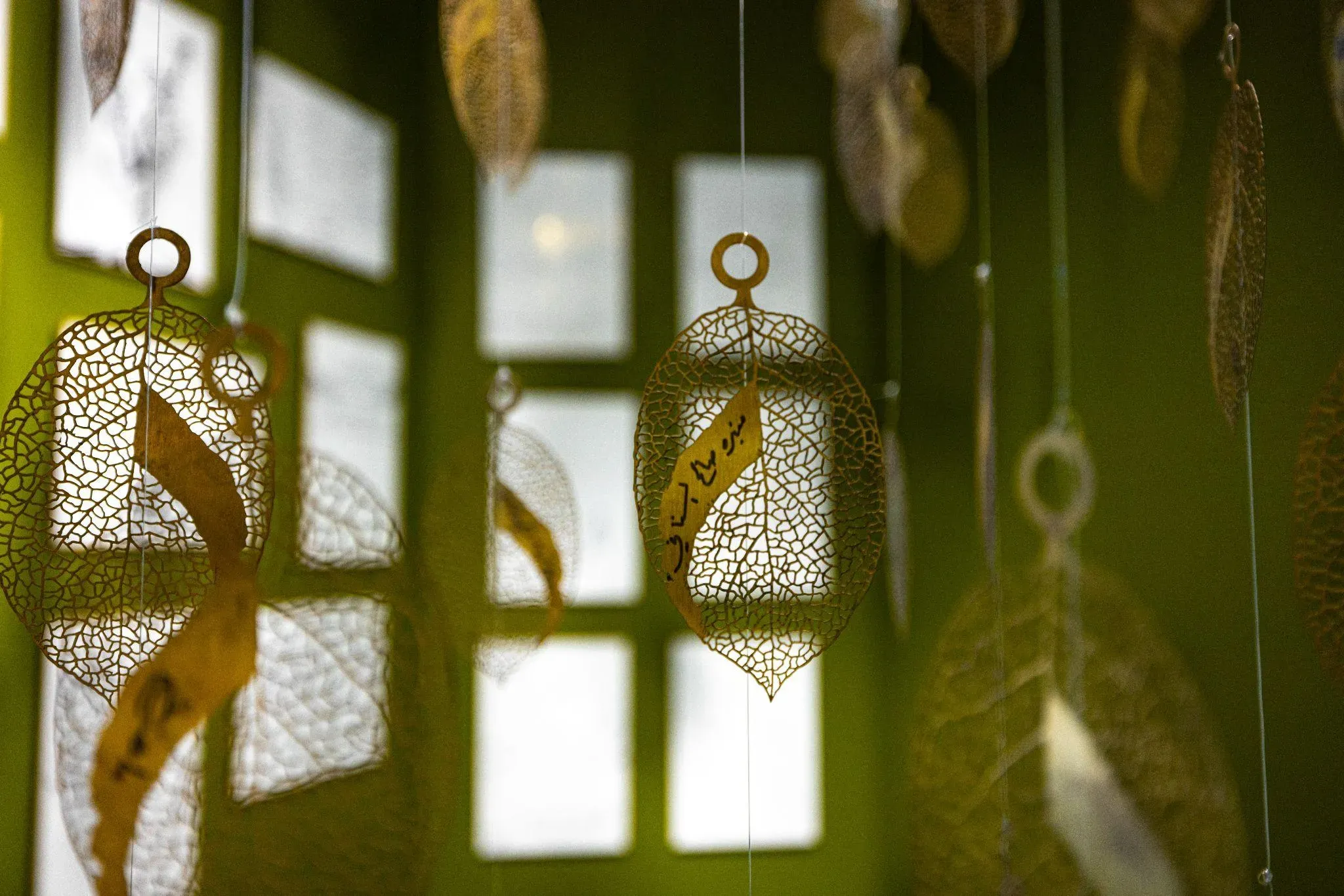
‘Tafasahu: Make Room.’ Nada AlMulla. 2026. Part of an Ithra Museum exhibition that invites visitors to enter as a guest—to pause, gather and reflect on the conditions of belonging within the context of the traditional Majlis, Arabic for "gathering space."
The word bayt ("house") occupies a central place in the Arabic language— linguistically, idiomatically, culturally, and across its deep anthropological and historical dimensions. In its most literal sense, it denotes a place of permanent residence. In Arabic literature, however, the bayt is also the fundamental unit of poetry, the building block upon which every poem is constructed. Classical critics traditionally did not consider a poem complete unless it comprised at least seven verses (abyat, plural of bayt). Bayt Allah al-Haram (The Sacred House of God) is the direction of prayer (qibla) for Muslims, while Bayt al-Maqdis (the Holy House) refers to the city of Jerusalem. Together, these meanings reveal the profound religious and cultural significance the word carries in Arabic and Islamic civilization.
Because the house is the repository of memory and the place from which one’s roots extend into the past, it naturally became the center of human existence. It is no coincidence that the classical Arabic poet begins his poem by standing before the abandoned campsite and lamenting, drawing from the transformation of a once inhabited dwelling into a deserted ruin, a metaphor parallel to existence itself. Likewise, the Bayati maqam, renowned among the Arabic musical modes for its gentle melancholy and contemplative rhythm, has long been favored by reciters when serenading verses of mercy.
When I was a child, my father's work required our family to move from one city to another. Every summer, when school ended, we could hardly contain our excitement at the prospect of returning to al-deera (hometown). To me, this word referred directly to the city of Sabya. It was synonymous with origins, roots and belonging. The concept of metaphor and figurative language has not yet entered my young mind, so I often wondered why others also called their other hometowns "al-deera," or why there was even a neighborhood in Riyadh—where I grew up—called "Al-Deera".
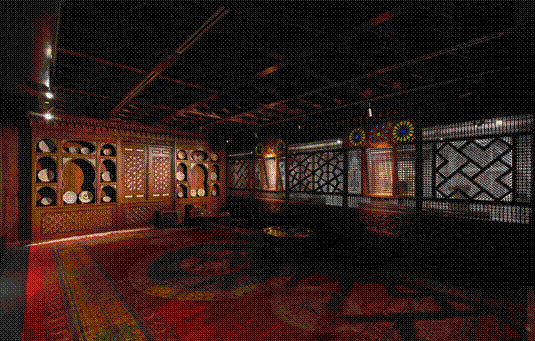
Traditional majlis in a traditional home, filled with beautiful moments and meticulous crafts. Part of Ithra Museum’s exhibition ‘In Praise of the Artisan.’ Photo by Ahmed Al-Thani.
Over time, however, language gradually revealed its layers to me. I came to understand that the word "Deera" carries multiple meanings, of which home ("bayt") is only one. Anything encircled by the desert sands may be called a "dar" (house). Muslim jurists even defined a dar (house) as a place enclosed by a surrounding wall. In Arabia, the interconnected network of homes bound by kinship and marriage gave rise to the common use of the term to signify one’s home and community. Among the Arabs on the Gulf coast, however, they used it as a navigational reference during journeys across the desert; a compass pointing travelers toward home.
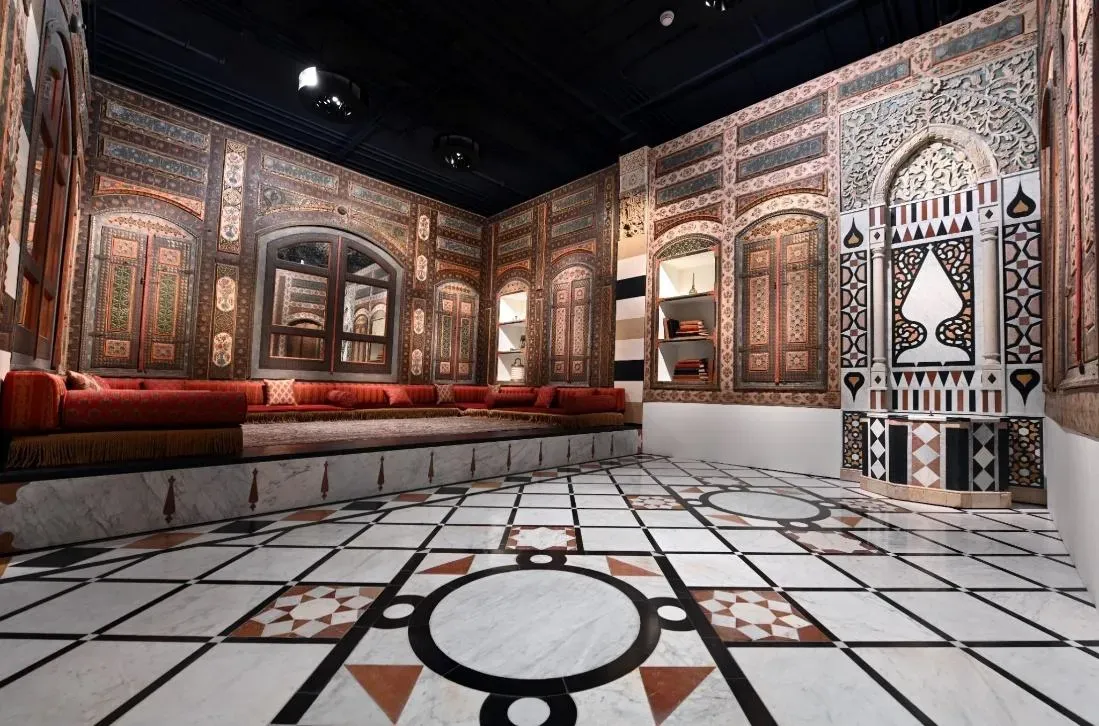
Every part of a home has a story, has a memory, and is rooted in our hearts. Traditional Damascus Majlis. Part of Ithra Museum’s exhibition ‘In Praise of the Artisan.’ Photo by Ahmed Al-Thani.
The house retains its own cultural and intellectual essence, rooted in its ability to open inward and outward at once. The memories formed within its walls have an extraordinary capacity to expand beyond them, accompanying us into the wider world, where we engage with larger communities and infinite sources of knowledge, even if the house itself contains its own library or intellectual circle. The house derives its permanence not from its silent physical structure, but from the lives, conversations, and events that unfold within it.
The house also occupies a privileged place in modern Arabic literature. In Sidi Wehdana, Raja Alem grants it absolute protagonism. Although the novel is populated by active characters, it is the rooftop that becomes the passage - and ascension - to a wider world through a creative mystical practice in which time moves freely and space dissolves into a phantom. In Amal Al-Faran's novel Hujra, we witness pivotal moments unfolding within Maryam’s house. Maryam suffers from a psychological condition that remains elusive, and we observe her through the eyes of her unnamed niece. We never get to know her name, yet we come to understand both what she witnesses and what Maryam murmurs in her delirium. This is sufficient, even for readers familiar with Al-Faran's minimalist narrative style, to realize that the story's dimensions extend far beyond the modest small house inhabited by the main character.
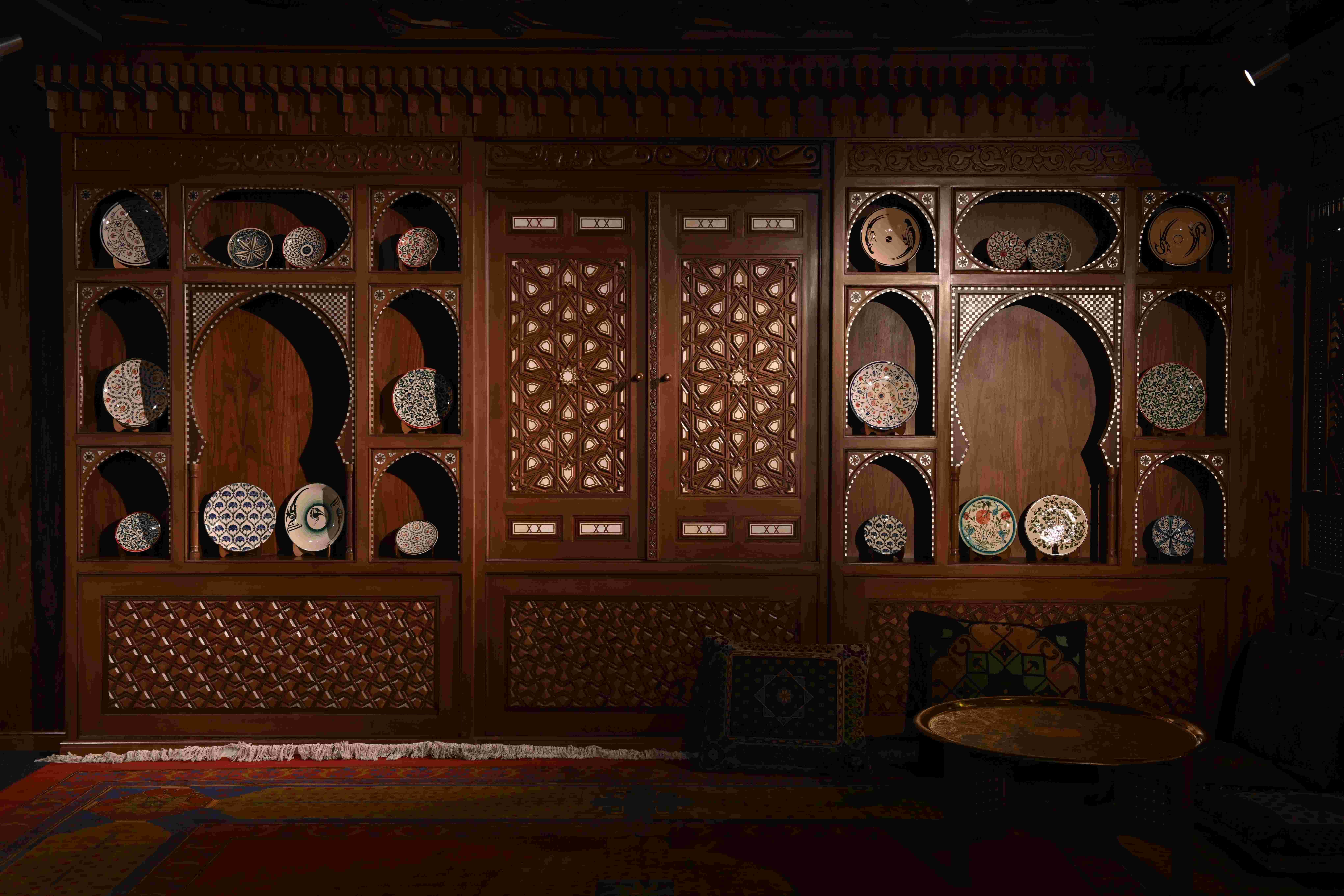
Traditional majlis in a traditional home, filled with beautiful moments and meticulous crafts. Part of Ithra Museum’s exhibition ‘In Praise of the Artisan.’ Photo by Ahmed Al-Thani.
In a different vein, Ahmed Al-Haqil in his short story collection Bayt, works with the memory formed in the rooms of the house, one that lingers like a persisting headache, until the house itself is transformed into a ruin reminiscent of the abandoned campsite of the pre-islamic Mu’allaqat, where memory does its work externally more than it emphasizes the inside of the house and its physical details. In this way, the concept of the house within the Arab philosophical imagination remains largely free from sentimental nostalgia or the imported romanticism of homesickness often associated with modern Western culture. Nor does it resemble the more radical explorations of space found in the works of Georges Perec, such as Species of Spaces or Things, where place acquires an autonomous value detached from human belonging and shaped instead by the materialism that emerged in the West after World War II.
The house may be where we are born and where we first take root, yet it grows larger with time. The farther we move away, whether for work or the inevitability of forced displacement, the greater it remains as engraved memory. It remains etched within us, like the key of any displaced person, who keeps it close to their heart, waiting for the day of return — very soon.
Tariq Khawaji is a writer and cultural consultant.
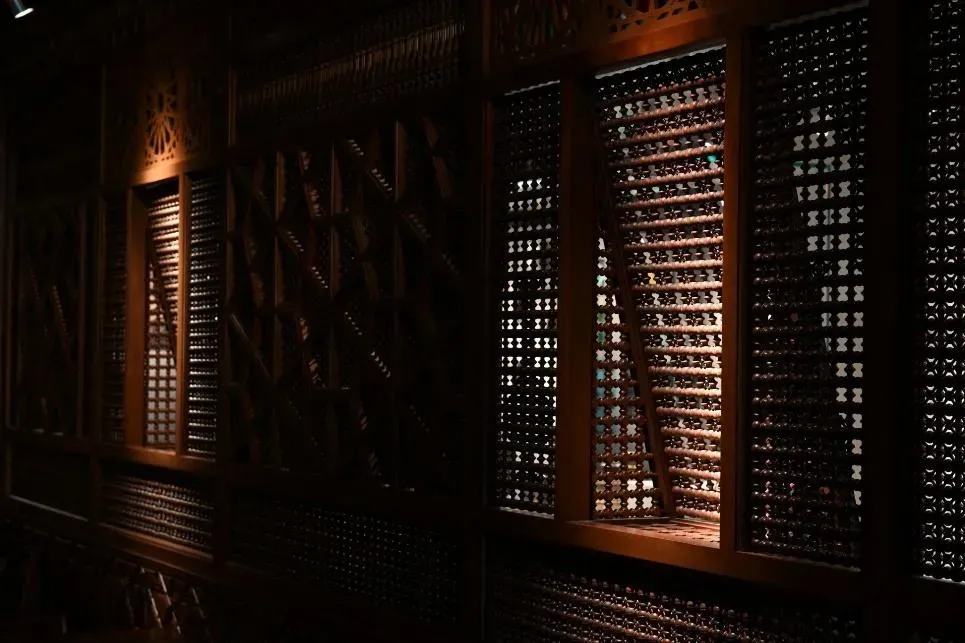
Traditional majlis in a traditional home, filled with beautiful moments and meticulous crafts. Part of Ithra Museum’s exhibition ‘In Praise of the Artisan.’ Photo by Ahmed Al-Thani.