The Art of Diplomacy: In Conversation with HRH Ambassador Reema Bandar Al-Saud
The Majestic Leopard. Eva Cellini. Undated. Part of HRH Ambassador Reema Bandar Al-Saud's private art collection. Photo by Rania Abdel Razek.
Over the years, Ithraeyat has had the privilege of serving as a subtle cultural ambassador for Saudi and Arab creatives and their work, bringing together a kaleidoscopic collection of voices and narratives that reflect the diverse cultural, intellectual, and human spirit — and often the resilience — of our time.
In this landmark 30th edition, we are honored to feature an exclusive interview with Her Royal Highness Ambassador Reema Bandar Al-Saud, whose own story is a masterclass in diplomacy, vision, service, and cross-cultural dialogue, underpinned by unwavering faith and a deeply compassionate heart; themes that have also defined much of Ithraeyat's journey.
As one of the country’s most recognized figures, her public story is well known, yet her answers here reveal something quieter and perhaps more intimate: a deep compassion for people, animals and nature, a love of art rooted in feeling, an enduring sense of humor and a faith in what is still possible.
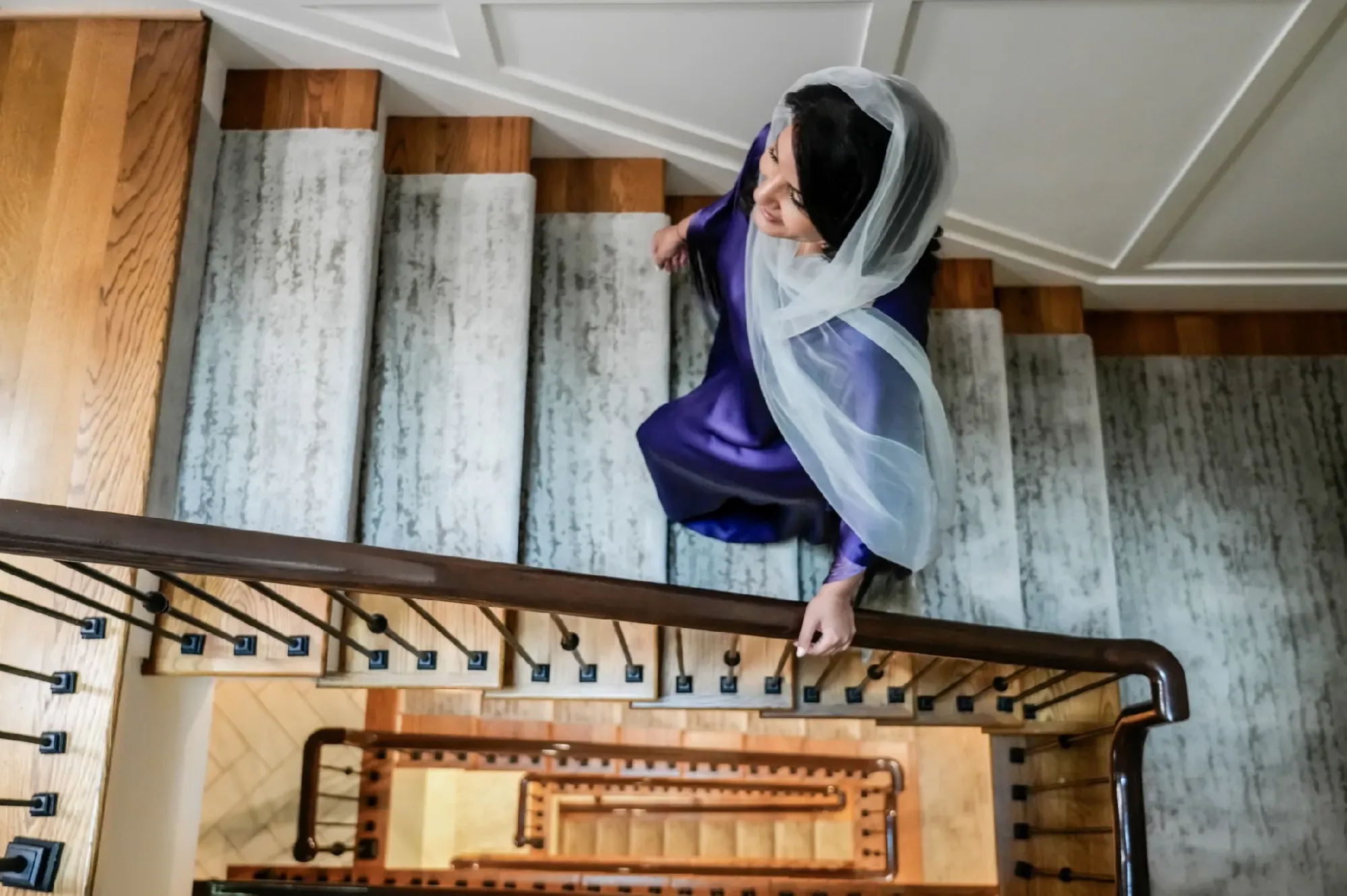
Her Royal Highness Ambassador Reema Bandar Al-Saud, Ambassador of the Kingdom of Saudi Arabia to the United States of America.
Photographed at her home in the United States by Rania Abdel Razek.
There are many ways to introduce HRH Princess Reema. One could begin with the historic firsts, the leadership roles and the causes she has championed. Yet when asked which of the many hats she has worn has taught her the most about herself, she chooses motherhood.
"Motherhood is one of life’s greatest teachers," she tells us, speaking of patience, responsibility, service and the importance of retaining a sense of humor through life’s most challenging moments.
A gentle insight into the great woman behind the titles, a leadership that is founded on caring for others.
When Her Royal Highness was appointed ambassador of the Kingdom of Saudi Arabia to the United States in 2019 by the Custodian of the Two Holy Mosques, King Salman bin Abdulaziz Al Saud, she made history as the first woman to hold this distinguished post. Yet her legacy of enrichment began long before her diplomatic service. As CEO of Harvey Nichols Riyadh, she did more than lead a business: She championed women's inclusion in the workforce and commissioned groundbreaking research that led to the Kingdom's first workplace childcare center — a testament to her belief that true leadership "begins with service."
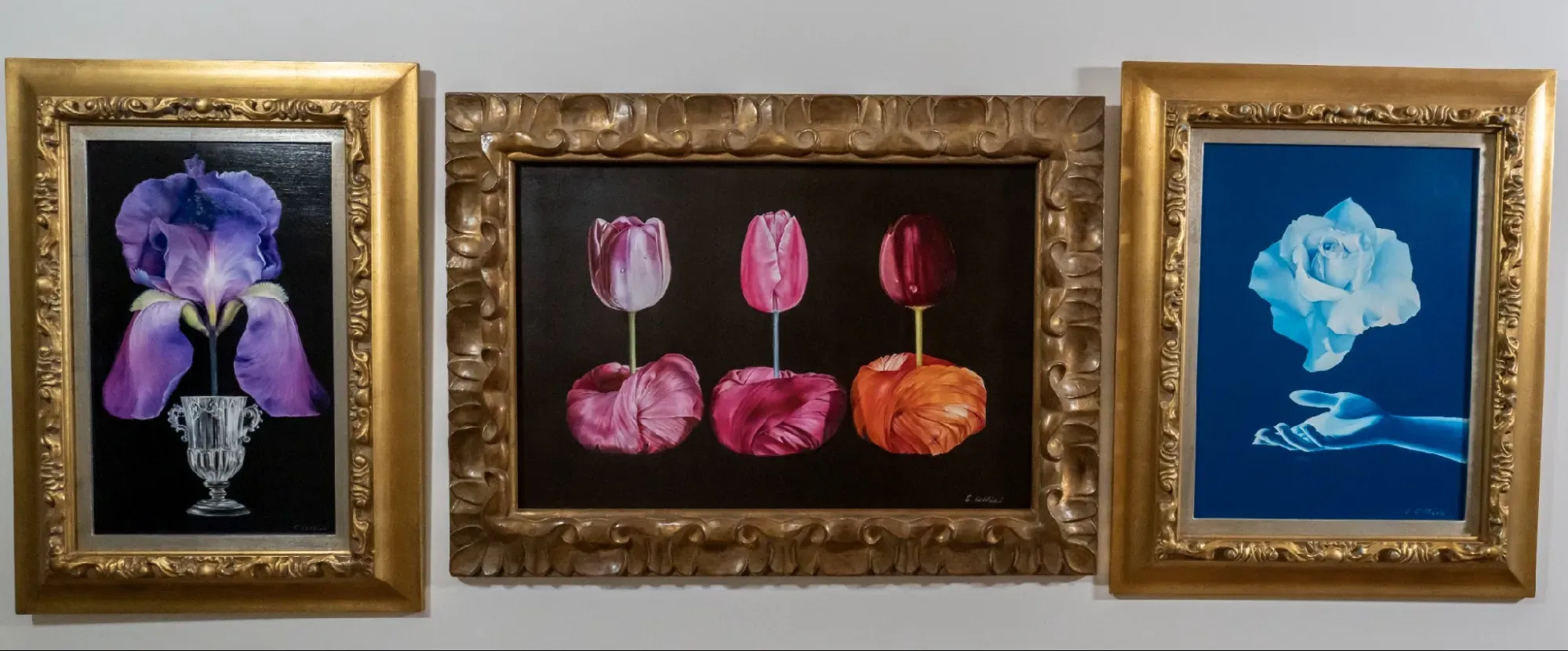
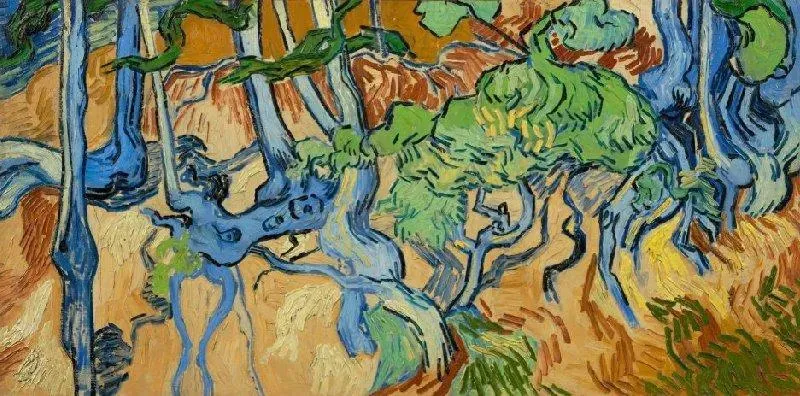
Art of Flowers. Eva Cellini. Undated.Part of HRH Ambassador Reema Bandar Al-Saud's private art collection. Photo by Rania Abdel Razek.
This philosophy, she shares with us, was shaped in part by her experience as a mother, which taught her “people management, organizational skills, patience, and responsibility.” It is also reflected in her profound care and compassion for mother nature and its many beings, deserving of kindness.
Her journey from private sector innovator to public servant has included becoming the first woman to lead a multisport federation in Saudi Arabia, serving as president of the Saudi Sports For All Federation (formerly known as the Saudi Federation for Mass Participation), alongside various other roles in sports. Throughout, she has been guided by a holistic vision in which art, nature, and culture are inseparable from human flourishing.
In our conversation, she reveals the deeply personal stories behind this vision—from her beloved adopted cats, George and Faith, who bring "a sense of calm and perspective," to her treasured art collection, including a striking piece by Saudi artist Skna Hassan depicting a woman with an Arabian leopard.
It is this majestic leopard, brought back from extinction, and its home amid the breathtaking landscapes of AlUla, that symbolizes her commitment to stewardship, a principle she extends globally through her founding of Catmosphere and WAVE, initiatives centered on interconnected well-being, big cat conservation and ocean regeneration.
Her Royal Highness Ambassador Reema has built a rich career dedicated to supporting local talent, advancing Saudi Arabia’s sports, cultural, conservation and sustainability efforts, and expanding social and economic opportunities for women across Saudi Arabia and beyond. She continues to wear many hats and lead across numerous fields. Her roles have included president of the Women’s Committee and member of the Board of Directors of the Saudi Olympic and Paralympic Committee, as well as chair of the Executive Committee of the Fashion Commission at the Saudi Ministry of Culture. The breadth of her contributions reaches across many layers of society.
Her Royal Highness founded Alf Khair in 2013, a social enterprise focused on building professional capacity and financial self-sufficiency among Saudi women, and was a founding member of the Zahra Breast Cancer Association in 2007. She is also an active member of the International Olympic Committee, where she serves on the Gender Equality, Diversity and Inclusion Commission; the Sustainability and Legacy Commission; and the Coordination Commission for the Brisbane 2032 Olympic Games, among other roles.
We invite you to join us in this intimate conversation with a leader whose vision of enrichment and service is rooted in heritage while extending boldly towards new horizons, building bridges of understanding along the way.
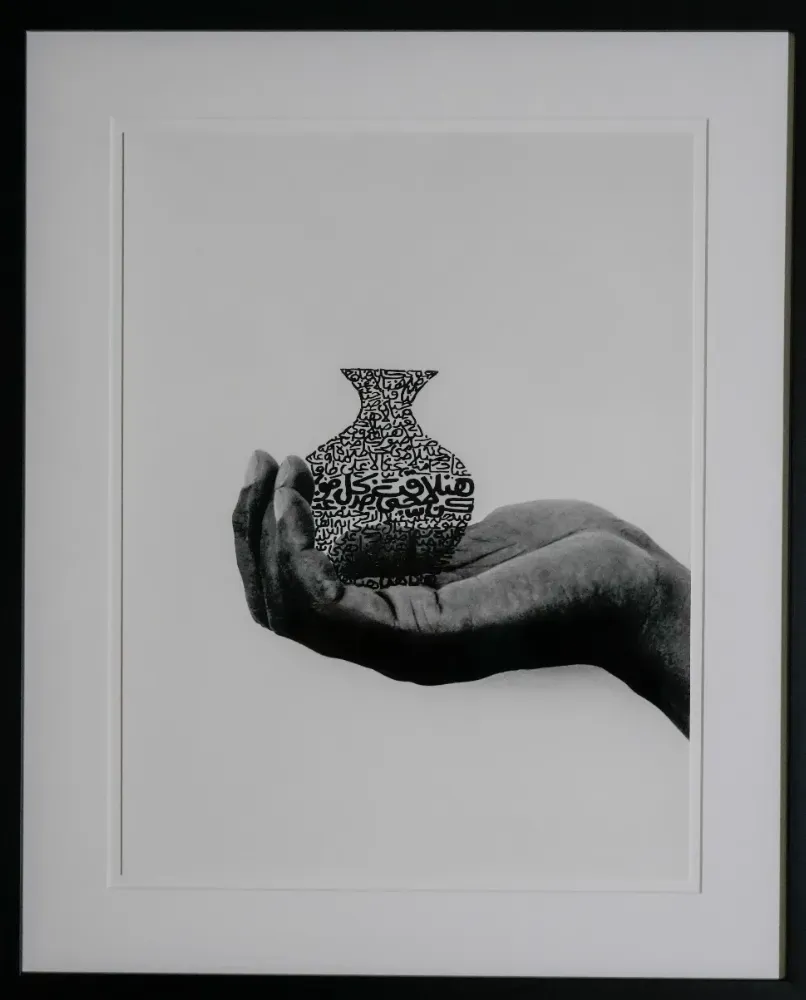
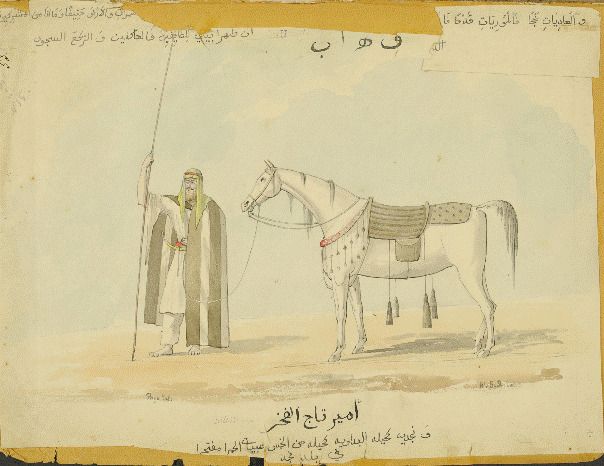
‘The Offering.’ Fathi Hassan. 2007. Part of HRH Ambassador Reema Bandar Al-Saud's private art collection. Photo by Rania Abdel Razek.
Q1. You have worn many hats throughout your career—diplomat, advocate, leader, mother, and champion of culture, champion of nature and many others. Which role has taught you the most about yourself?
Motherhood is one of life's greatest teachers. It teaches you about people management, organizational skills, patience and responsibility. It reminds you that true leadership begins with service, and that even in the most challenging moments, a sense of humor is one of life's greatest gifts.
Q2. What does art mean to you?
Art is where dreams meet reality.
Q3. Saudi Arabia is undergoing one of the most significant cultural transformations in its modern history. How do you hope the world will remember this era fifty years from now? Are there specific areas you would like to shine a special light on?
We are witnessing a profound transformation, but it is also a moment where Saudi Arabia invested in its greatest asset, and that is its people. When history looks back fifty years from now, I hope the story is not about the buildings we constructed or the events we hosted, but about the opportunities we created.
The greatest transformation has been the confidence of a new generation of Saudis— particularly young women and men who now see no limits to what they can contribute. This era is about inclusion and fostering a society where everyone has opportunities to shine. Because ultimately, a nation's greatest legacy is not what it builds, but what it enables its people to become.
Q4. We understand you are an admirer and collector of art. What draws you to a work of art? Is there a particular artwork or artist that has profoundly influenced you personally? Are there any Saudi or Saudi-American artists you have supported or like to highlight? Are there any emerging Saudi artists and creatives whose work particularly excites you?
Any piece of art that I have ever appreciated, admired or purchased has made me feel something. For me art reminds you of a moment, a person, a place or a thing that you have experienced in some way. For me, art isn’t about the financial value, it is about how it makes me feel.
So, all of the pieces that are highlighted here are pieces that have done just that - they have evoked a feeling of something, someone or some place. One of my favorite pieces in my home is a piece by a Saudi artist, Skna Hassan. It is colorful, bright, striking and powerful all at the same time. It features a woman with an Arabian Leopard.
Another artist that I love is Eva Cellini whose work is filled with beauty and contrast. I find her pieces to be moving and intriguing and I’ve collected various pieces from her throughout the years.
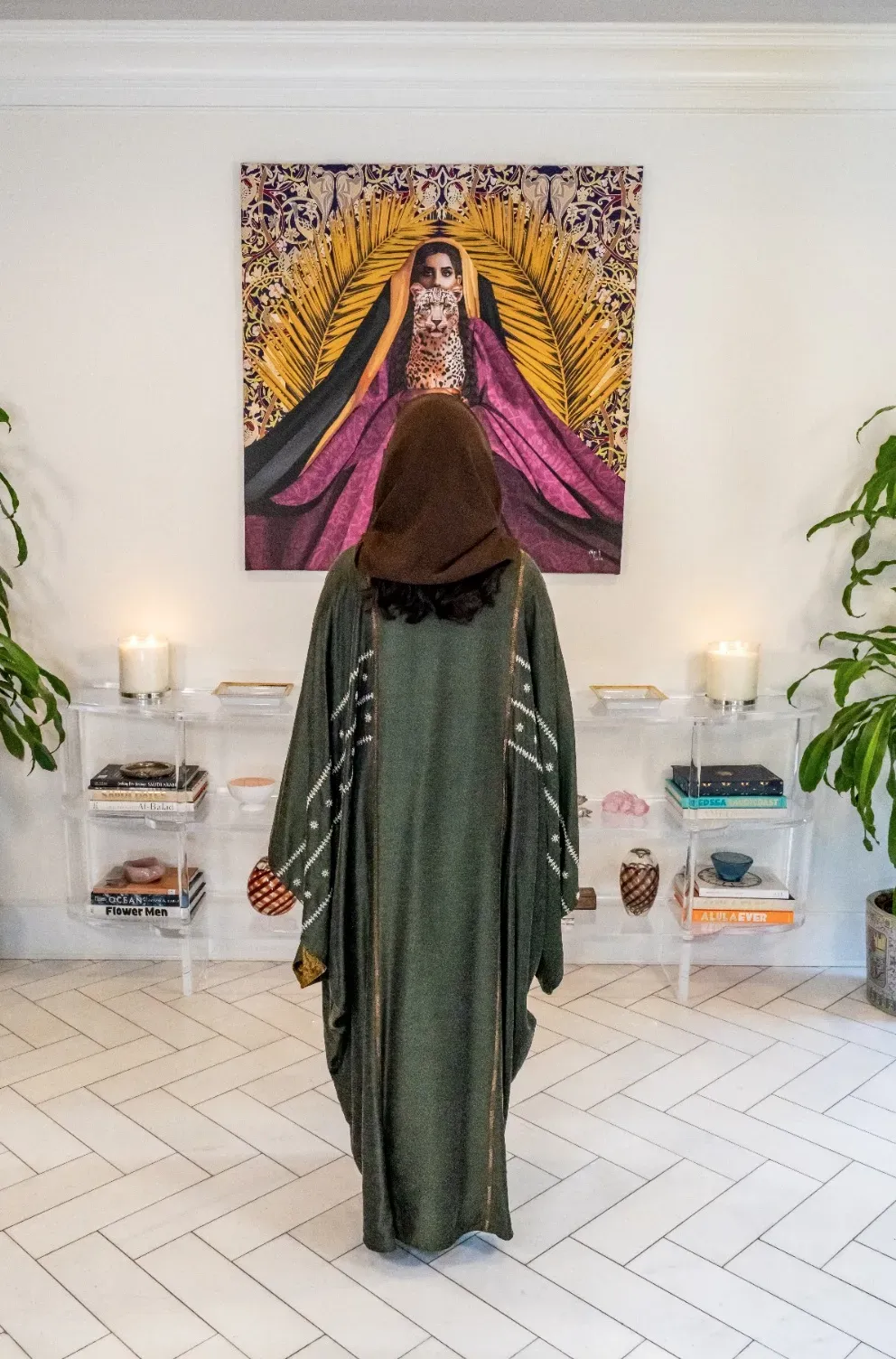
HRH Ambassador Reema Bandar Al-Saud at her home in the United States, in front of one of her beloved art pieces by dynamic Saudi artist Skna Hassan. Photo by Rania Abdel Razek.
Q5. We were delighted to learn that you enjoyed our Nature issue, particularly our feature on the revival of the Arabian leopard. What role does nature play in your own life? And what is something each of us can do to protect it?
Nature reminds us that our well-being is deeply interconnected with the health of the world around us. The story of the Arabian leopard is a powerful example of what is possible when we choose stewardship over complacency.
Each of us has a role to play, whether through the choices we make every day or by helping the next generation develop a deeper appreciation for nature. After all, protecting our environment is ultimately about protecting our shared future.
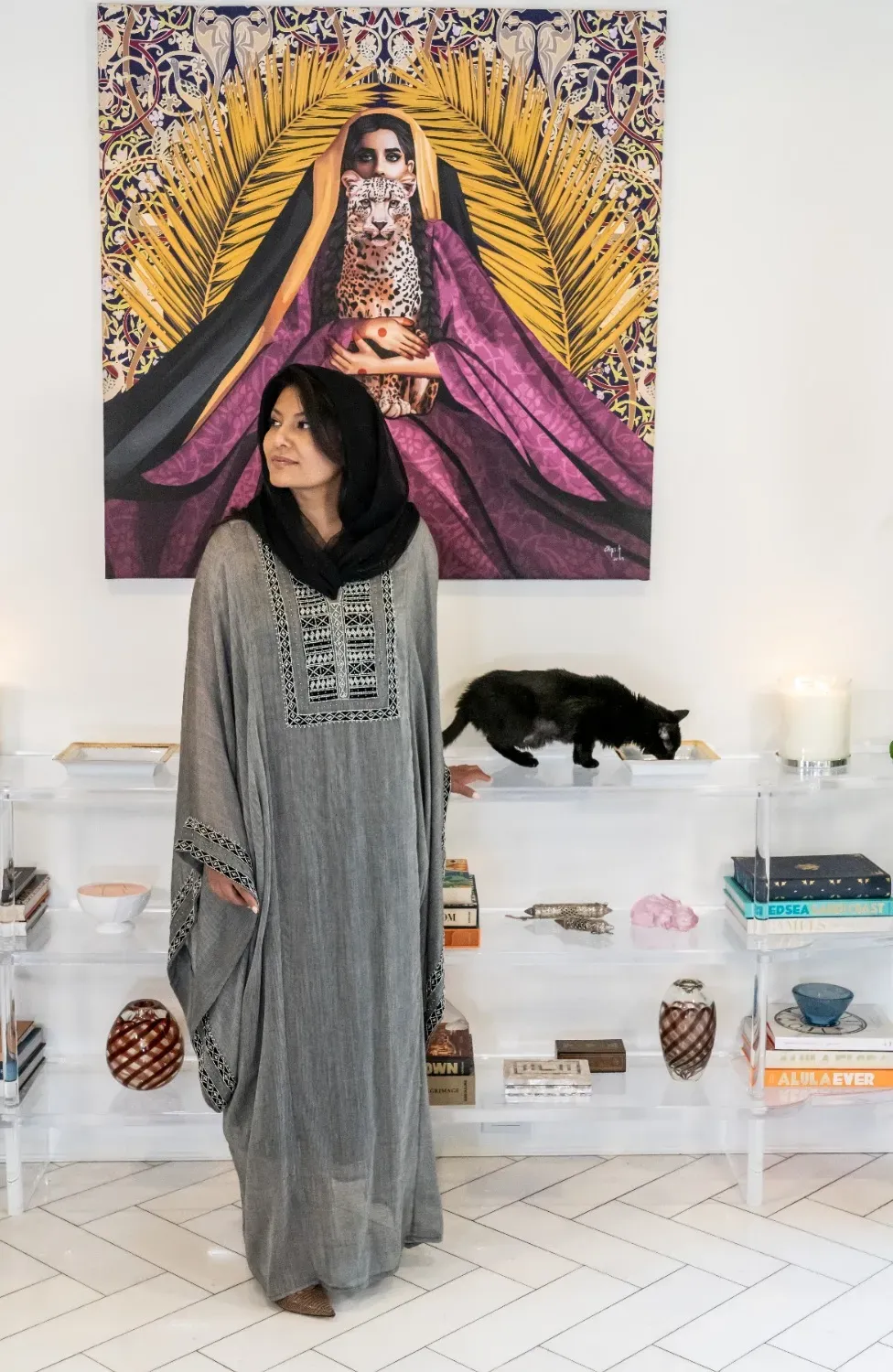
HRH Ambassador Reema Bandar Al-Saud with her cat Faith at her home in the United States.Photo by Rania Abdel Razek.
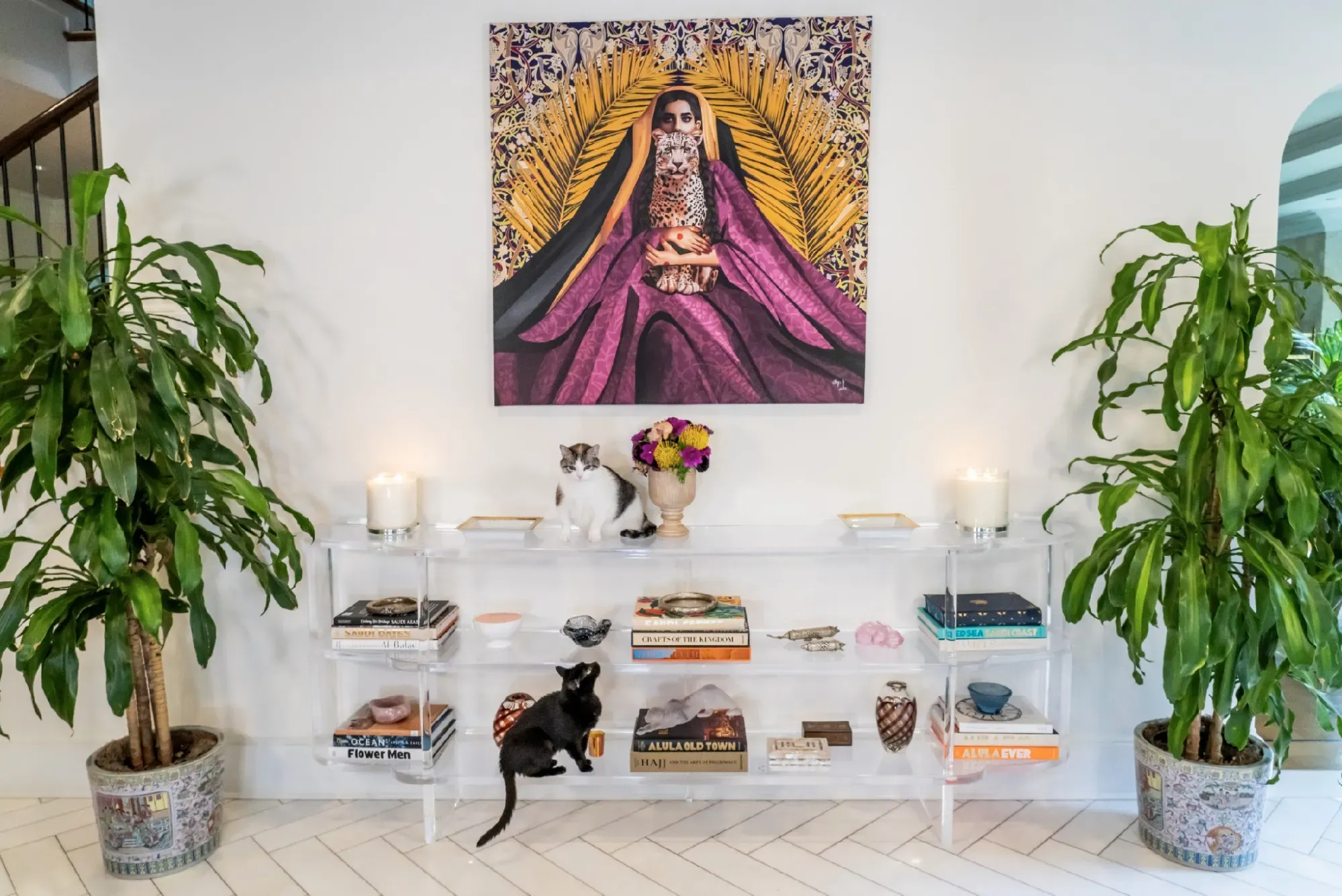
HRH Ambassador Reema Bandar Al-Saud's cats, George and Faith, adopted from a local shelter. Photo by Rania Abdel Razek.
Q6. We understand you have cats? Can you share their stories, their names and what lessons do they teach us?
I adopted my cats George and Faith from the local shelter. I had first adopted Faith - and then a few months later George came along. There are so many animals waiting for a second chance, and every act of kindness matters.
How we treat animals says a great deal about who we are, it teaches compassion. My cats have an incredible ability to bring a sense of calm and perspective, even after the most demanding days. I've found cats to be remarkably intuitive and quite frankly, amusing.
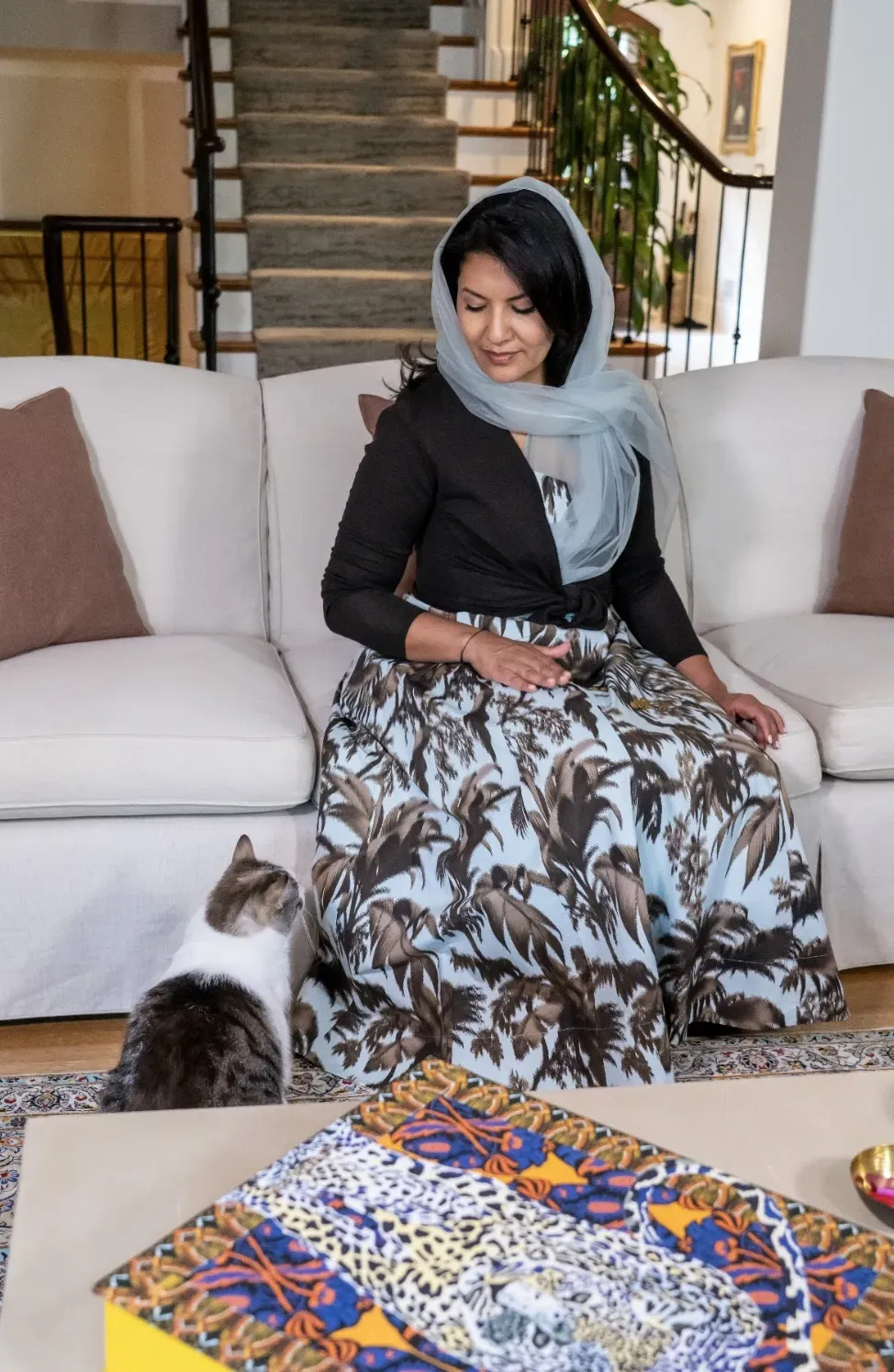
HRH Ambassador Reema Bandar Al-Saud with her cat George at her home in the United States. Photo by Rania Abdel Razek.
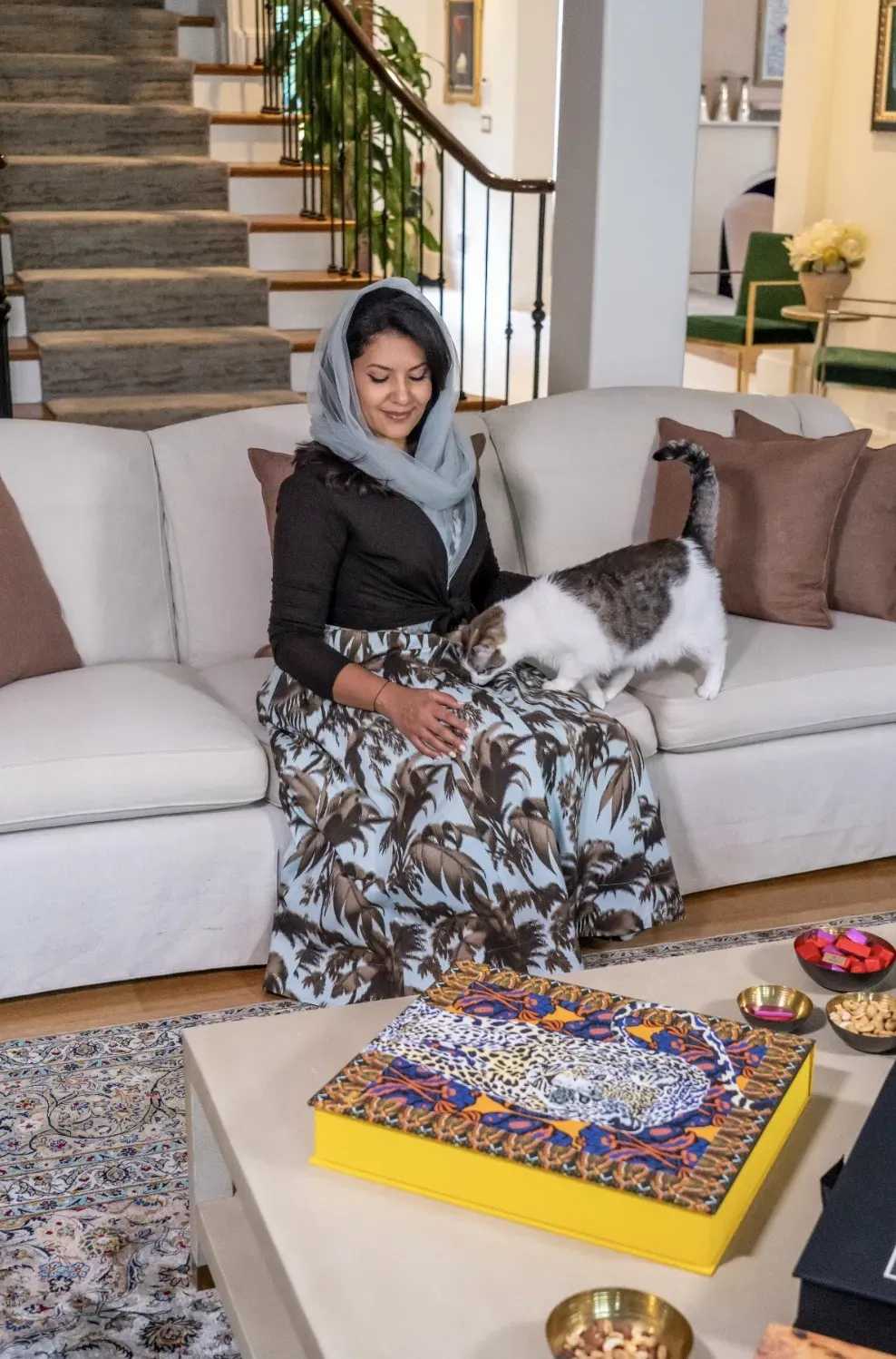
HRH Ambassador Reema Bandar Al-Saud with her cat George at her home in the United States. Photo by Rania Abdel Razek.
Q7. Are there any favorite places you visited and traveled to? Why did they leave an impression? Is there a place in Saudi Arabia where you feel most connected to nature?
AlUla is breathtaking. It is the home of the Arabian Leopard, and when I close my eyes I can imagine them roaming around the dunes and the rocks. I look forward to the day that becomes a reality again.
Q8. What do you hope people will see if and when they visit Saudi Arabia? Are there any special areas you hope people visit in Saudi Arabia and why?
I hope visitors leave with a deeper understanding of who we are. Saudi Arabia is a country of rich history, and vibrant culture, but what stays with most people is the generosity and warmth of the people.
Every region of Saudi Arabia has its own beauty — it is incredibly diverse. You can swim in the Red Sea, explore the ancient ruins of Al-Ula, go zip-lining in Abha or visit our history in Diriyah.
Q9. You have inspired countless women in Saudi Arabia and around the world. What advice would you give young women who are just beginning their creative or professional journeys?
My advice would be the same for any woman. Be open to opportunities that may not seem obvious.
Q10. As a diplomat, you have witnessed the power of culture to transcend language and politics. Can art succeed where diplomacy sometimes cannot?
Art is a language that unifies and it transcends politics. It is a tool that can help bring people together in the same way that music can unify.
Q11. What piece of music or composition (or poetry) do you find yourself returning to again and again?
"Free," by George Michael.
Q12. Is there an object you own that holds deep personal meaning?
Yes, my father’s Air Force Wings, they are very dear to me.
Q13. If you could curate your own exhibition at Ithra, what story would it tell?
It would be the story of the Mother of the Faithful Khadija bint Khuwaylid – رضي الله عنها.
As it is one of the most inspiring stories, not only for women, but to society and humanity. Her story is one of inspiration that deserves celebration.
Q14. What cultural legacy would you personally like to leave behind?
I haven’t lived long enough to think about what I’d leave beyond. There is so much more to do.
Q15. Finally, if you could write a letter to the next generation of Saudi creatives, what would be the opening sentence? And if you would like to share, what would you write to a younger self?
You’ve got to have faith.
There is a lovely symmetry in those final two answers. Asked to look backwards towards legacy, HRH Ambassador Reema turns instead toward the work still waiting to be done. When asked to look forward and offer the next generation a first line, she offers faith. And somewhere amid these larger horizons are her family, George and Faith, a favorite song, a father’s wings and works of art chosen simply because they made her feel something.
We thank Her Royal Highness Ambassador Reema Bandar Al-Saud, Ambassador of the Kingdom of Saudi Arabia to the United States of America, for sharing her story and her insights with Ithraeyat and with readers who have long admired her and continue to be inspired by her journey as it unfolds.
—
Photos were taken exclusively for this special feature by Rania Abdel Razek, an internationally exhibited photographer, curator, and educator whose work explores visual storytelling, cultural identity, architecture, landscapes, and the relationships between people and place.
With more than two decades of professional experience in the United States and the Kingdom of Saudi Arabia, Abdel Razek has dedicated her career to using photography as a bridge between cultures. Her work has been exhibited in more than thirty international exhibitions and recognized through numerous awards and juried competitions. Her photographs have appeared in over thirty-five books and publications, reflecting her ongoing exploration of architecture, heritage, landscapes, and contemporary life.
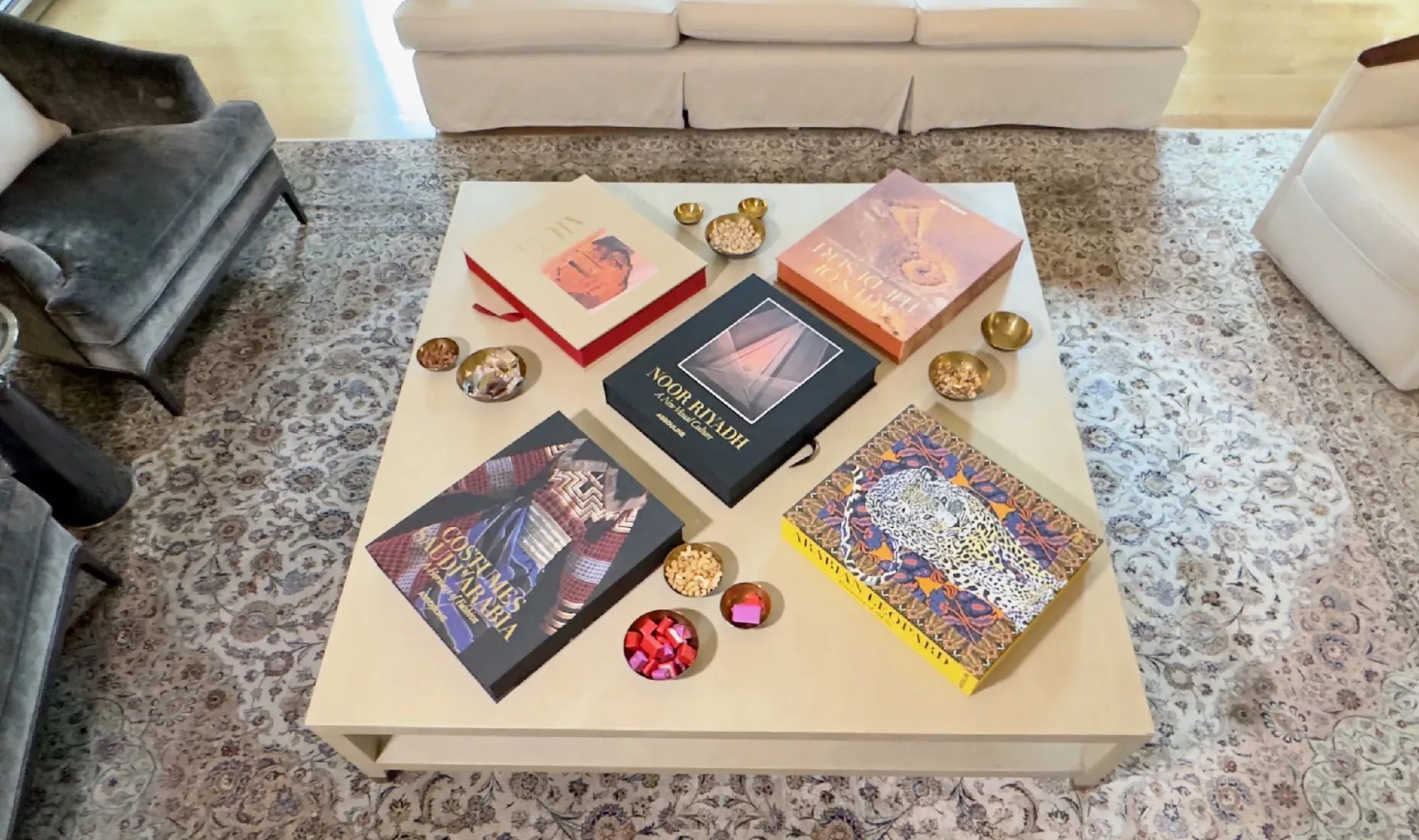
Assouline Collection - Kingdom of Saudi Arabia. Part of HRH Ambassador Reema Bandar Al-Saud's collection of books. Photo by Rania Abdel Razek.