Edition #31
Edition #30
Edition #29
Edition #28
Edition #27
Edition #26
Edition #25
Edition #24
Edition #23
Edition #22
Edition #21
Edition #20
Edition #19
Edition #18
Edition #17
Edition #16

Edition #15

Edition #14

Edition #13
Edition #12
Edition #11
Edition #10
Edition #9

Edition #8
Edition #7
Edition #6
Edition #5
Edition #4
Edition #3
Edition #2
Edition #1
Bridges: Cross-Cultural Conversations:
Eyes on New Horizons
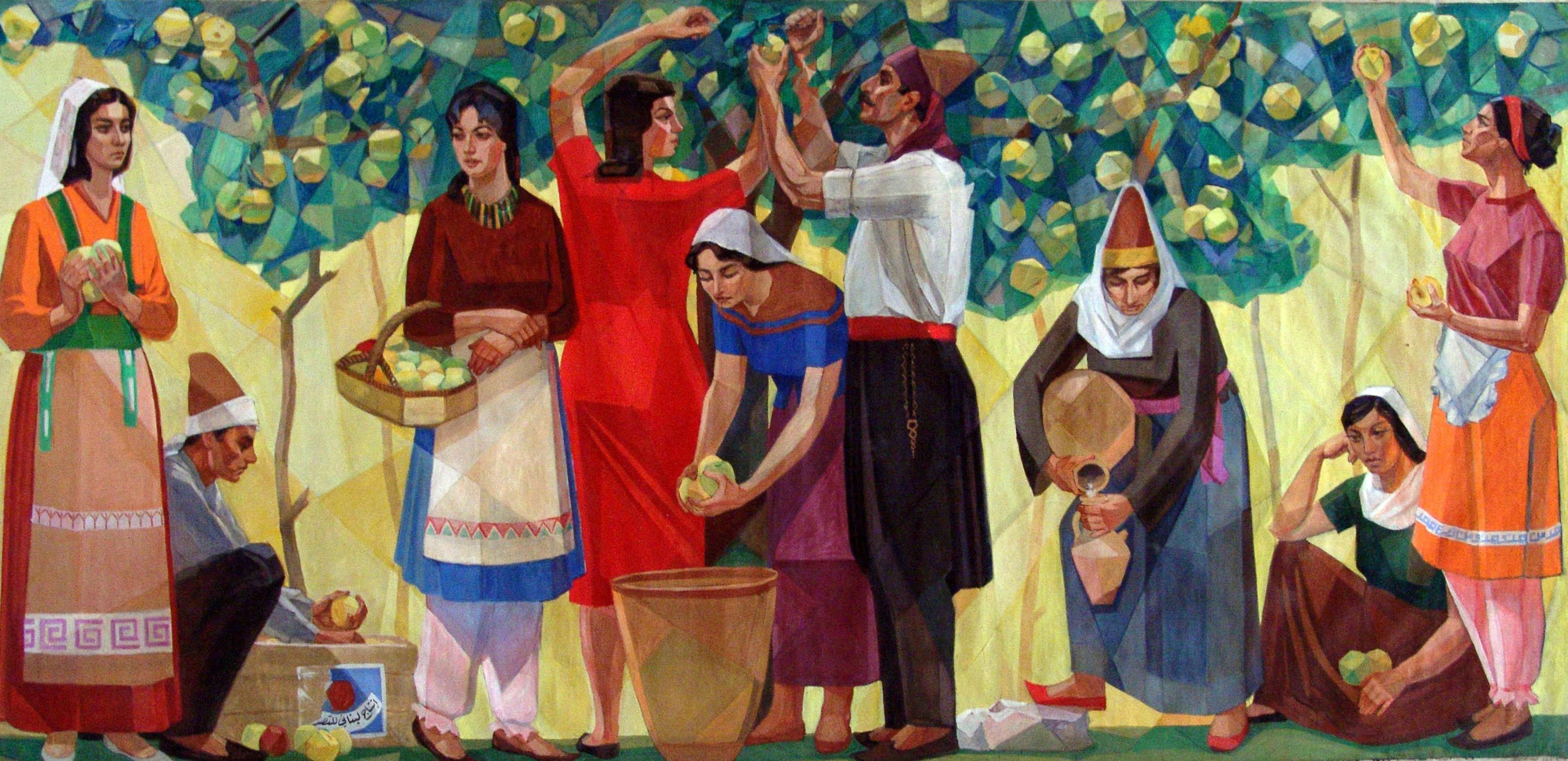
‘Harvesting (or The Picking of the Apples in the Mountain).’ Wahib Bteddini. 1966. Beirut. Sursock Museum Archive. Courtesy of The Nicolas Sursock Museum.
2 minutes read
December 30, 2026
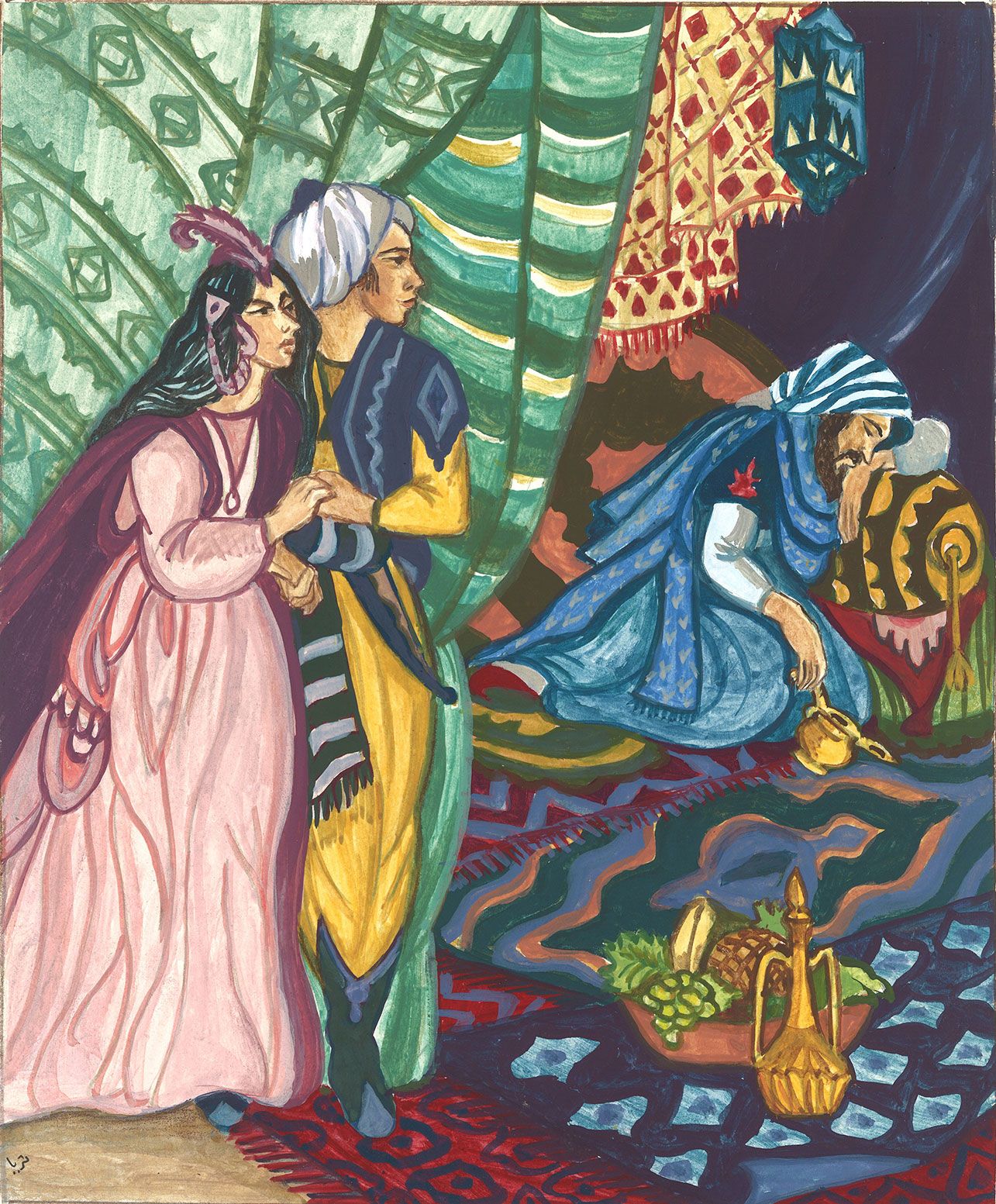
‘Aladdin and the Magic Lamp.’ Thuraya Al-Baqsami. 1981. Courtesy of the artist.
An often forgotten chapter in art history, many of the Arab world’s great artists at some point in their creative journey found their way into the classrooms and studios of the Soviet Union. They joined new artistic circles, looking up to their teachers and around at the bustling creative scene, discovering different perspectives, and fresh possibilities for stories and images rooted in home.
The Arab Art and Arab Artists in the Soviet Union (AASU) Foundation invites us to explore these encounters, following the people and artworks that connected the Arab world and the USSR between the 1950s and 1991, a period connected with cultural diplomacy between the Arab world and the USSR.
Founded in 2024, the online research project brings together artworks, archival materials, films, books and essays, with exhibition catalogues to leaf through and traces of student life to discover. Among the artists whose journeys we encounter is Lebanese painter Wahib Bteddini (1929-2011), who began his art training in the early 1950s, taking painting classes in Omar Onsi’s atelier and sculpture classes in Halim El Hajj’s atelier.
He started his formal education in 1956 at the Lebanese Academy of Fine Arts, spending a few years there. In 1961, he left the academy to continue his education in the USSR, in Moscow, becoming the first Lebanese art student at the Surikov Art Institute in 1962. He studied at the Faculty of Painting in the Workshop of Monumental Art, graduating in 1966 with a piece entitled “Harvesting” (or “The Picking of the Apples in the Mountain”) that is showcased here. His colorful scene of figures gathering fruit captures the warmth of shared work, with hands reaching into the branches above. Upon returning to Lebanon, he taught at the Institute of Fine Arts at the Lebanese University from 1967 to 1988 and eventually became head of the department. In 2004, Bteddini received the Lebanese Cedar Badge of Honour Presidential Award. Kuwaiti artist Thuraya Al-Baqsami (1951), who became a foundational figure in Kuwaiti art, and whose studies took her from Cairo to Moscow and Dakar, drew on these varied artistic traditions to develop a visual language rich in symbolism, mythology and cultural memory.
Her 1981 work, Aladdin and the Magic Lamp, which was part of her graduation project from the Surikov Art Institute where she studied from 1975 to 1981, brings a familiar tale to life through vivid colors and intricate patterns. Memory, resistance, cultural heritage and the female experience were central themes in Thuraya’s work. Through her experimentation with various materials and media, including printmaking and silk painting, she synthesised the artistic heritage of Russia and Europe with African aesthetics and the regional aesthetics of the Arab world. This created a unique trajectory in Arab visual arts. She remained true to this artistic method for many decades, defining the direction of her artistic expression and making her paintings unique phenomena of 20th century Arab art.
These selected artworks offer a glimpse of what has been preserved and inspired through cross-cultural artistic exchange, and the pleasure of discovering it anew. Let your eyes wander, linger over a detail, and see where your curiosity takes you. Together, these works invite us to explore new horizons, reach a little higher and let our imagination flow.
Dr. Olga Nefedova is an art historian and the Director of the AASU Foundation.