Edition #31
Edition #30
Edition #29
Edition #28
Edition #27
Edition #26
Edition #25
Edition #24
Edition #23
Edition #22
Edition #21
Edition #20
Edition #19
Edition #18
Edition #17
Edition #16

Edition #15

Edition #14

Edition #13
Edition #12
Edition #11
Edition #10
Edition #9

Edition #8
Edition #7
Edition #6
Edition #5
Edition #4
Edition #3
Edition #2
Edition #1
Cover Artist:
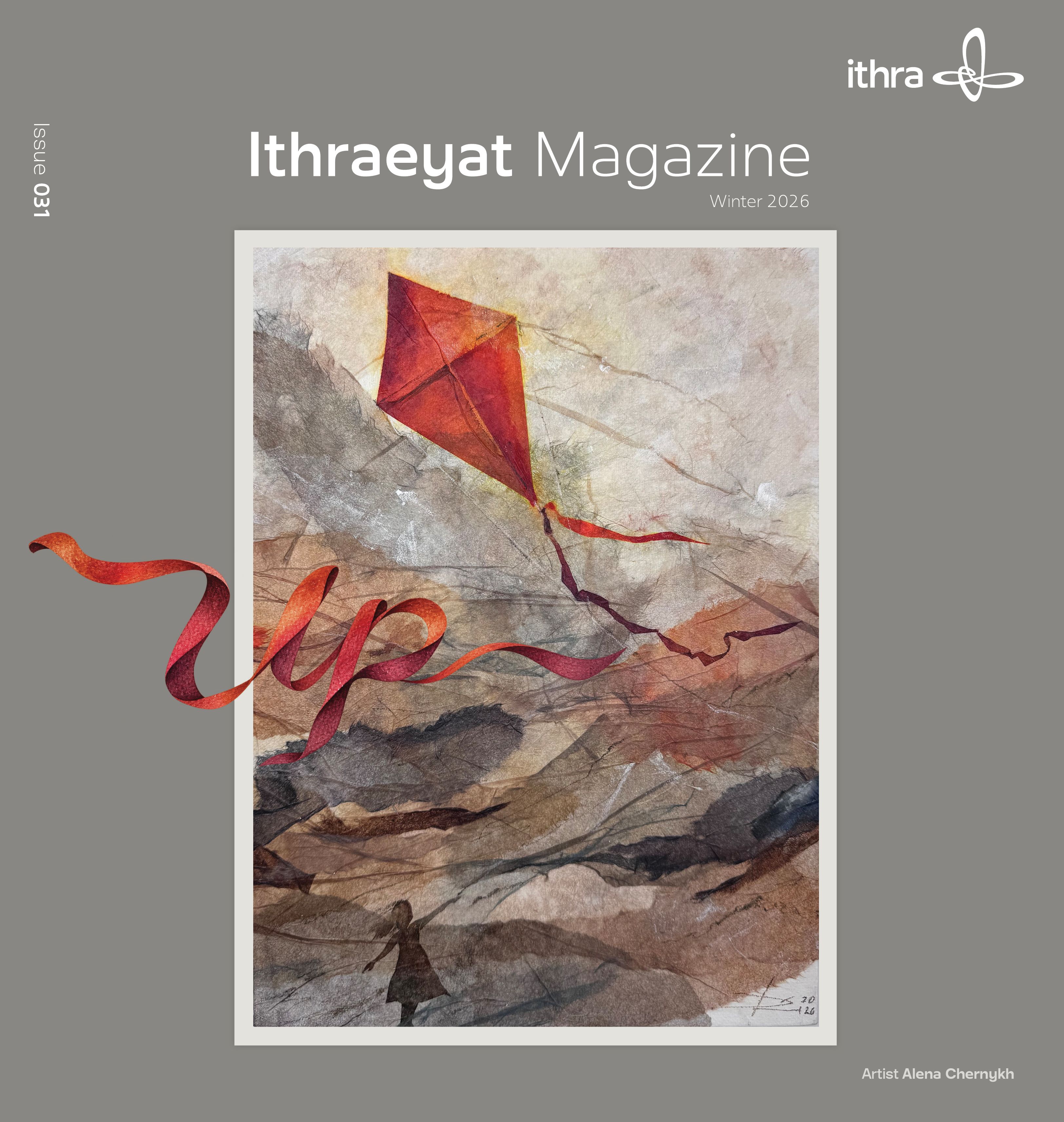
Up with the Wind
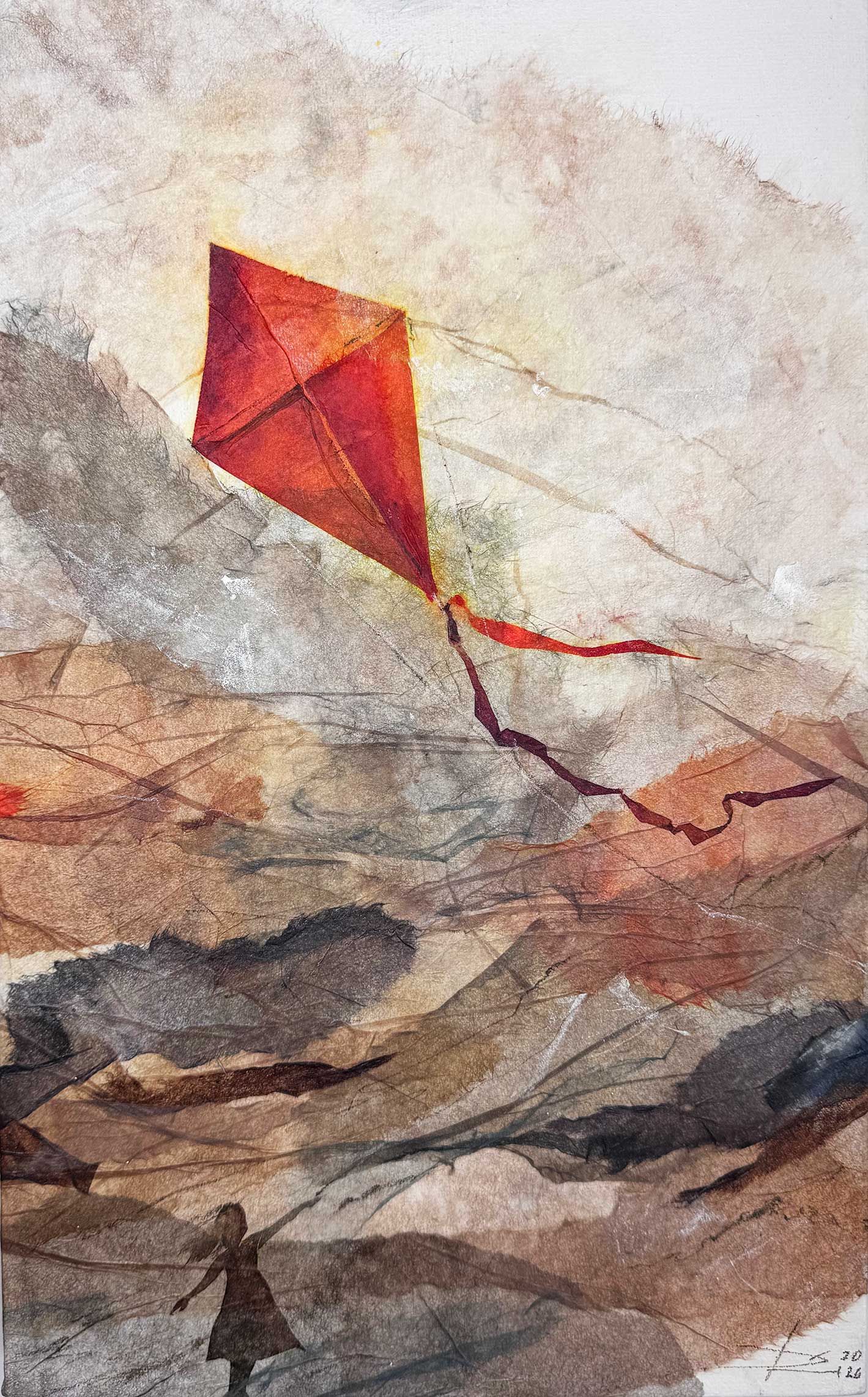
‘Towards the Wind.’ Alena Chernykh. Collage painting. 40 x 25 cm. Courtesy of the P.S.Grig Art Gallery and the artist.
4 minutes read
December 30, 2026
Artist Alena Chernykh
How much of our play is simply a dance with the wind? We run with it, sway with it, surrendering to its current, feeling its invisible push carry us faster. We set sail or fly against it, delighting in the small triumph of overcoming its resistance. For something we cannot see, the wind comes remarkably close to magic. And nowhere is that magic more alive than in childhood.
But do we ever truly outgrow play and our search for the magical?
Aren’t sports, games, performances, and all our little acts of make-believe proof that play is woven into the very fabric of our being? We play for pleasure but also to cope, to resist, sometimes even to mock adversity. We play to test our limits, hoping to accomplish something extraordinary, if only once. We play to connect with nature and with one another. And sometimes, we play for the sheer silliness of it, for the pleasure of doing something that serves no purpose beyond making us laugh. Children understand this instinctively. They have yet to learn to be embarrassed by their own delight.
And on the lightness of being, there is something wonderfully elusive about the wind itself. Formless and invisible, it makes its presence known through everything it touches. It sets plants dancing and draws music from the rocks. It sends children racing across open fields, their eyes bright with excitement, laughing until they are literally breathless. And this is one core memory that we all share.
Perhaps we never quite forget what it felt like to run as children, when the world seemed to open before us and the simple act of sprinting through it was enough to fill us with joy. It is a feeling as pure and fleeting as the sight of a colorful kite dancing high in the wind.
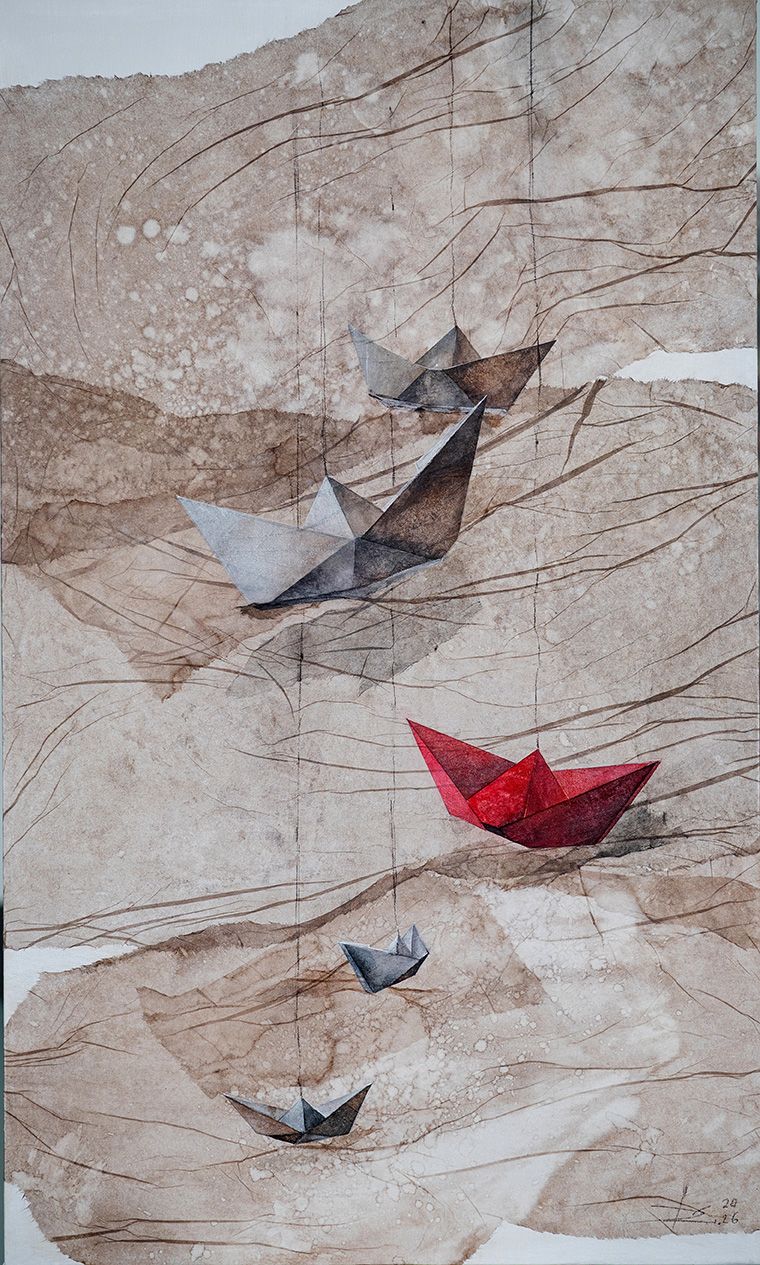
‘On a Thin Thread (Red).’ Alena Chernykh. 2025. 100 x 60 cm. Courtesy of the P.S.Grig Art Gallery and the artist.
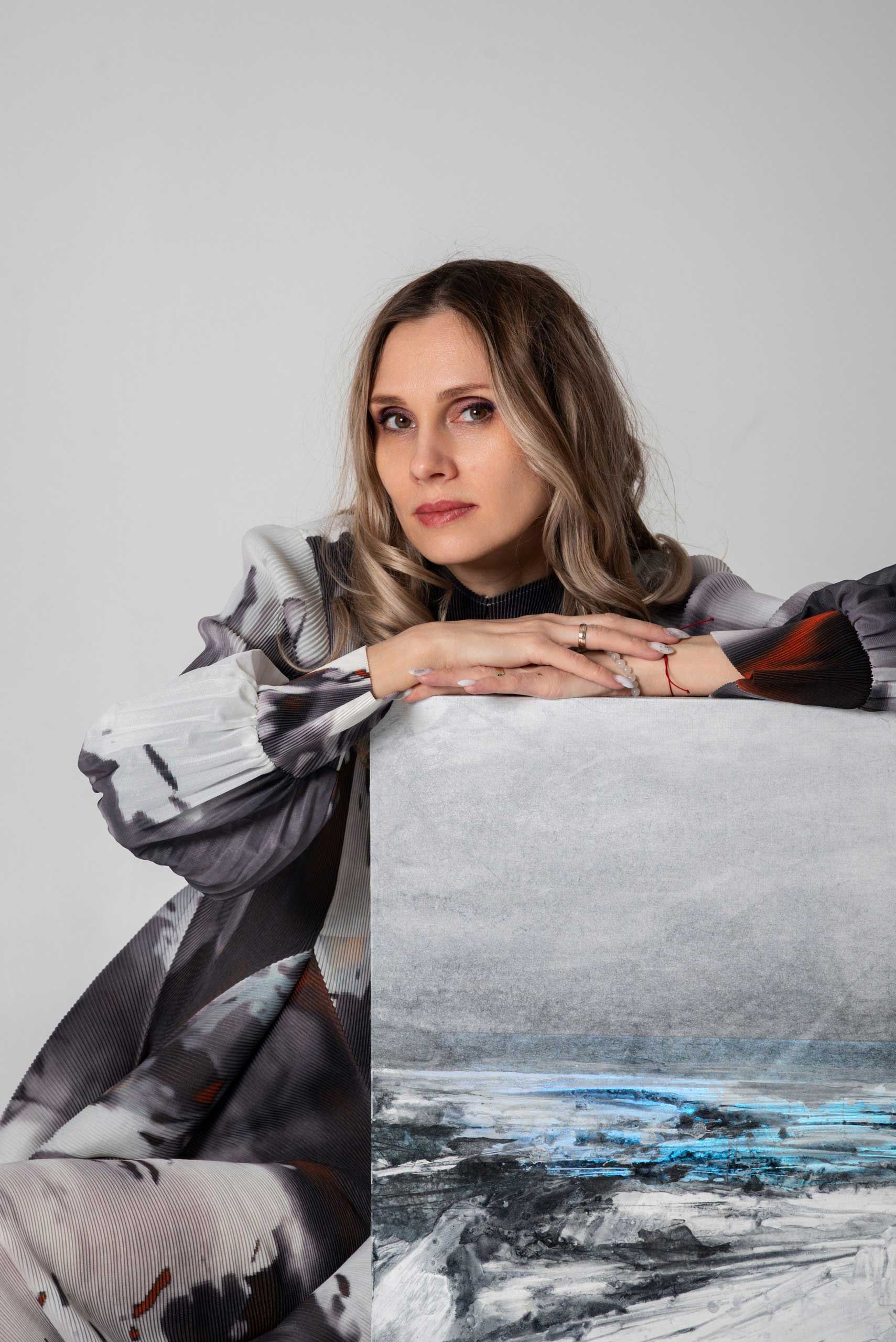
Artist Alena Chernykh. Courtesy of the P.S.Grig Art Gallery and the artist.
That feeling resonates with our cover artist, Alena Chernykh, who sees the kite as an expression of the energy and sincerity of childhood.
In her series Shadows of Play from the Past, a selection of which appears here, Alena explores children’s openness to the world, their imaginative freedom, and their willingness to try without dwelling on the consequences. To a child, the “im-” in “impossible” might be little more than a suggestion—or in the true daring spirit of children, they take it as a challenge to prove themselves.
We asked Alena, what does Up mean to you?
Her answer: “Upward is movement and hope, aspiration and achievement. It is a certain path that does not always follow a straight trajectory.” Then she continues: “Up is always an effort, trust in air currents, and an attempt to reach the child’s freedom.”
But what is a child’s freedom?
It is perhaps best understood through Chernykh’s artworks themselves. In Shadows of Play from the Past, paper boats venture into vast, unfamiliar waters, toys become inseparable companions, and the most ordinary objects take on lives of their own. There is something wonderfully audacious about these little worlds. Who among us has never folded a piece of paper into a boat and sent it sailing across a puddle, imagining it bound for distant shores? Or entrusted our deepest secrets to a stuffed animal, certain that it understood every word? Children have a remarkable ability to make entire worlds out of very little, and Chernykh seems to delight in giving those worlds a life beyond their makers.
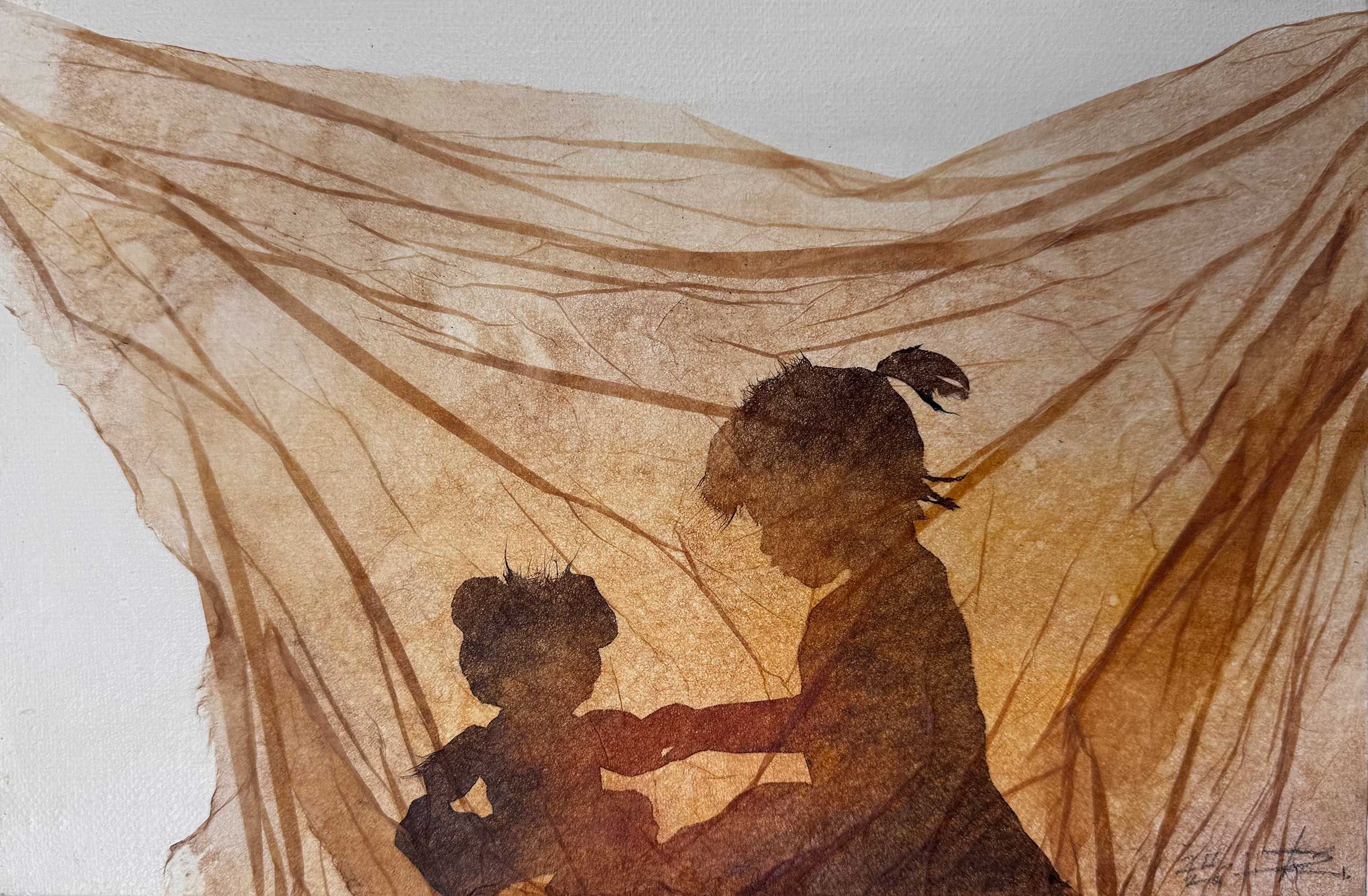
Best Friend.’ Alena Chernykh. 2026. Collage painting on canvas. 20 x 30 cm. Courtesy of the P.S.Grig Art Gallery and the artist.
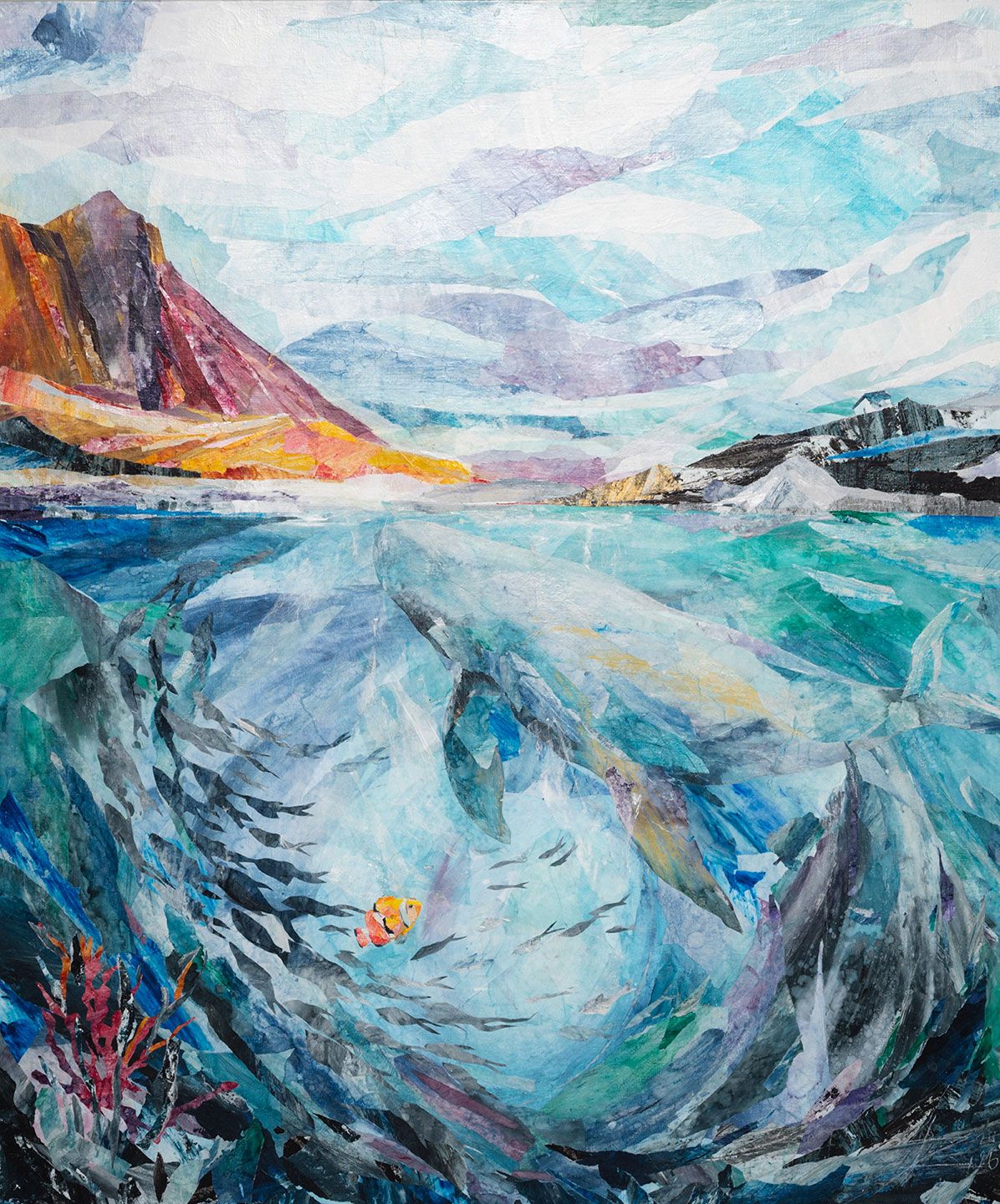
Strength.’ Alena Chernykh. 2024. Collage painting on canvas. 120 x 80 cm. Courtesy of the P.S.Grig Art Gallery and the artist.
But there is tenderness here, too, and something of the wistfulness that accompanies looking back. The toys that once shared our adventures are now tucked away in forgotten corners, and the puddles that held our imaginary oceans might only live in a memory. Yet a glimpse of something familiar can bring those worlds rushing back. Chernykh understands this intimate relationship between memory and imagination. For her, art is a dialogue in which the artist’s personal experiences meet those of the viewer, each bringing something of their own to the encounter.
As Chernykh beautifully puts it when asked about her art: “It is all about finding light in the darkest moments.” And art does just that, and more, it allows us to see familiar things differently, opening a dialogue between the artist’s perspective and the memories we bring to the work ourselves.
And so we return to the wind, that invisible playmate that asks so little of us and gives us so much in return. We grow older, and the world grows more complicated. We learn to weigh our chances, calculate our risks, and think twice before running headlong into the unknown. But the impulse to play survives, as does our longing for a little magic. It takes only a gust of wind, a colorful kite, and the familiar tug of a string to remind us of the child who once ran simply for the joy of running.
And before we know it, we’re running again.
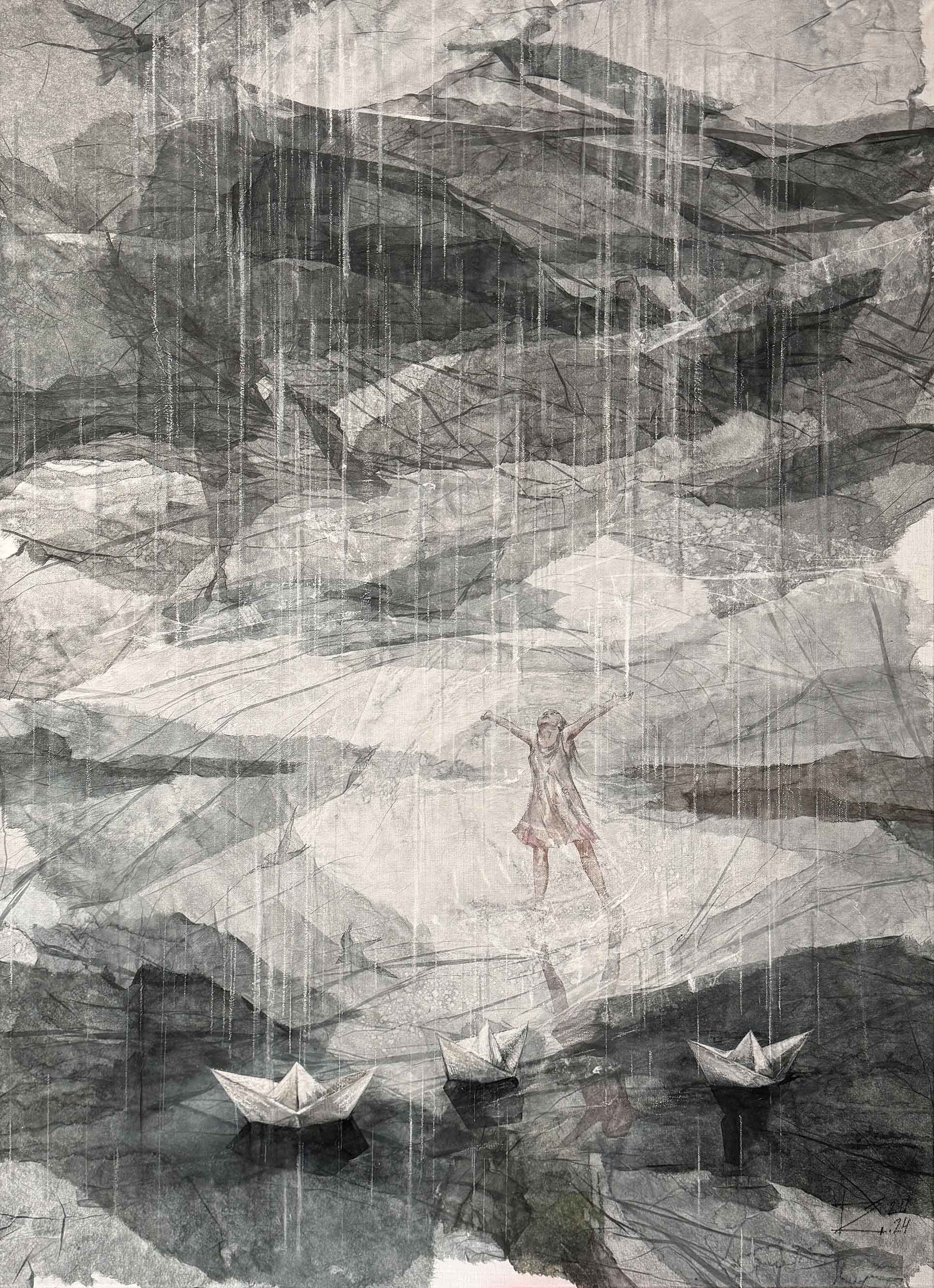
‘A Glimmer of Light.’ Alena Chernykh. 2024. Collage painting on canvas. 110 x 80 cm. Courtesy of the P.S.Grig Art Gallery and the artist.
Enjoy more of Alena Chernykh’s beautiful artworks.
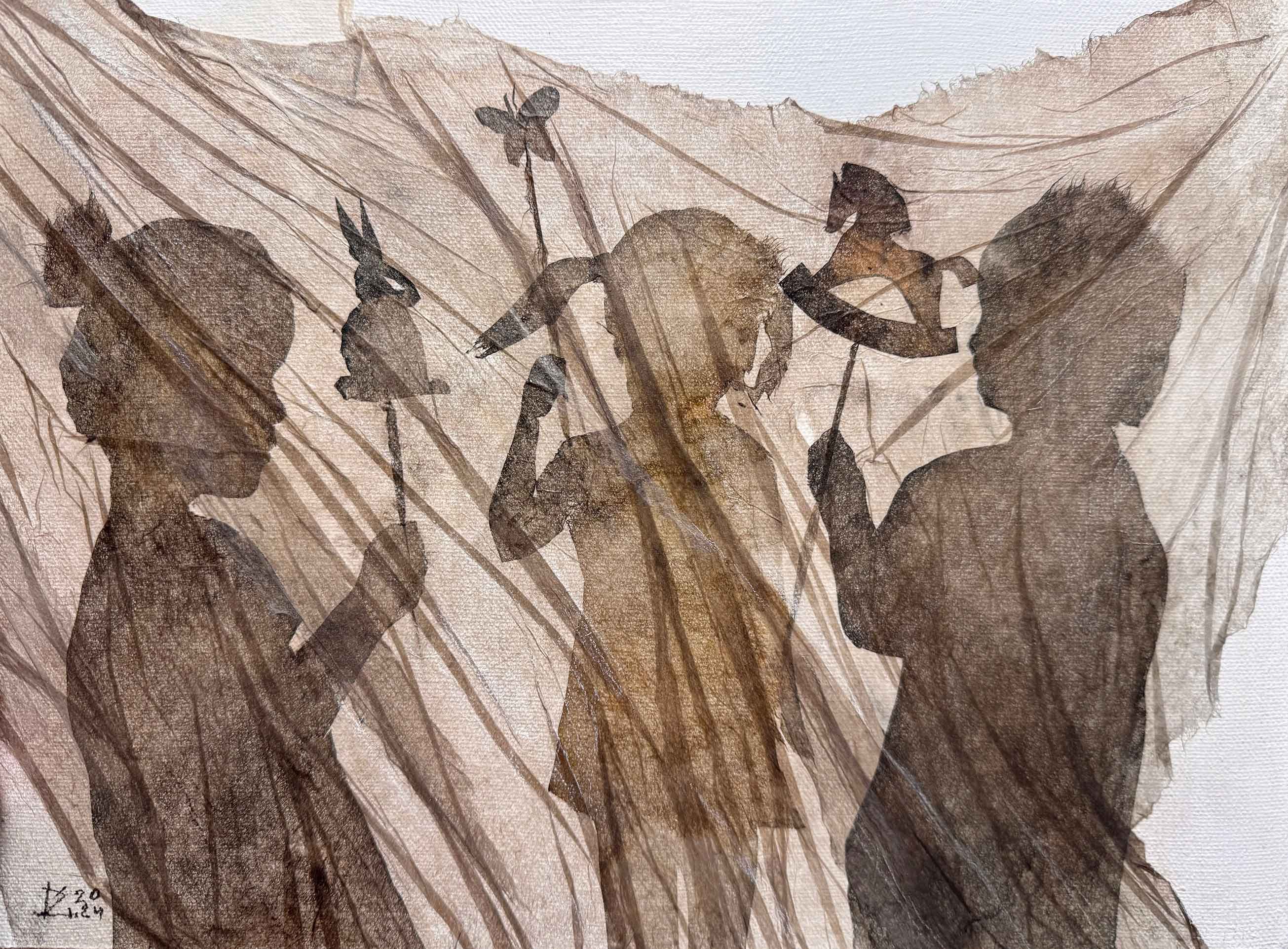
‘Shadows of Childhood.’ Alena Chernykh. Collage painting on canvas. 25 x 35 cm. Courtesy of the P.S.Grig Art Gallery and the artist.
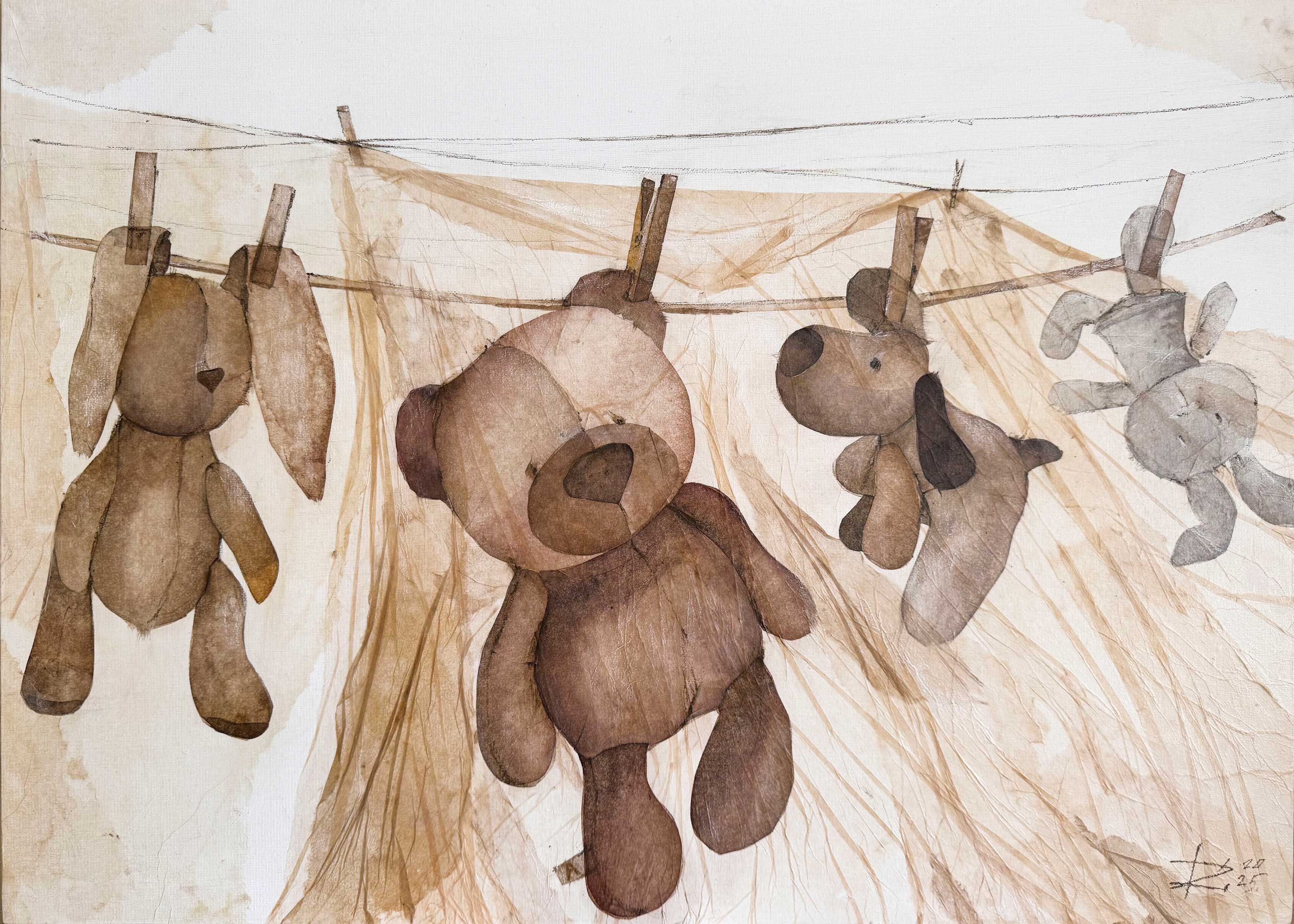
‘Sincere Love.’ Alena Chernykh. 2025. Collage painting on canvas. 50 x 70 cm. Courtesy of the P.S.Grig Art Gallery and the artist.
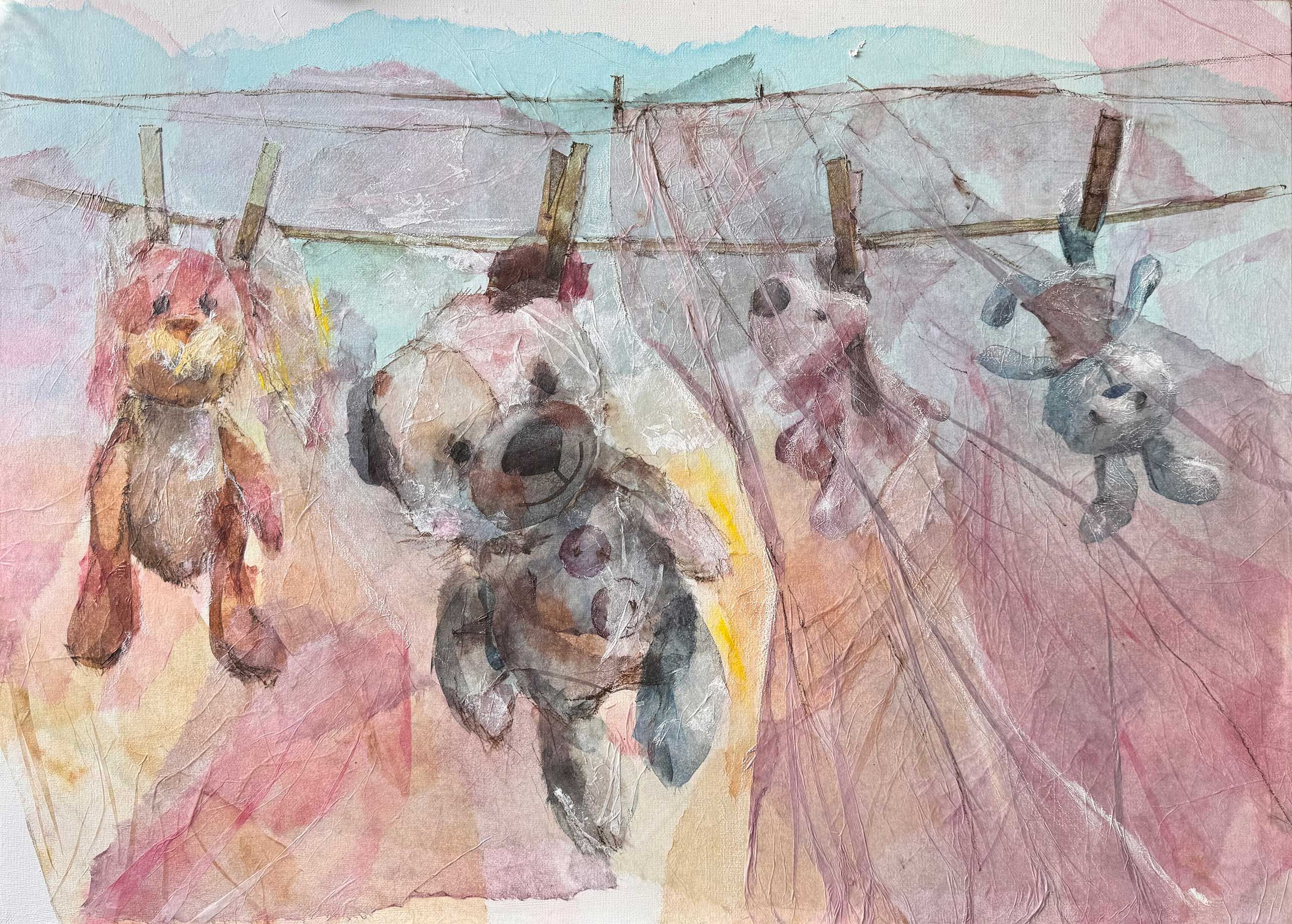
Sincere Love.’ Alena Chernykh. 2025. Collage painting on canvas. 50 x 70 cm. Courtesy of the P.S.Grig Art Gallery and the artist.
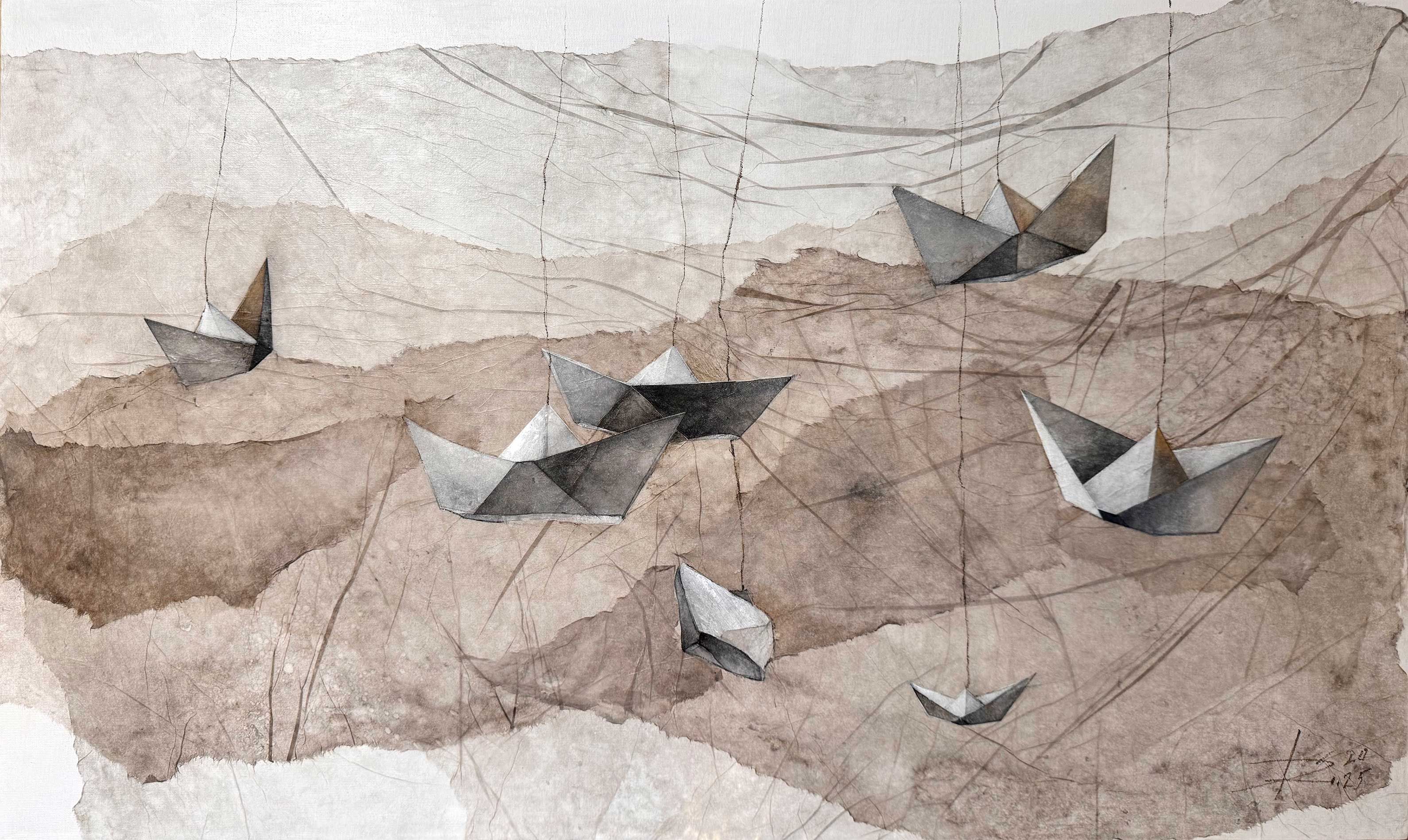
'On a Thin Thread.' Alena Chernykh. 2025. Collage on canvas. 60 x 100 cm. Courtesy of the P.S.Grig Art Gallery and the artist.
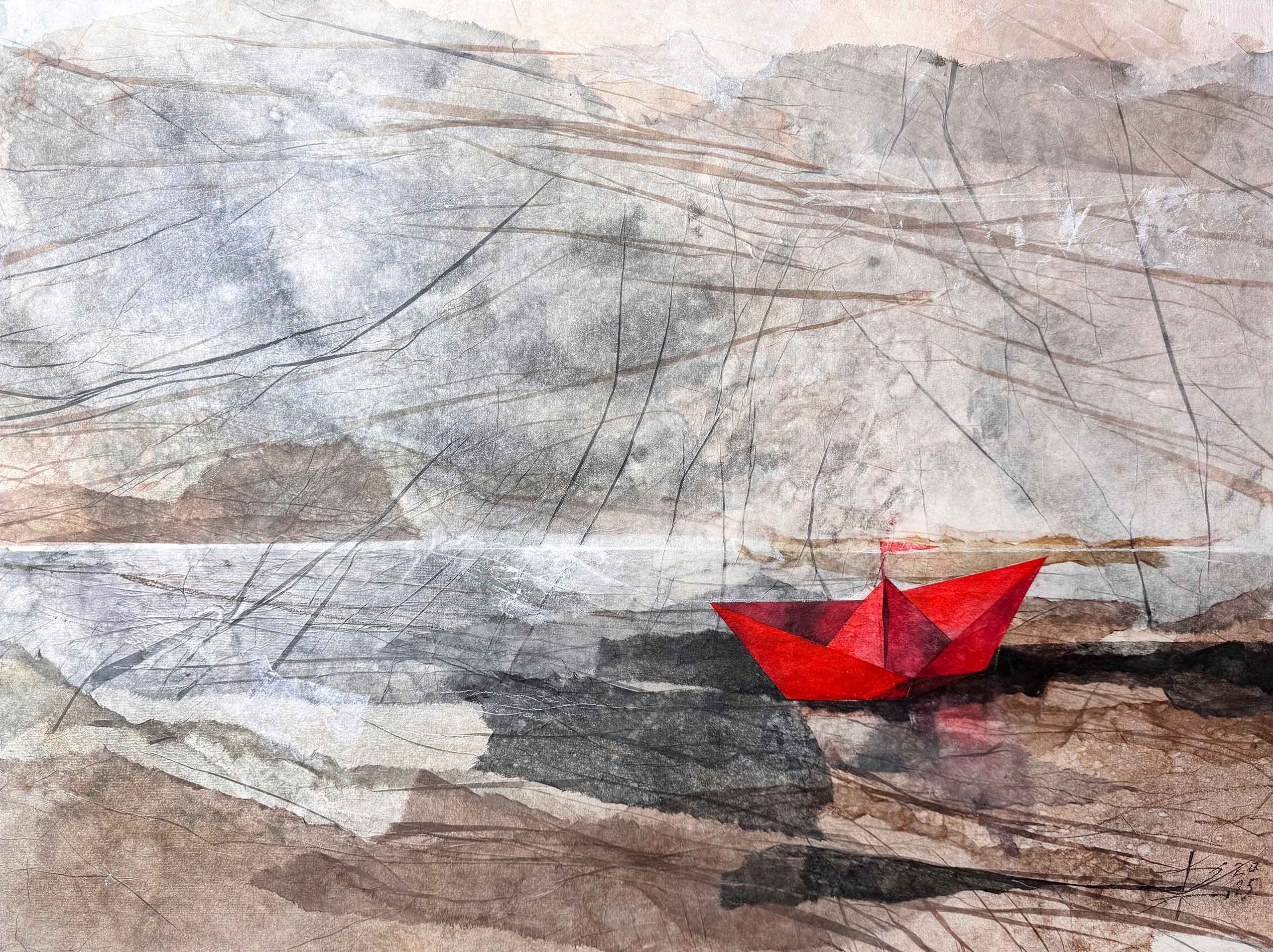
‘Red Light Beyond the Gray.’ Alena Chernykh. 2025. Collage painting on canvas. 60 x 80 cm. Courtesy of the P.S.Grig Art Gallery and the artist.
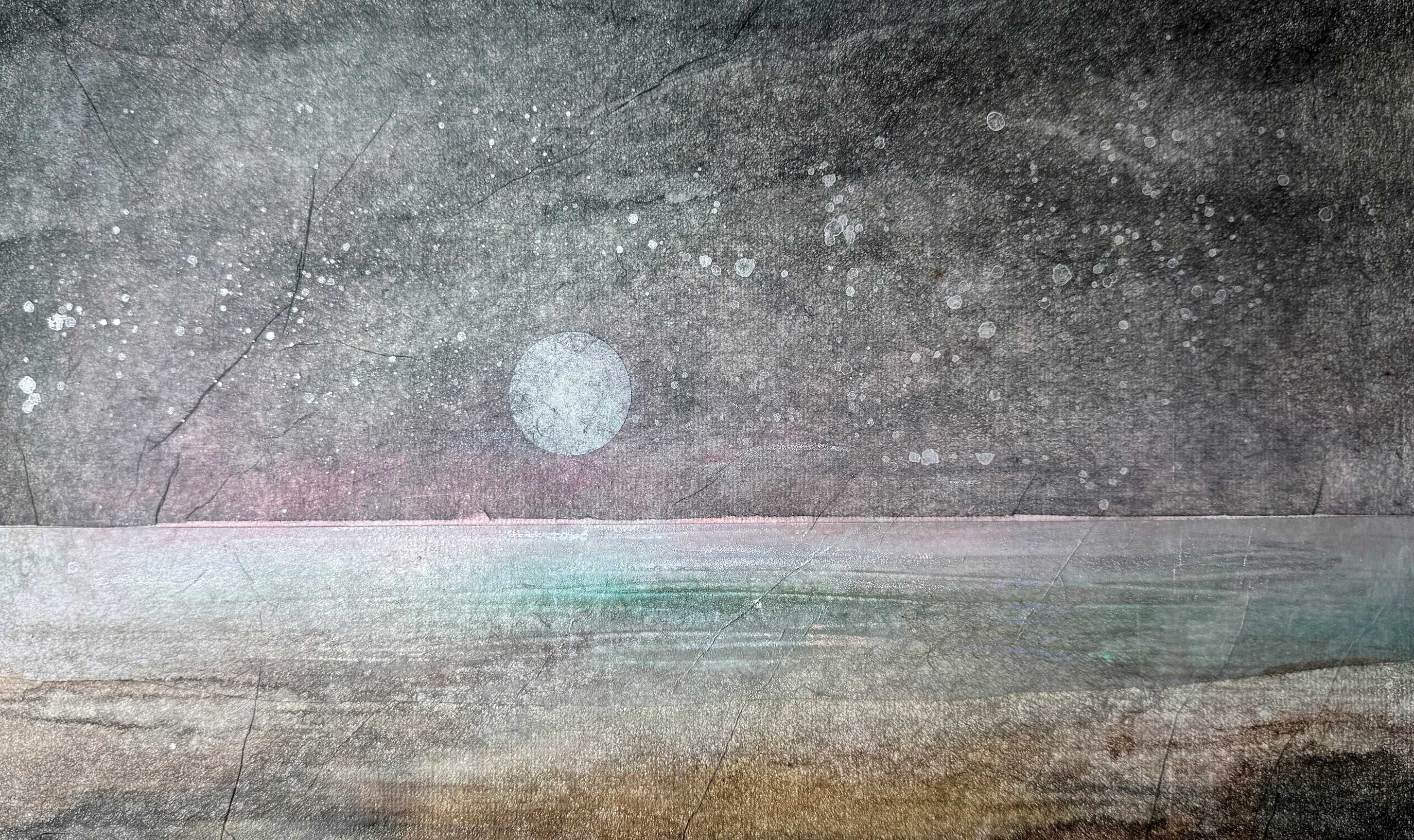
‘Star Trek.’ Alena Chernykh. Collage-style graphic. 27 x 39 cm. Courtesy of the P.S.Grig Art Gallery and the artist.
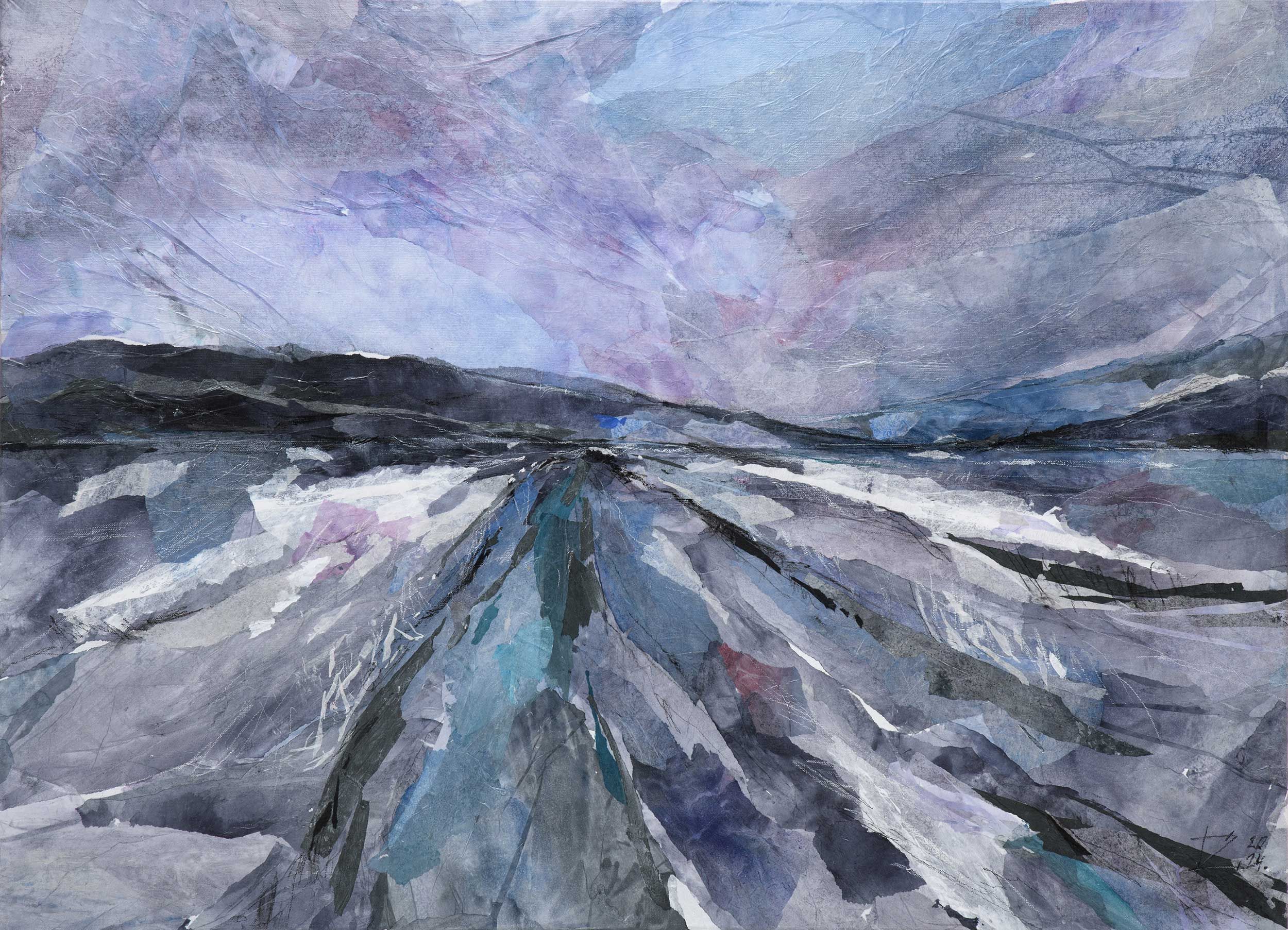
‘Ashen Dawn.’ Alena Chernykh. 2024. Collage painting on canvas. 70 x 100 cm. Courtesy of the P.S.Grig Art Gallery and the artist.
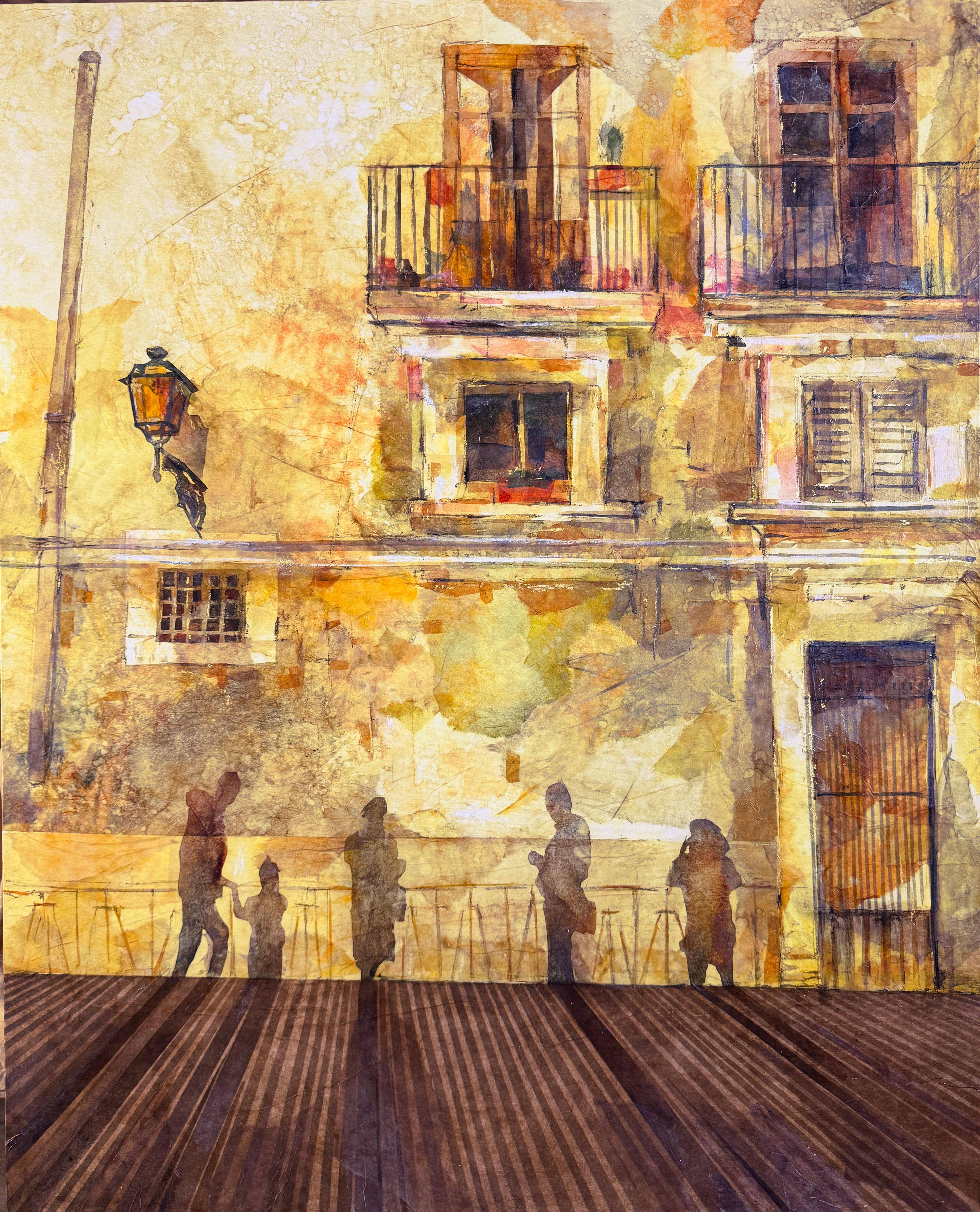
'Sunny Day.' Alena Chernykh. 2025. Collage painting. 100 x 80 cm. Courtesy of the P.S.Grig Art Gallery and the artist.
Hassan Albather is a cultural writer, editor and translator.