Edition #31
Edition #30
Edition #29
Edition #28
Edition #27
Edition #26
Edition #25
Edition #24
Edition #23
Edition #22
Edition #21
Edition #20
Edition #19
Edition #18
Edition #17
Edition #16

Edition #15

Edition #14

Edition #13
Edition #12
Edition #11
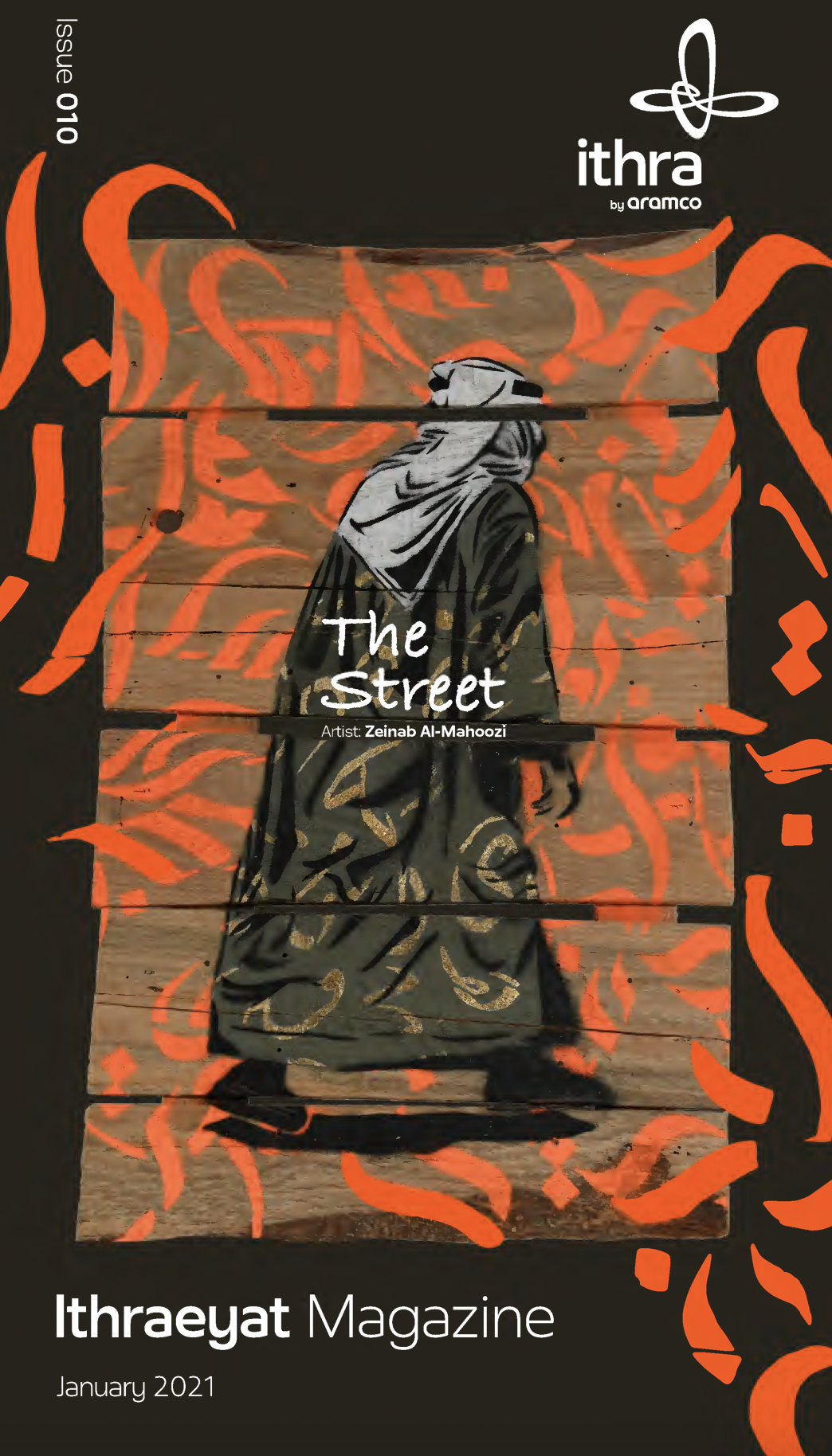
Edition #10
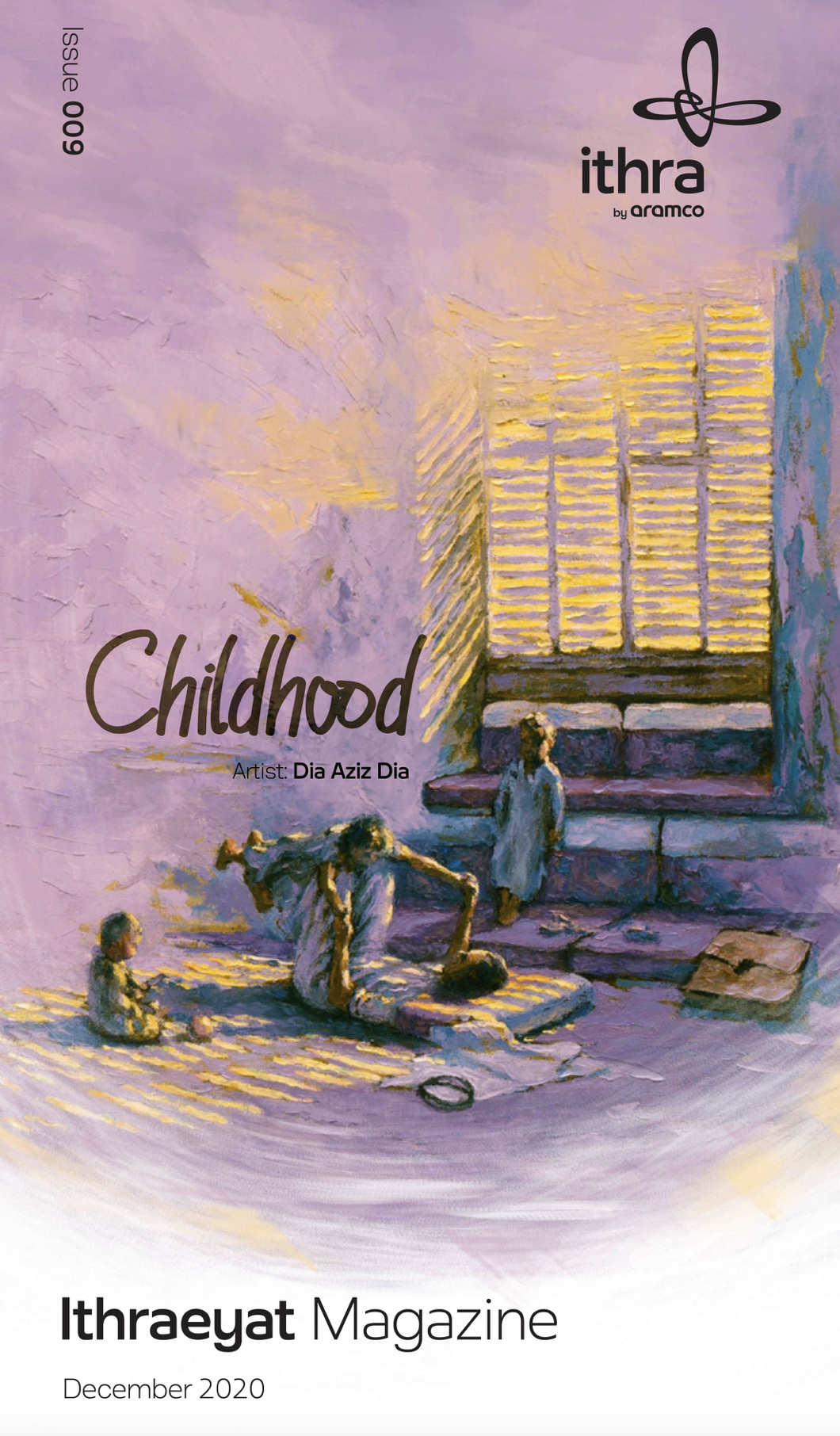
Edition #9

Edition #8
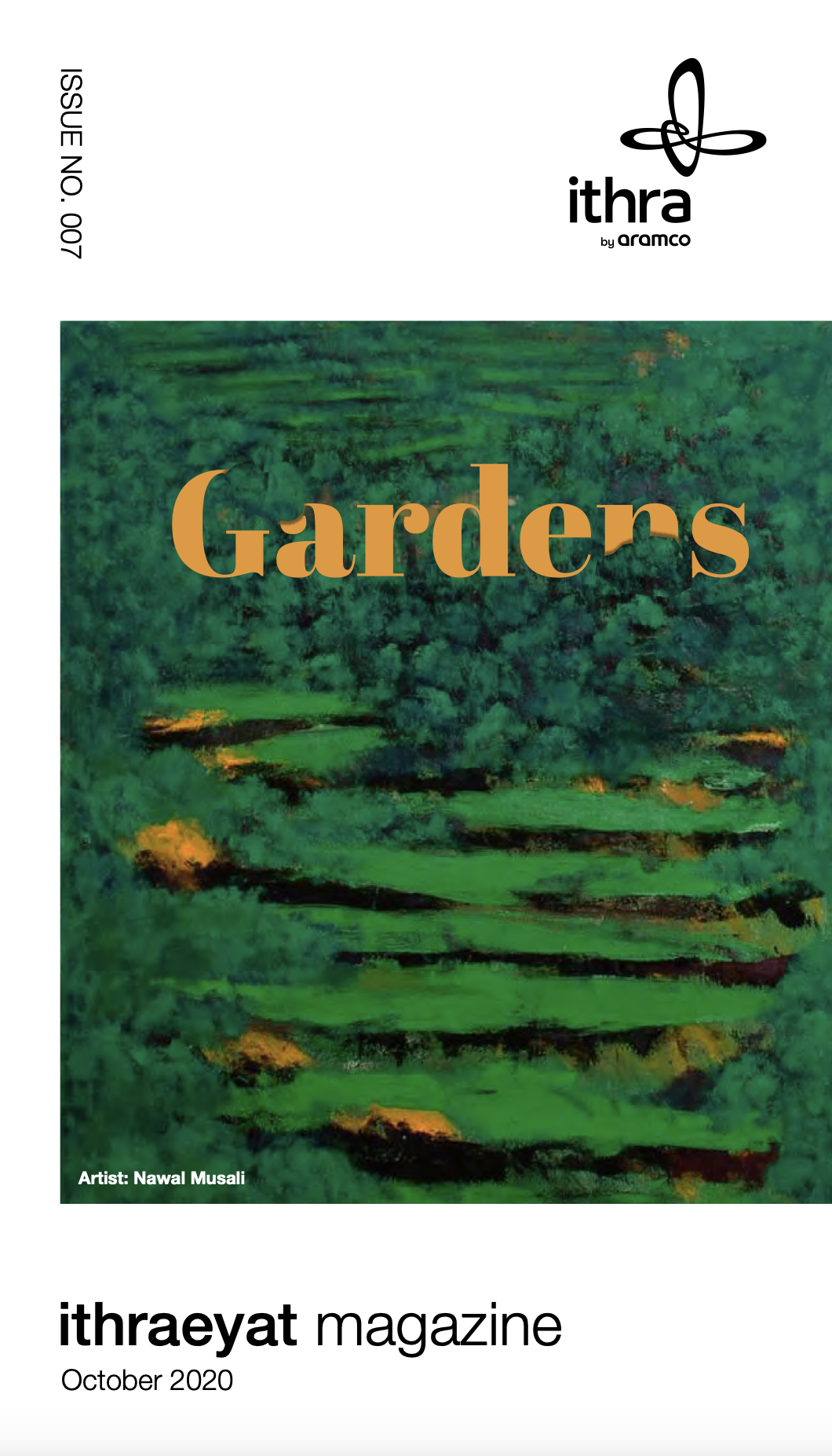
Edition #7
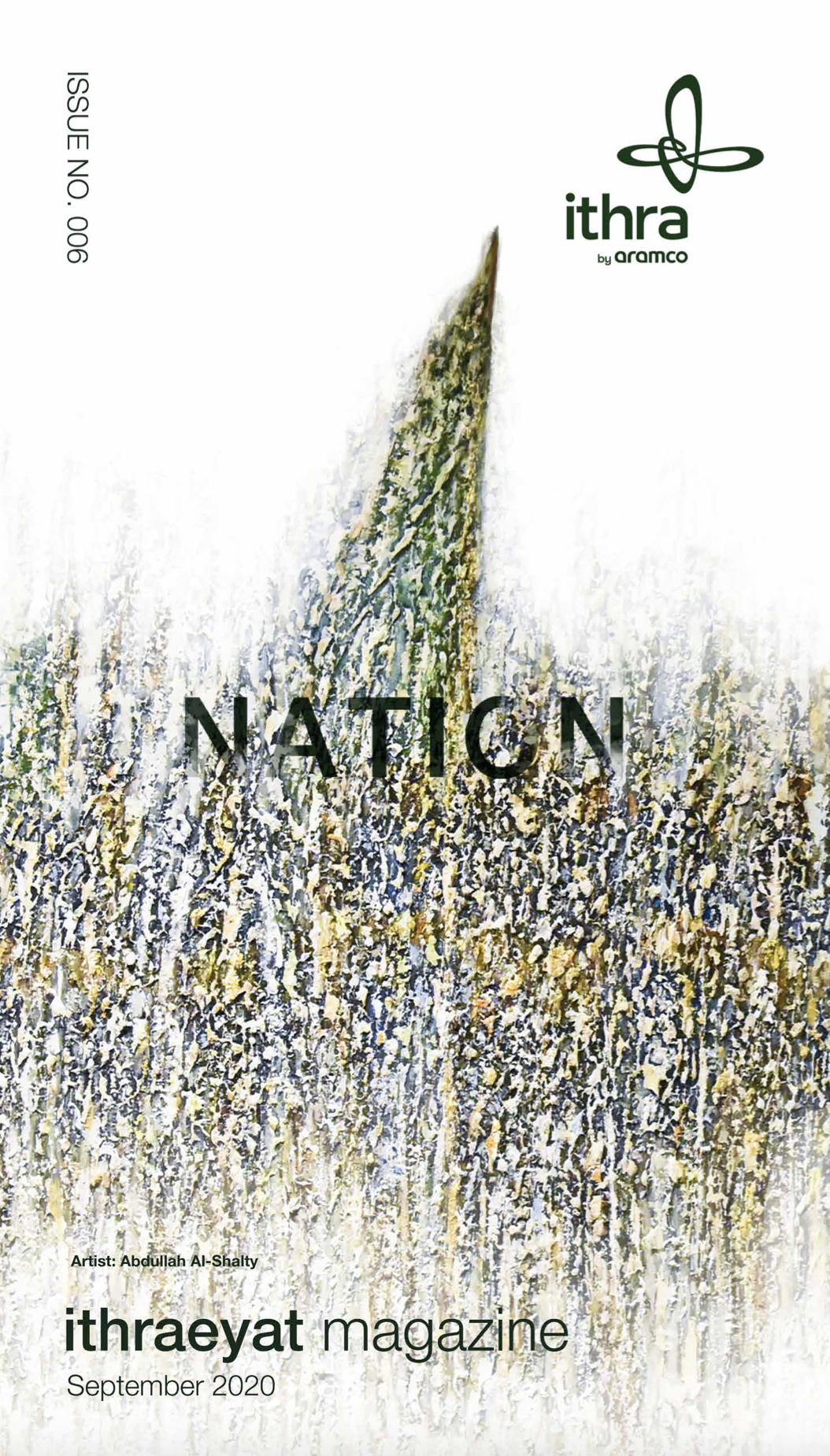
Edition #6
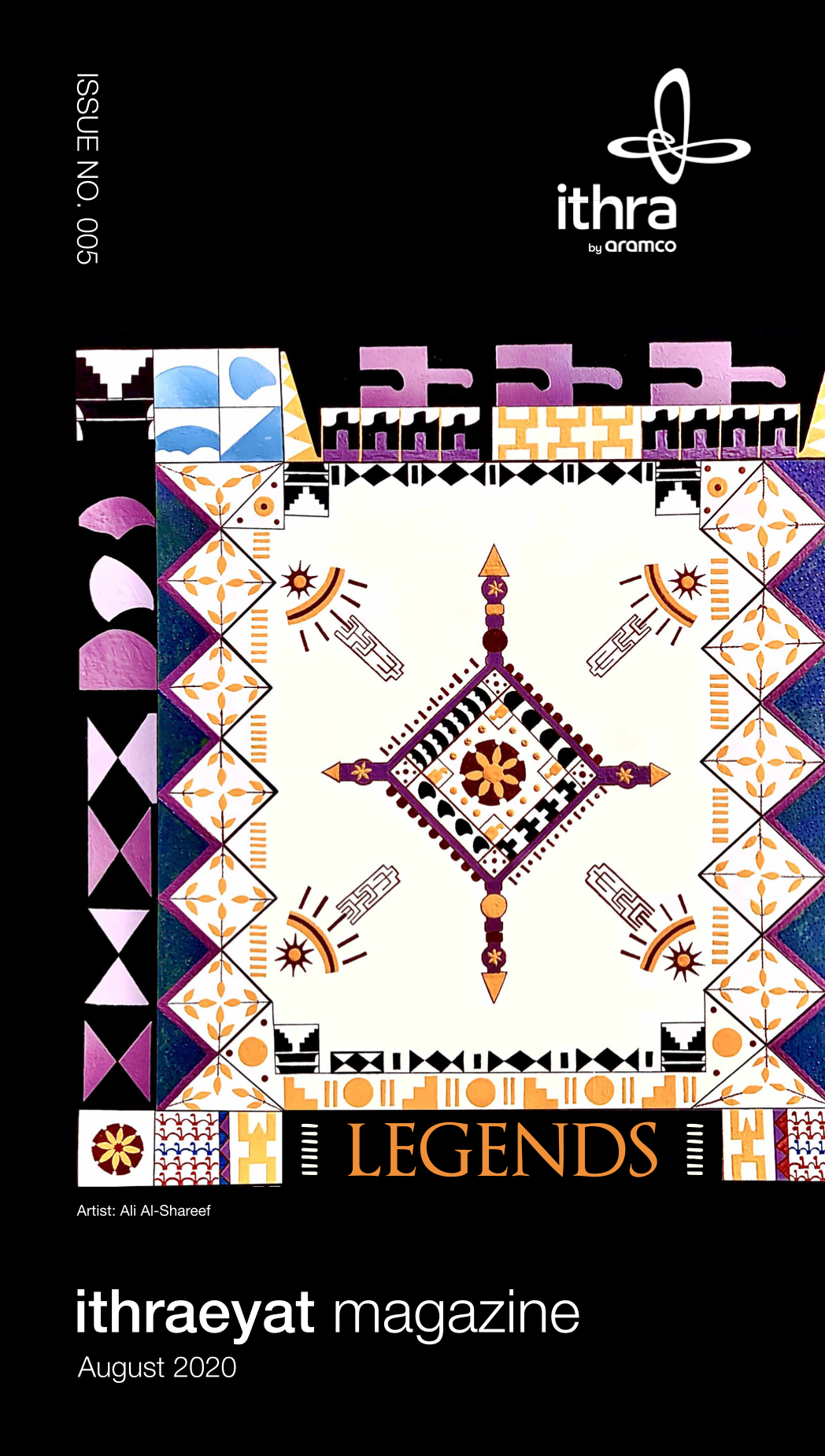
Edition #5
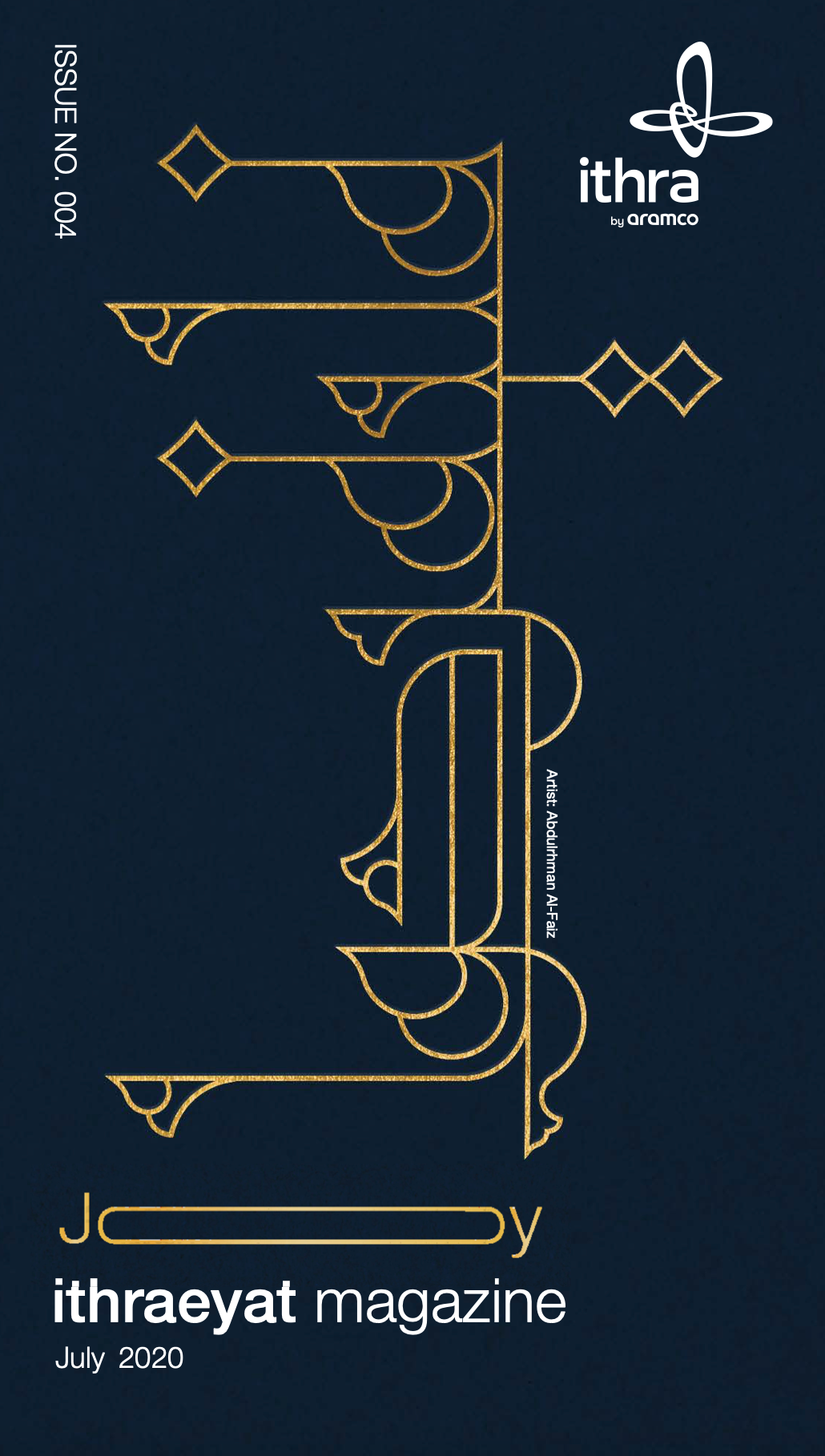
Edition #4
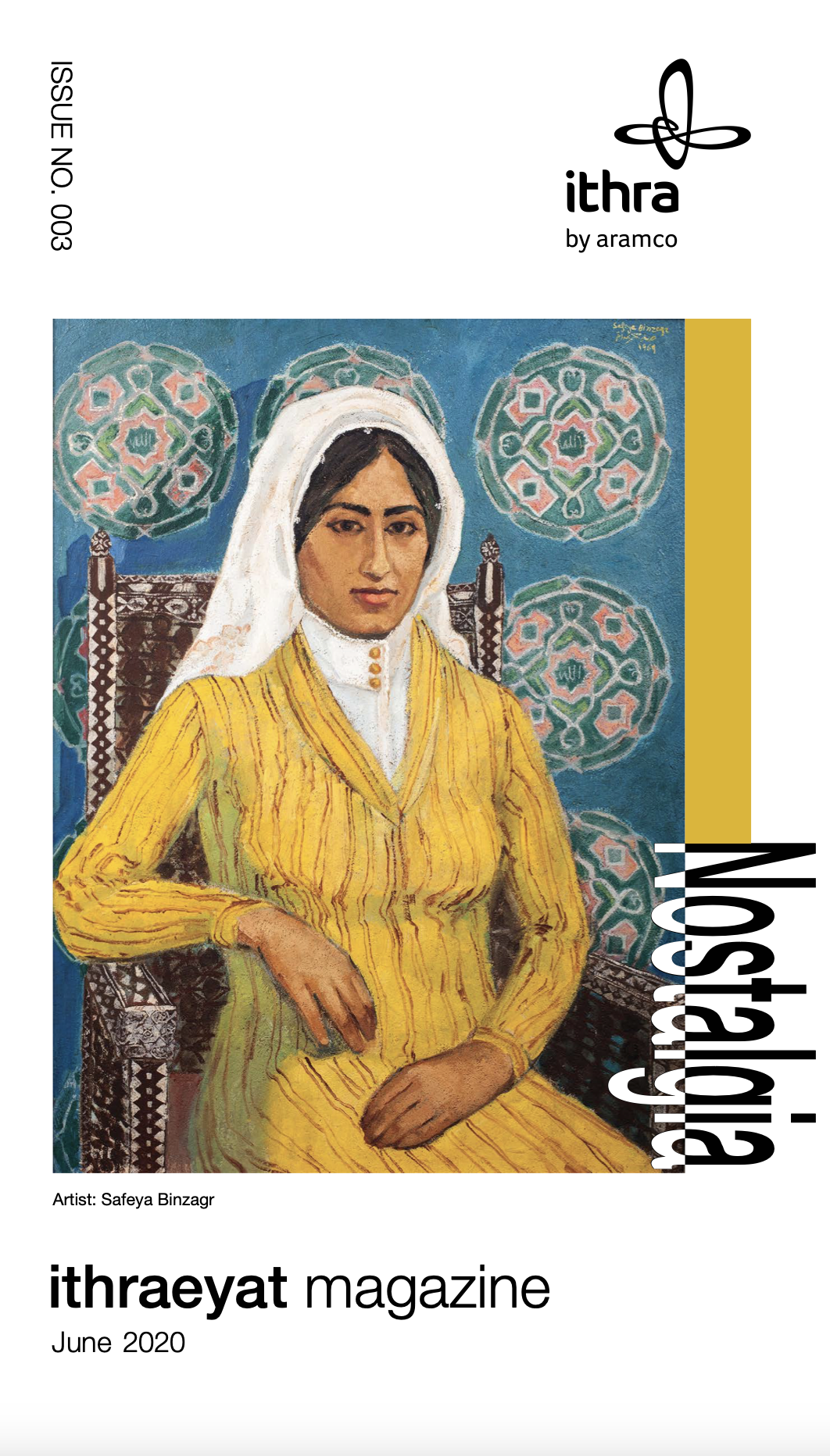
Edition #3
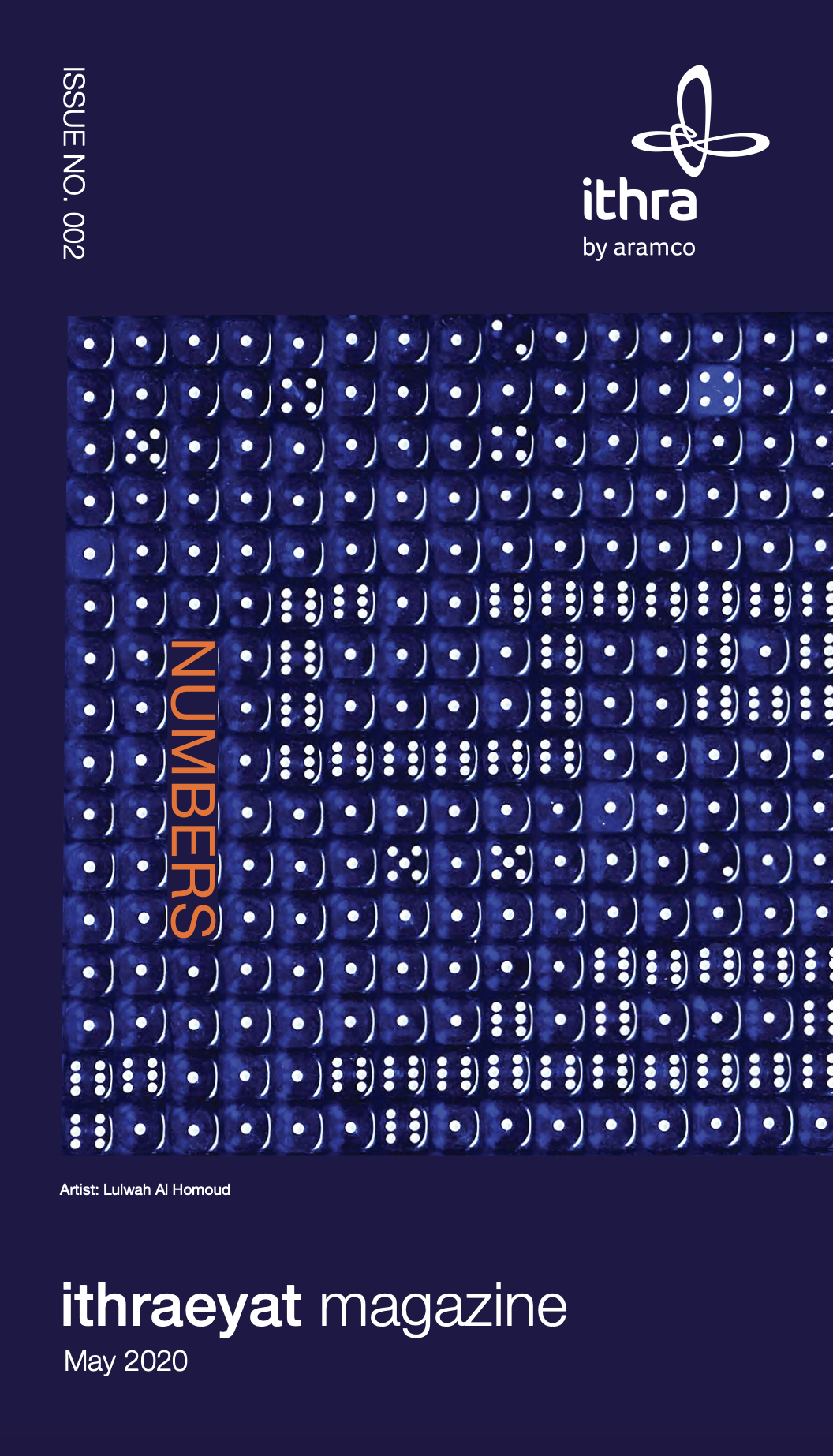
Edition #2
Edition #1
Exclusive Interview
The Geometry of Awe
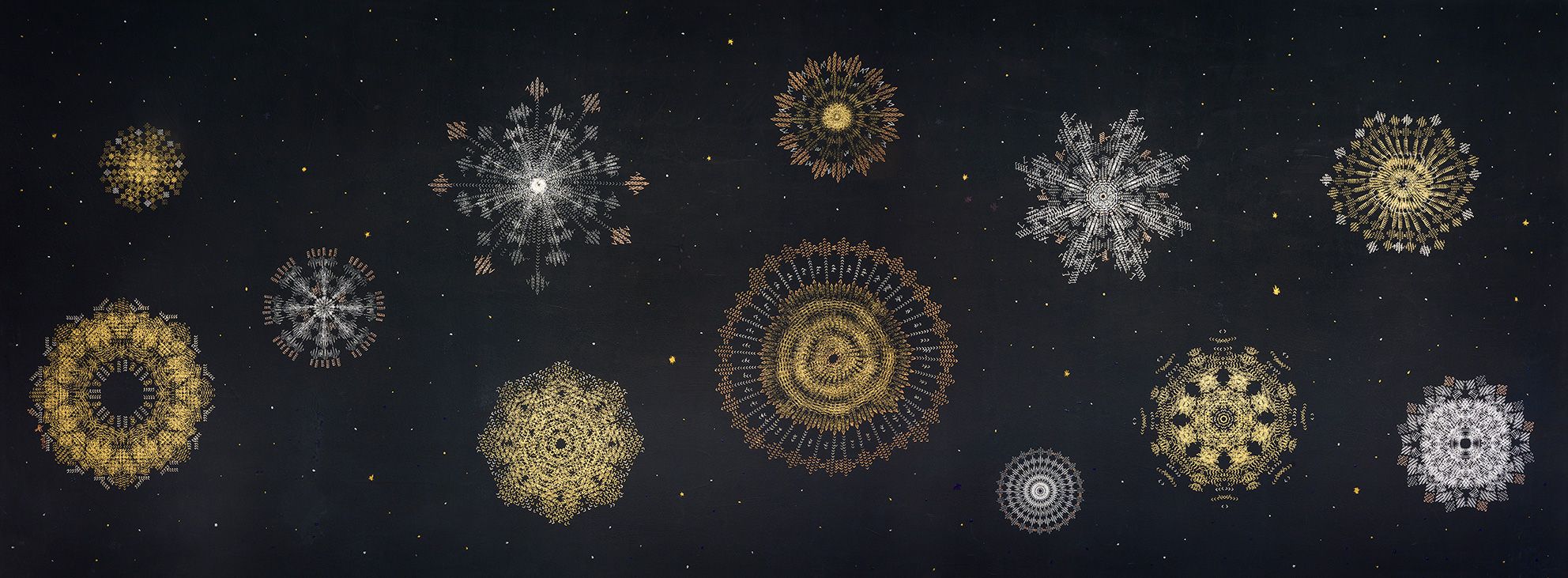
‘The Language of Existences Mural.’ Lulwah Al Homoud. 2020. Mixed media on canvas. 467 x 176 cm. Courtesy of the artist.
9 minutes read
December 30, 2026
Artist Lulwah Al Homoud
Lulwah Al Homoud is one such artist, one who finds wonder and meaning in the geometry and perfection of the skies. In her work, she explores patterns, balance and harmony, and through that pursuit, a deeper sense of her own purpose and belonging. Since her work graced the cover Ithraeyat’s Numbers edition, the magazine’s second issue, published in May 2020, she has received first prize in the inaugural edition of the Visual Arts Commission’s National Award for Visual Arts and the Rawabi Award from the Saudi British Society in London for strengthening cultural ties between the two countries.
Not only does she align her inner world with the universe around her, but Lulwah also shares her creative vision with others. To create opportunities for fellow artists, she established ISDAR, a space where artists can learn, experiment, and develop their own practices. The center, whose name derives from the Arabic word meaning “to release,” is based in Riyadh and showcases established artists while mentoring emerging ones.
In this conversation with Ithraeyat, Lulwah reflects on what looking up means to her, her evolving artistic practice, and the importance of nurturing the next generation of artists while continuing to support established ones.
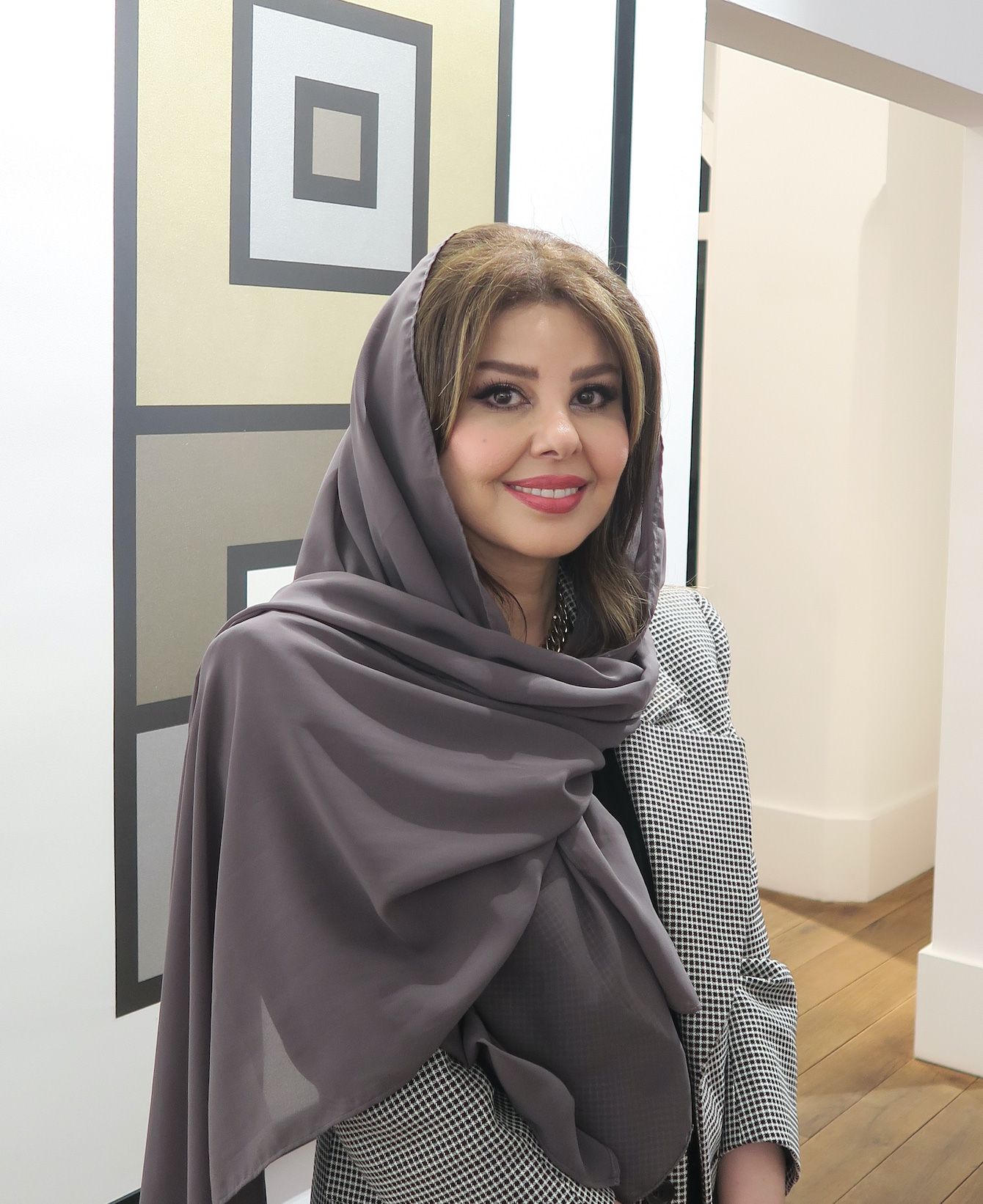
The renowned artist Lulwah Al Homoud.
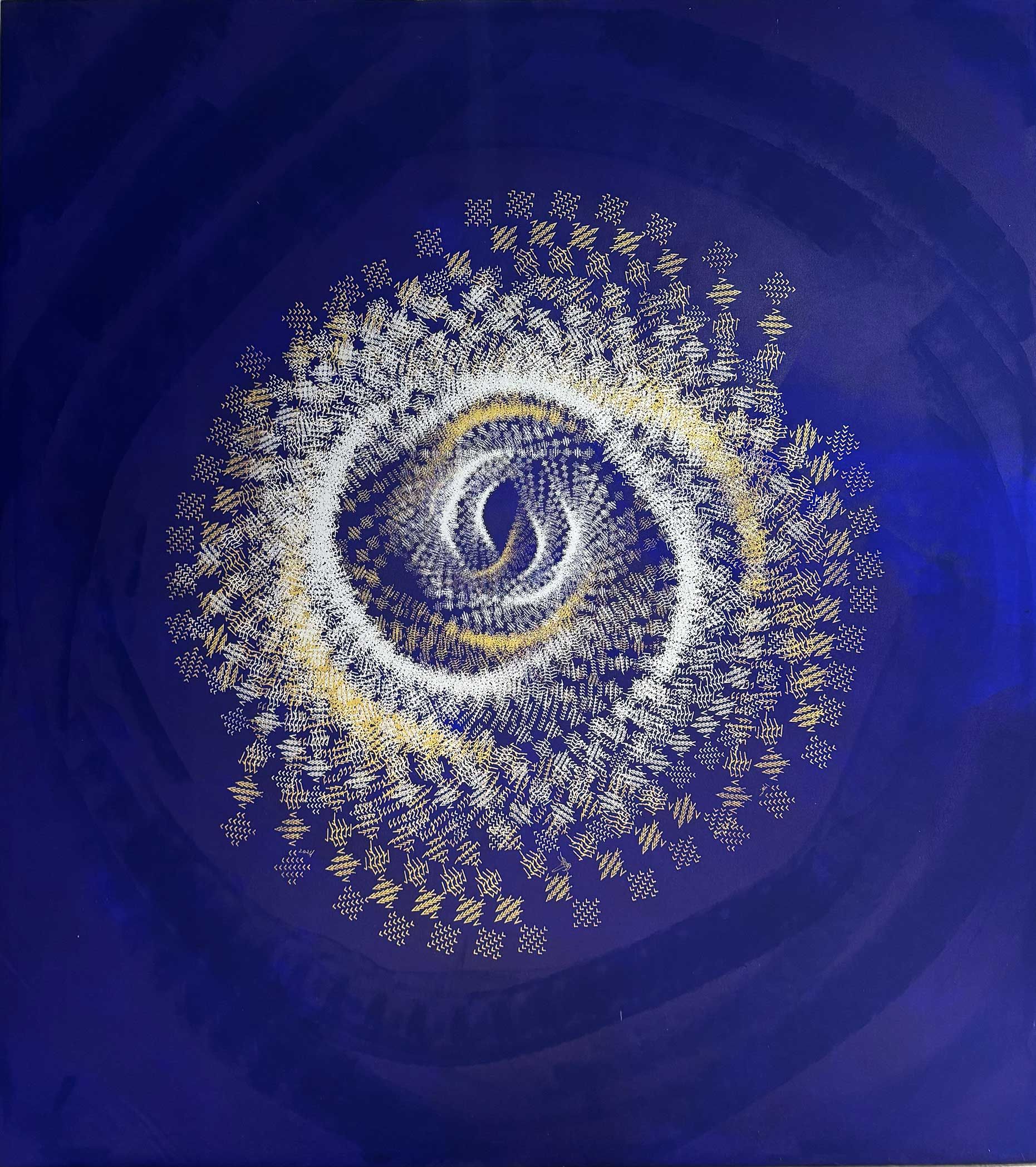
‘The Language of Existence Blue Series: Al Moez.’ Lulwah Al Homoud. 2024. Mixed media on canvas. 175 x 195 cm. Courtesy of the artist.
Looking up is an encounter with ourselves, with our humanity, with the infinite. The celestial bodies that swirl and spin around us have long served as metaphorical playground for our imaginations and fascination. Their movements are traced, their patterns are followed, and their very existence provides fodder for creative minds. For centuries, artists have grappled with how to translate, capture, and convey the significance of this otherworldly spectacle unfolding above us—striving to find language, both verbal and visual, that expresses our search for meaning, purpose, and a sense of place in the Universe.
Q1. Is there a recent work that feels particularly personal to you or that best represents where you are as an artist today?
My work has never been primarily about my personal life. I have always been drawn to geometry and abstract forms because they allow me to explore ideas that go beyond the individual, connecting us to the universe and to something larger than ourselves.
However, in 2024, I was invited by Cartier to participate in a project celebrating the centenary of the Trinity ring, alongside one hundred international artists. I created a work dedicated to my late sister, who had gifted me the ring. It was a very personal experience, and I found myself working through emotions that I would not normally bring directly into my art. What interested me was finding a way to move beyond the emotion itself and express the spiritual connection behind it. In that sense, the work opened a different door for me.
Q2. We last featured your work in Ithraeyat in 2020, when you spoke about finding beauty and meaning through numbers. More than six years later, how has your work evolved? Has the way you see the world changed?
Of course, many things have changed. I believe we continue to grow through what we learn, what we experience, and the people we encounter. My work remains rooted in geometry because it is the language through which I understand and interpret the world. What has evolved is my relationship with it and my understanding of what it can communicate.
Q3. Your recent work What Does Not Strain has an intriguing title. What inspired the piece, and what does the title mean to you?
The title draws on the Quranic phrase “It is effortless for Me” (هُوَ عَلَيَّ هَيِّنٌ). It speaks to the difference between what we perceive as difficult or impossible and what is effortless for the Creator. I find this idea both humbling and reassuring.
The work brings together the verse in black against a blue ground, crossed by a bold golden line. For me, the title is not simply about ease; it is about recognizing the limits of our own understanding and the possibilities that lie beyond them. There are things we struggle to comprehend, yet our inability to understand them does not mean they are beyond possibility.
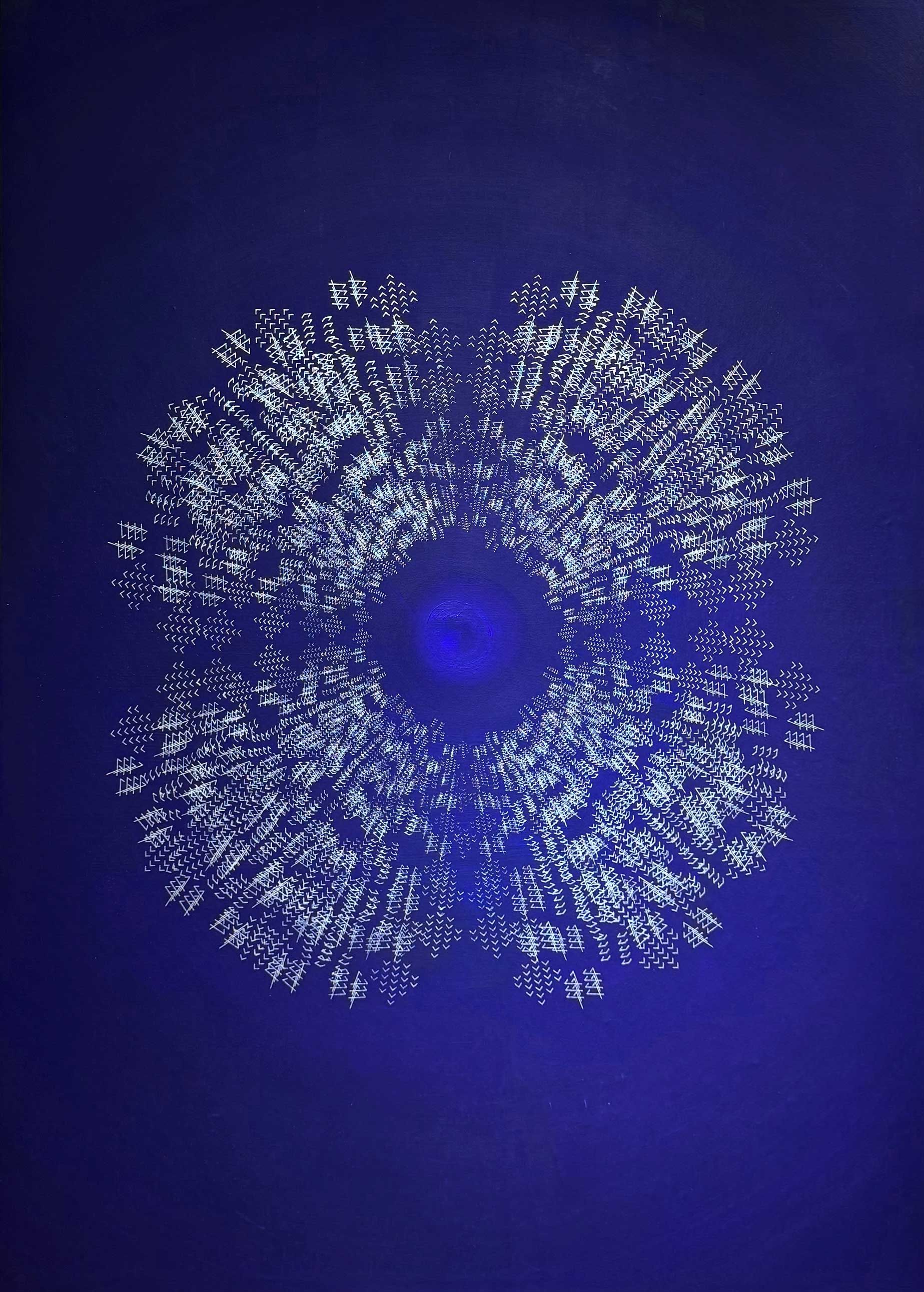
‘The Language of Existence Blue Series: IQRAA 2.’ Lulwah Al Homoud. 2025. Mixed media on canvas. 130 x 180 cm. Courtesy of the artist.
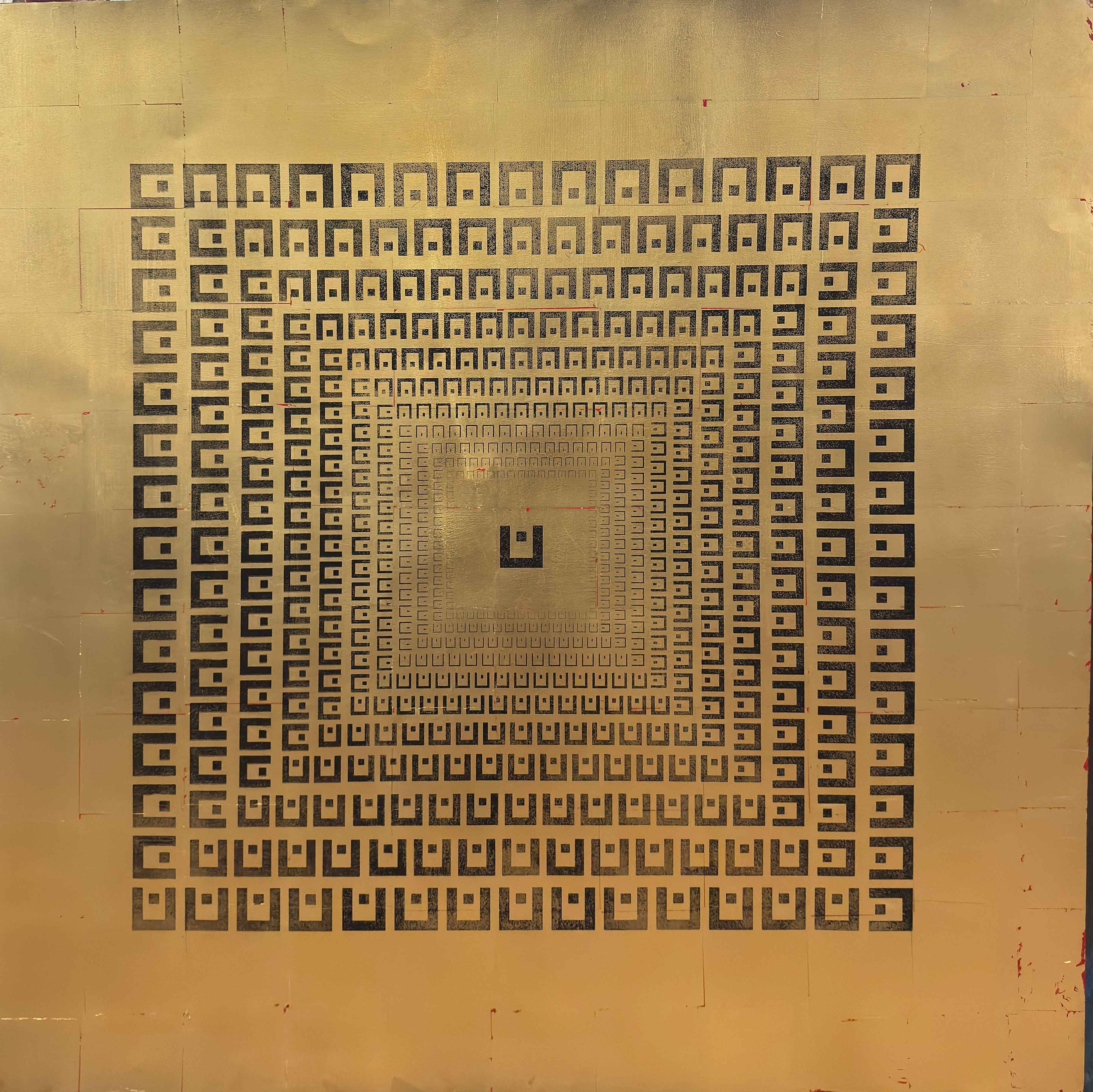
‘NOUN.’ Lulwah Al Homoud. 2025. Mixed media on archival paper. 150 x 150 cm. Courtesy of the artist.
Q4. People have always looked to the sky for answers, guidance, or comfort. Looking up can also make us feel both incredibly small and part of something much bigger. What does looking up mean to you, and how does that feeling find its way into your art?
The sky has always inspired me. I find myself watching its colors change, waiting for that particular blue to appear. It is something I can look at repeatedly without ever feeling that I have seen it enough.
Looking at the sky reminds me that we are part of something much larger than ourselves. Our physical place in the universe may seem insignificant, yet what we do with our lives matters enormously. I find that balance fascinating.
The sky also makes me think about the limits of our knowledge. What we see is only part of a much larger reality, with layers and dimensions we cannot fully comprehend. This sense of looking beyond what is immediately visible has always been present in my work. Geometry gives me a way to explore that relationship between what we can understand and what remains unknown.
Q5. What does art mean to you personally? Has its meaning or purpose changed for you over the years?
Art has been a major part of my life for more than two decades. Through it, many things have become clearer to me, and it has helped me grow, particularly on a spiritual level. It has also introduced me to different cultures, ideas, and ways of understanding the world.
I have always believed that learning through art is a process of give and take. You receive knowledge from others, but you also have a responsibility to share what you have learned. Art has been my gateway to knowledge, and over time, that has come to mean more than what happens in the studio. It also means creating opportunities for others to learn and discover things for themselves.
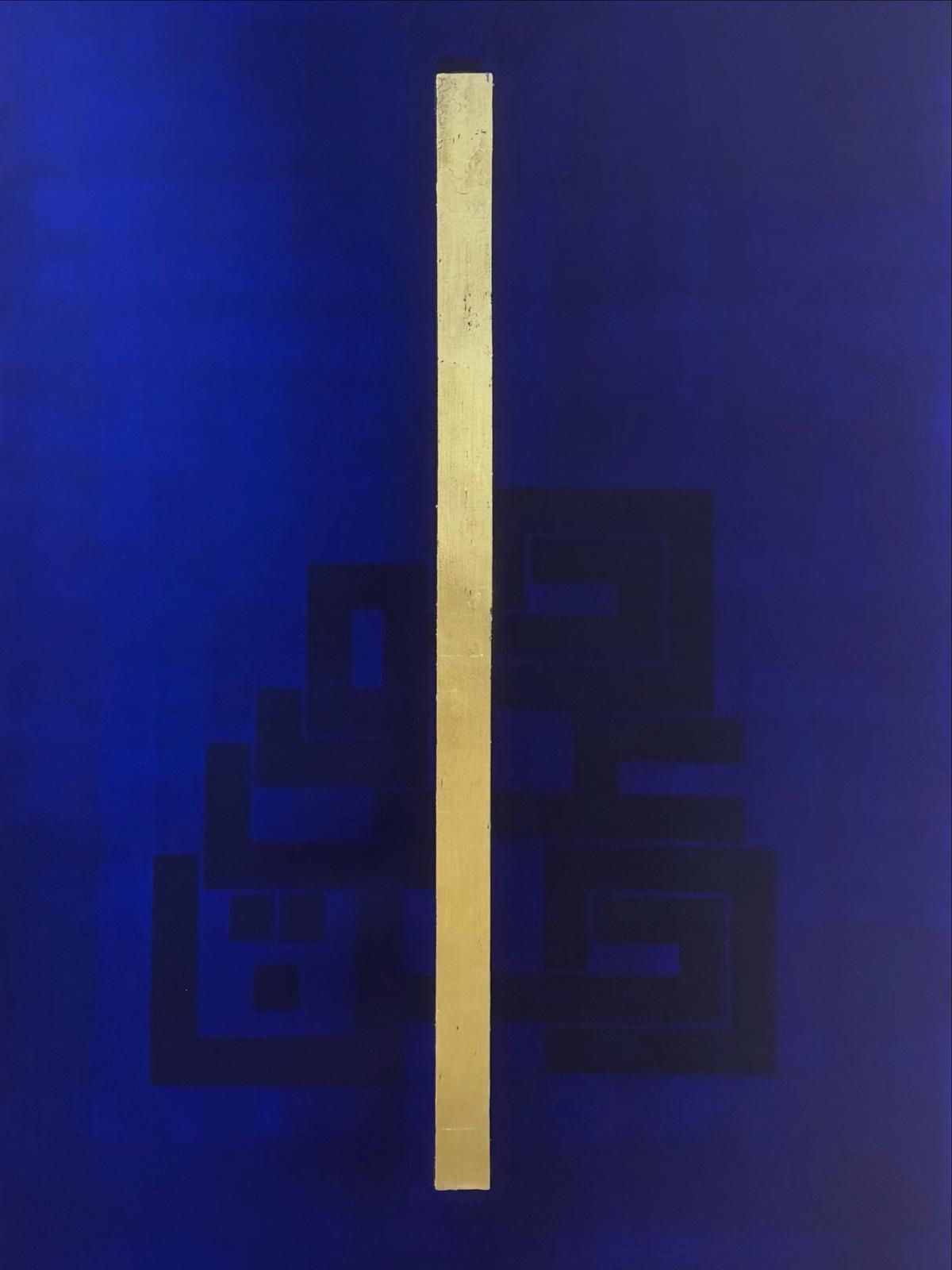
‘What Does Not Strain.’ Lulwah Al Homoud. 2026. Mixed media on archival paper. 153 x 90 cm. Courtesy of the artist.
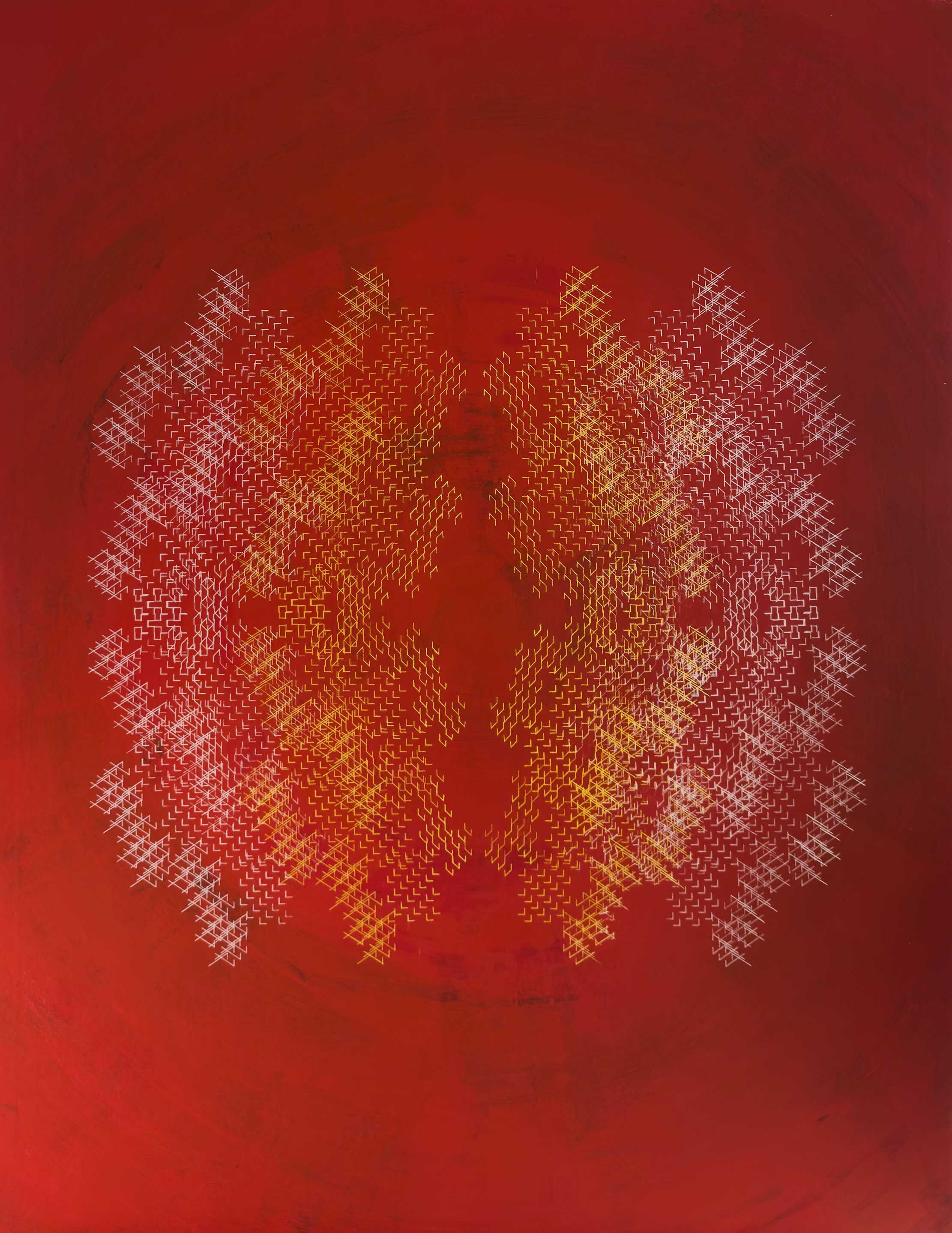
‘The Language of Existence Blue Series: IQRAA 4.’ Lulwah Al Homoud. 2025. Mixed media on canvas. 130 x 180 cm. Courtesy of the artist.
Q6. Your work was recently featured in Same Air. Tell us about that experience. Did it change the way you think about your work or how people connect with it?
Same Air was a valuable exhibition because it brought different artistic expressions from across the Gulf region into a shared context. I find these encounters important because they allow us to recognize both the differences in our experiences and the things that connect us.
When works are presented together, they enter into a conversation that goes beyond the intentions of any individual artist. Each work retains its own identity, but it also becomes part of a wider picture. For me, this is one of the strengths of bringing artists together: it creates room for new perspectives without requiring everyone to speak the same language.
Q7. You’ve also taken on roles as a curator and mentor to younger artists. Has working with other artists influenced your own creative process?
To be honest, helping artists grow along their own paths gives me a great deal of joy. When I meet someone with a strong creative instinct and help them recognize what makes their practice distinctive, I feel that I have become part of their development.
Artists can sometimes lose their way, and I think that is a natural part of the process. What they often need is someone who can help them step back, see the strengths in their work, and understand where they might take it next. I do not believe in directing artists towards my own way of thinking. It is more important to help them find their own.
This work has also reinforced something I believe deeply: knowledge becomes more valuable when it is shared. We are not here forever, but what we teach and what we pass on can continue through others, sometimes for generations. That is a meaningful contribution in itself.
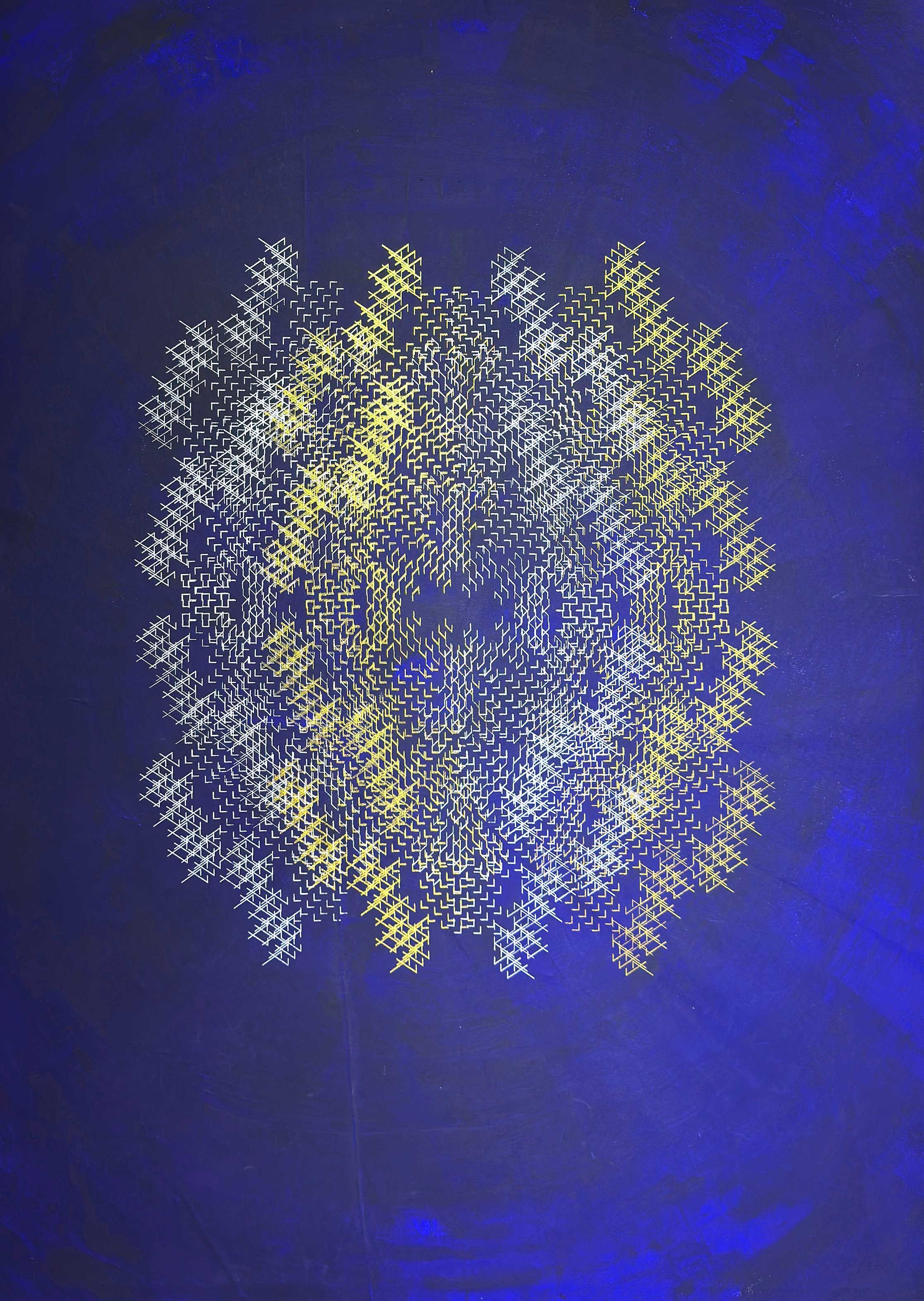
‘The Language of Existence Blue Series: IQRAA 1.’ Lulwah Al Homoud. 2025. Mixed media on canvas. 130 x 180 cm. Courtesy of the artist.
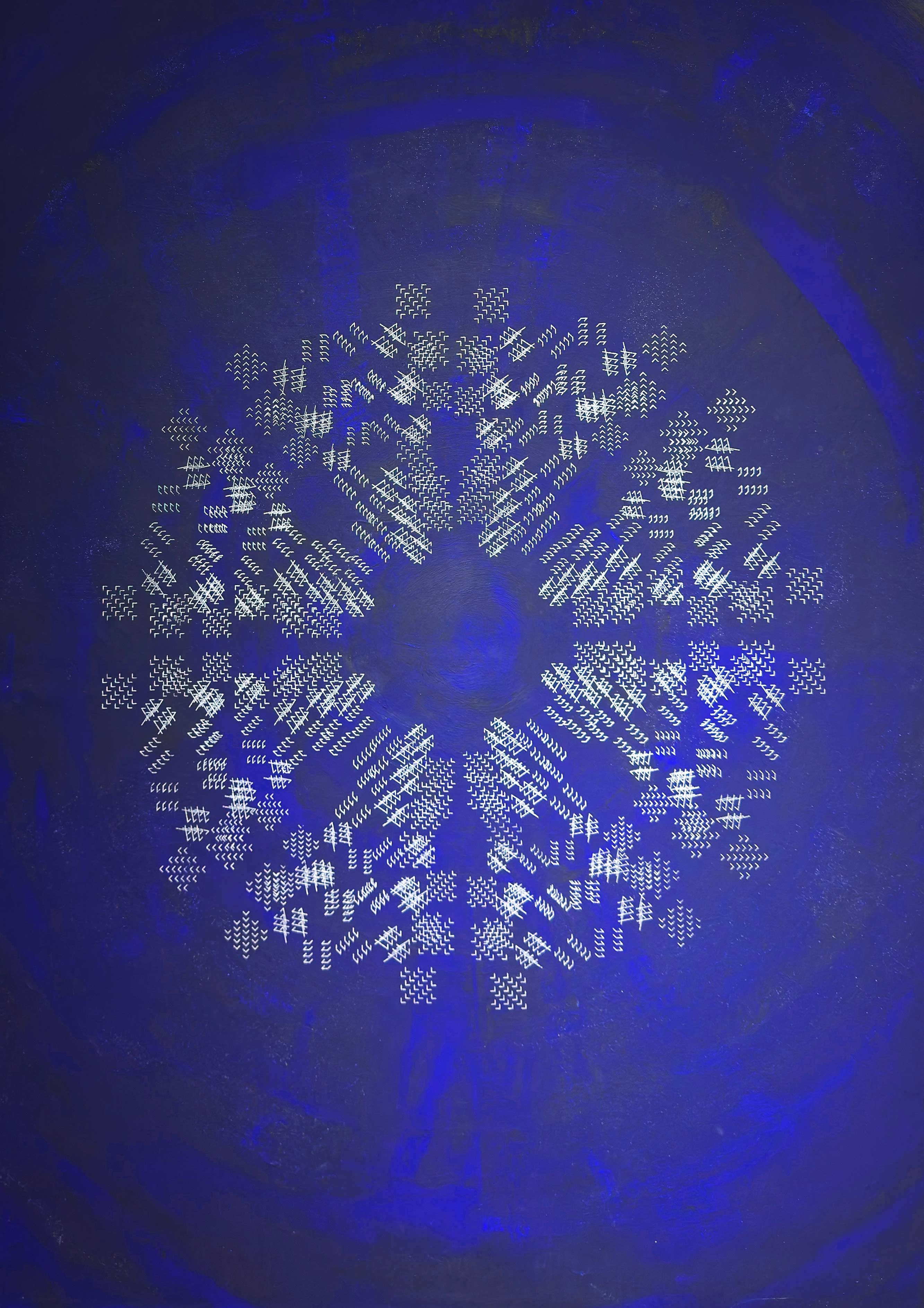
‘The Language of Existence Blue Series: IQRAA 3.’ Lulwah Al Homoud. 2025. Mixed media on canvas. 130 x 180 cm. Courtesy of the artist.
Q8. Has your understanding of the divine changed over the years, and has that influenced your work?
Certainly. I feel more connected now, although I see that connection as something that continues to develop rather than something one eventually completes.
Research has always been important to my practice, particularly my exploration of Islamic art and geometry. The deeper you go, the more connections you begin to discover between art, mathematics, science, and the principles underlying the world around us. These discoveries have strengthened my faith and deepened my sense of wonder.
For me, knowledge and faith are not separate. The more I learn, the more I realize how much remains beyond my understanding. That awareness has a direct influence on my work and on my continued search for the structures and relationships that connect the visible world to something beyond it.
Q9. When you create art, are you solving a mystery or becoming part of a greater one?
I think it is both. I feel that I am part of a greater mystery, trying to understand how its different parts connect. At the same time, making a work involves solving problems at every stage.
I sometimes think of the process as similar to architecture. An architect has to find a logic for every element, making sure that each part relates to the whole. I approach my work in a similar way. Every decision has a reason, whether it concerns a line, a proportion, or the relationship between forms.
Yet even when I find a solution, it often leads to another question. That is what keeps the process alive for me. I am not necessarily trying to solve the greater mystery completely; I am trying to understand my place within it, one step at a time.
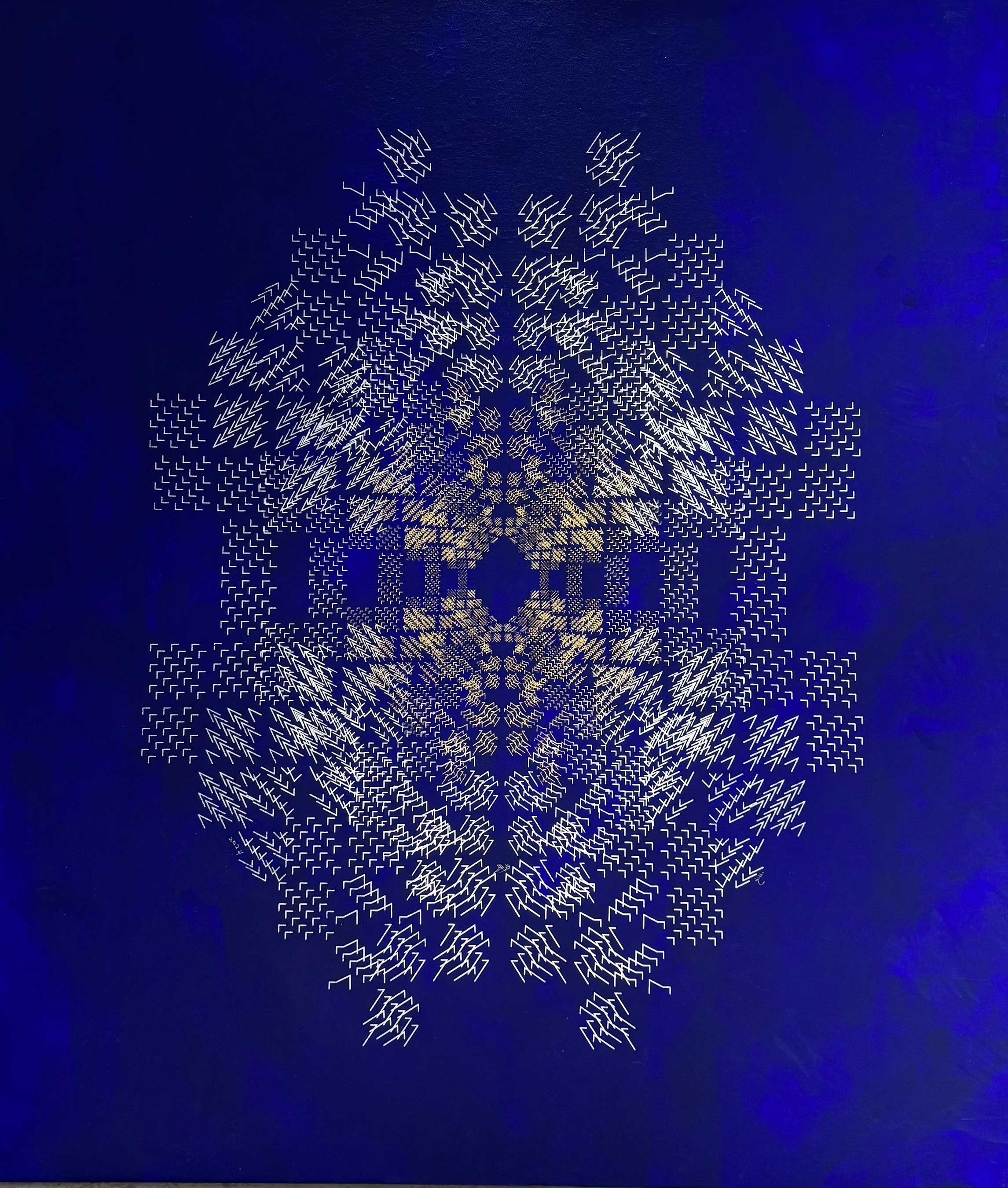
‘The Language of Existence Blue Series: Al Manie.’ Lulwah Al Homoud. 2024. Mixed media on canvas. 175 x 198 cm. Courtesy of the artist.
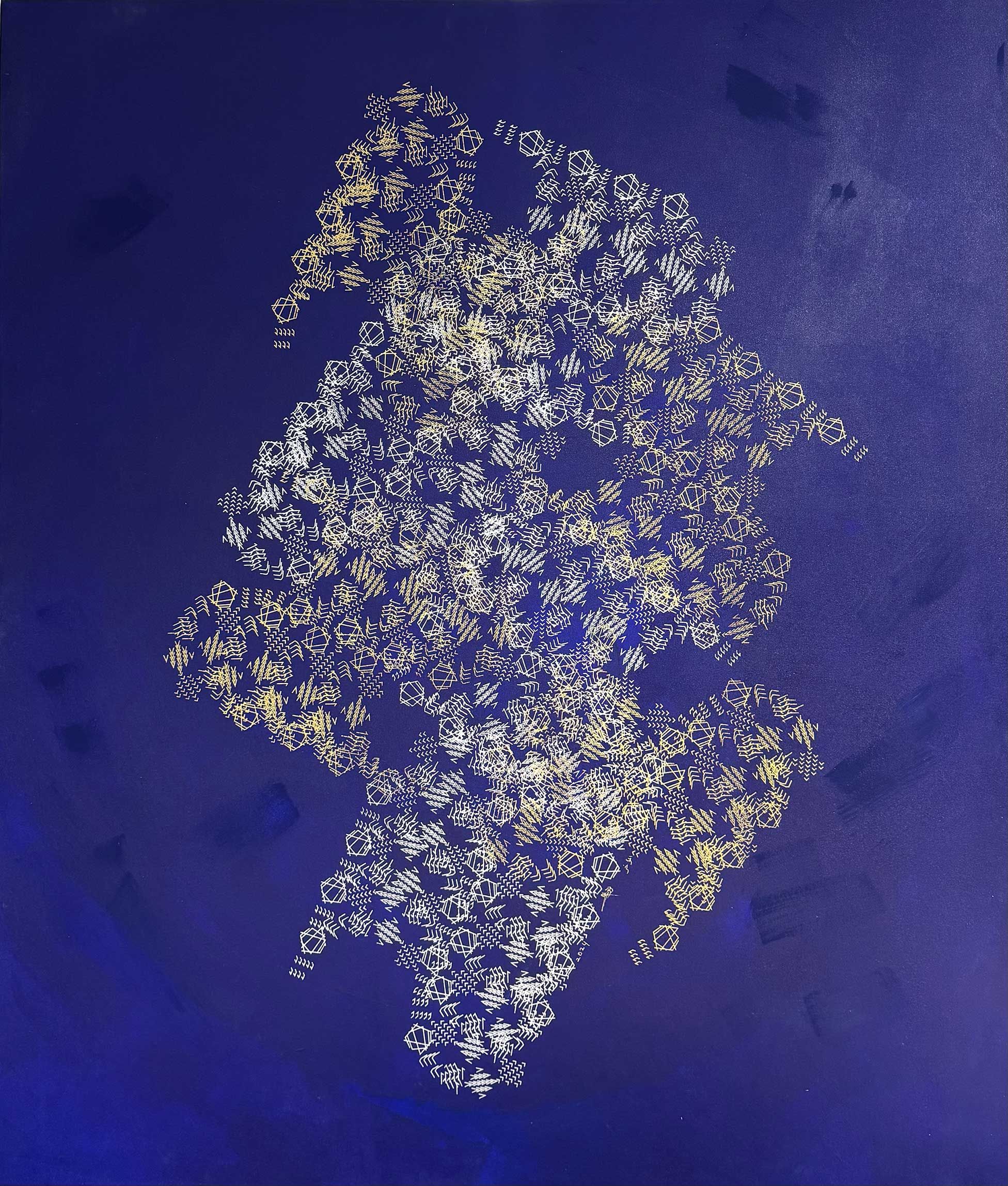
‘The Language of Existence Blue Series: Al-Moakhir.’ Lulwah Al Homoud. 2024. Mixed media on canvas. 150 x 174 cm. Courtesy of the artist.
Q10. For this edition of Ithraeyat, we’re exploring the theme of “Up” in its many forms. It could mean looking toward the sky, reaching beyond ourselves, seeing things from a different perspective, or simply looking up from our phones to reconnect with the world around us. What does this theme mean to you, and which of your works do you feel best reflects it?
For me, “Up” has both a physical and a metaphysical meaning. It can be as simple as looking at the sky, but it can also mean elevating our understanding and moving beyond the limits of the self.
I believe we are meant to keep growing, learning, and looking further than where we stand. The more knowledge we gain, the more we begin to understand how much exists beyond our individual experience. This is closely connected to my artistic practice, where geometry becomes a way of exploring relationships between the visible and the invisible, the finite and the infinite.
I would connect this theme particularly to What Does Not Strain. Its reference to divine power invites us to look beyond our own limitations and reconsider what we understand as possible. For me, looking up is not only about direction; it is also about perspective.
For Lulwah, looking up is also an invitation to look within, to ponder the mysteries of existence and our place in the universe. Through geometry and faith, she explores the connections between the visible and the invisible, finding in the vastness of the skies a deeper understanding of ourselves and, perhaps, hinting that within each one of us there is a whole universe waiting to be discovered.
Rima Ruhman is a writer and novelist.