Edition #31
Edition #30
Edition #29
Edition #28
Edition #27
Edition #26
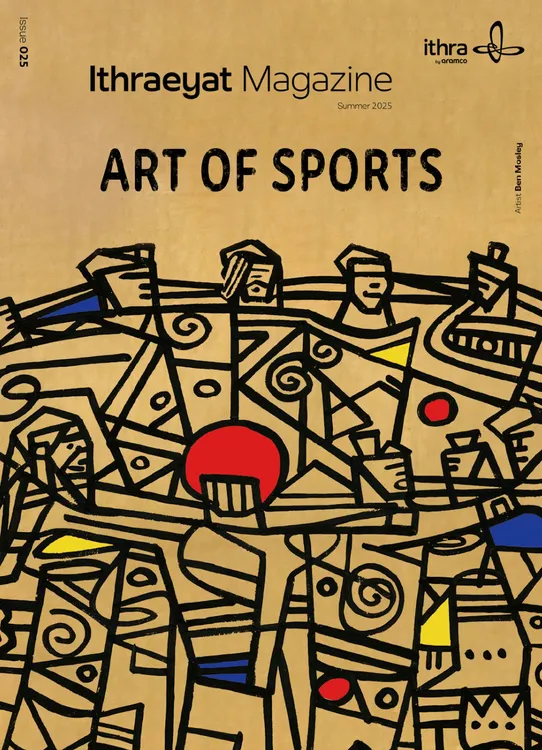
Edition #25
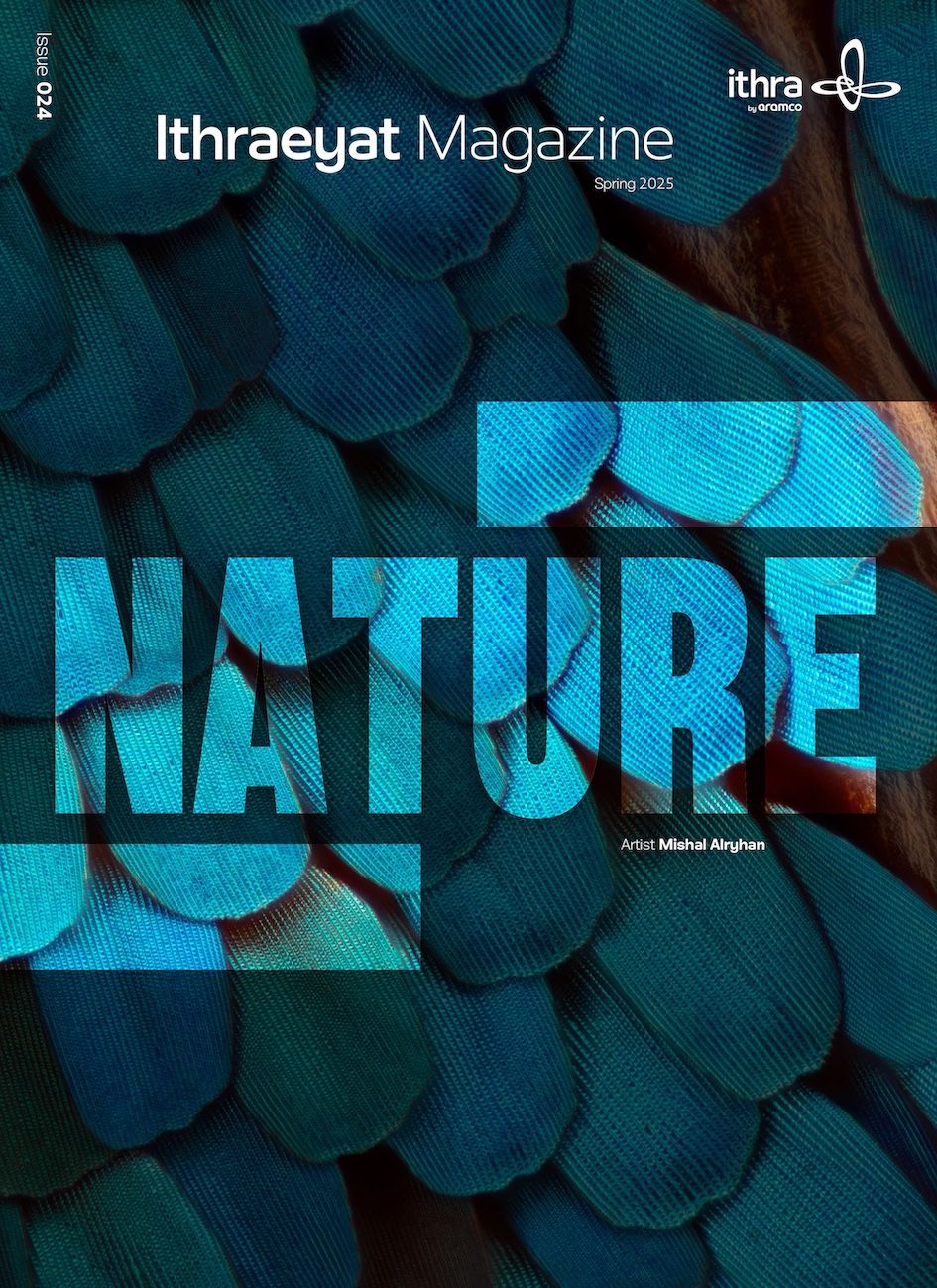
Edition #24
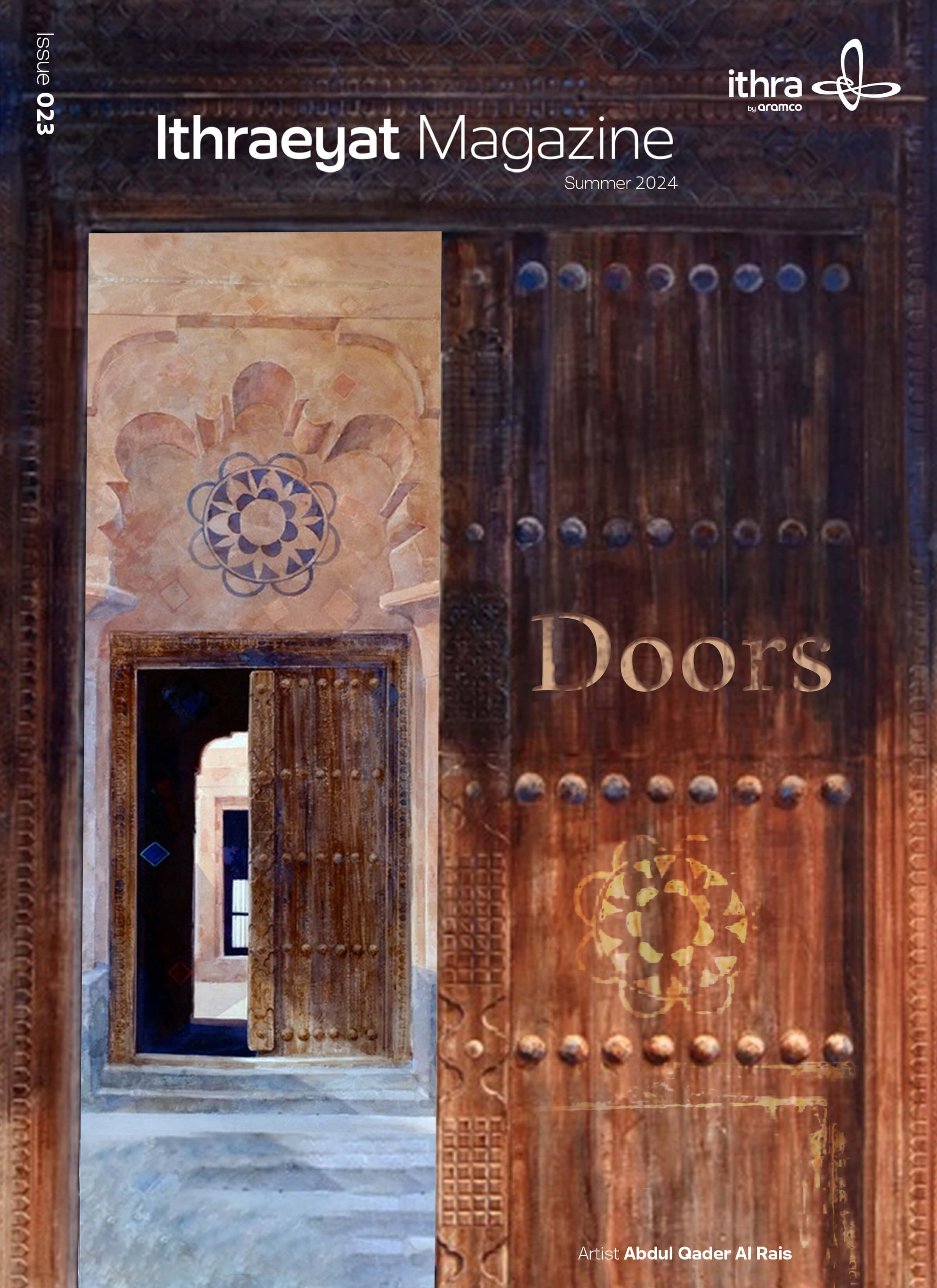
Edition #23
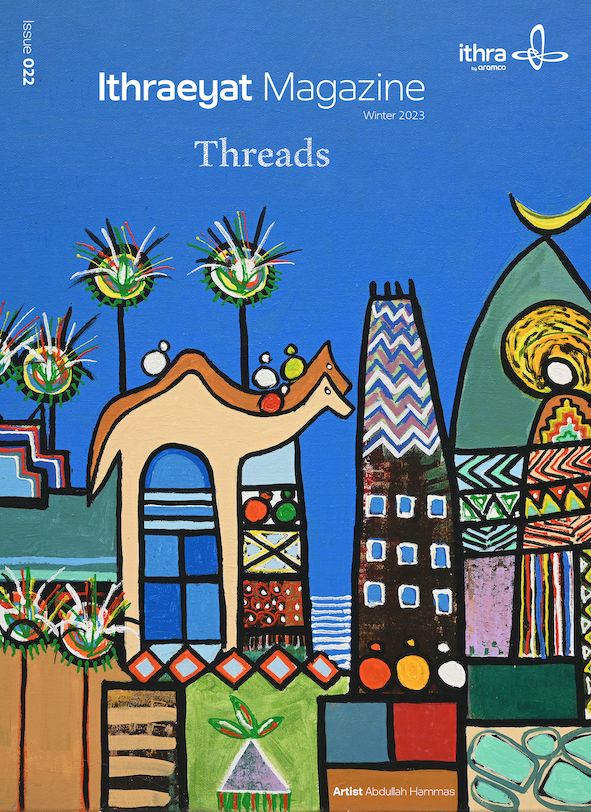
Edition #22
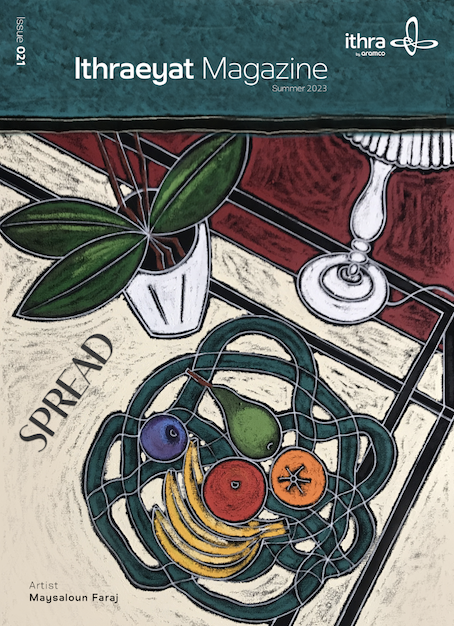
Edition #21
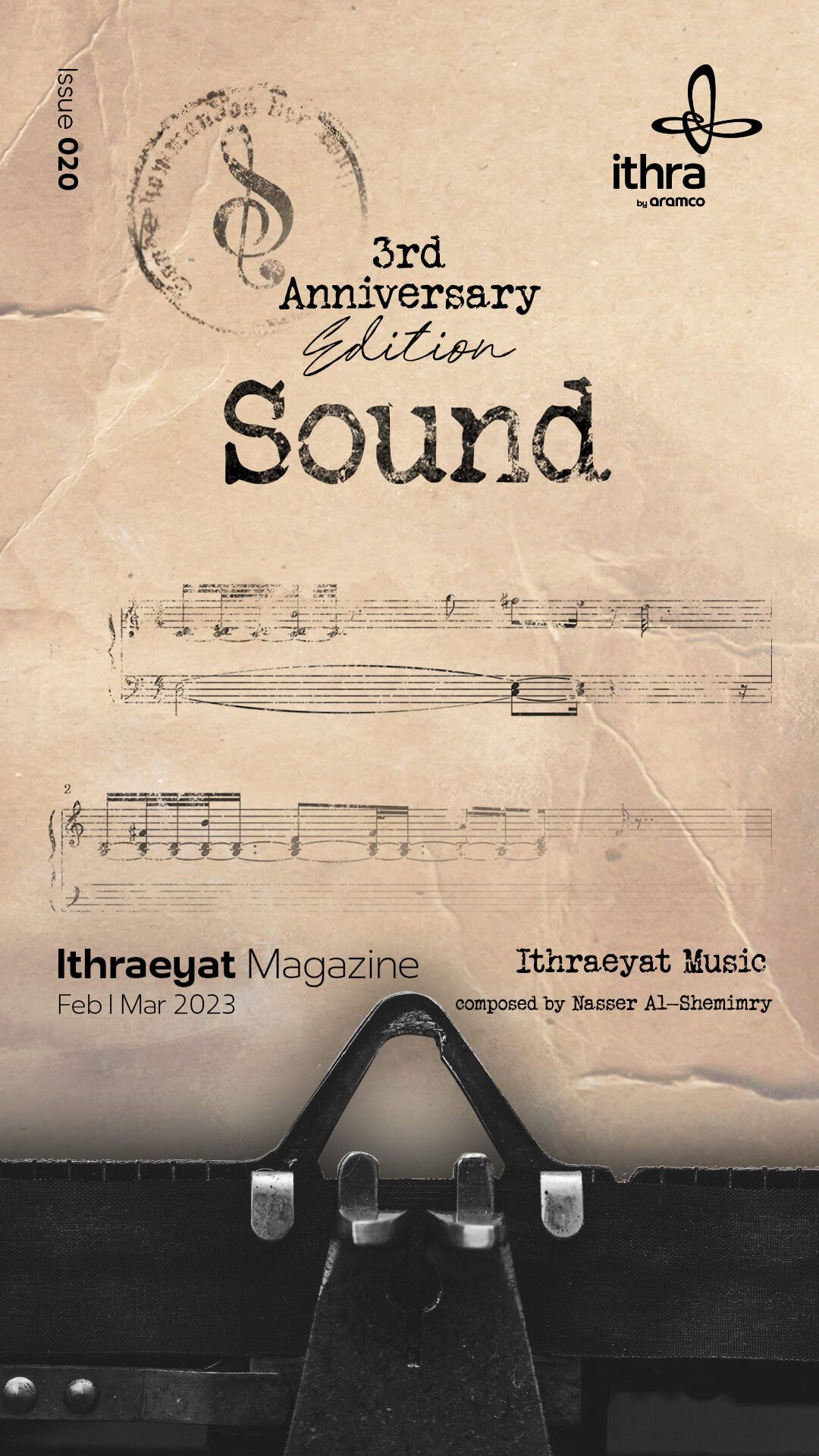
Edition #20
Edition #19
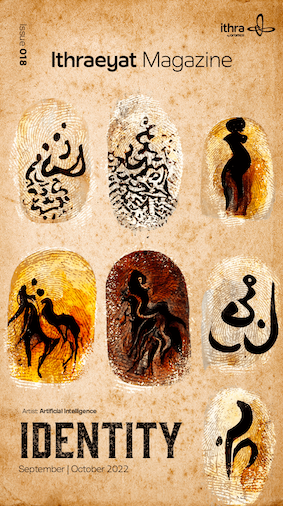
Edition #18
Edition #17
Edition #16

Edition #15

Edition #14

Edition #13
Edition #12
Edition #11
Edition #10
Edition #9

Edition #8
Edition #7
Edition #6
Edition #5
Edition #4
Edition #3
Edition #2
Edition #1
Artistic Expressions
The Art of Looking Again
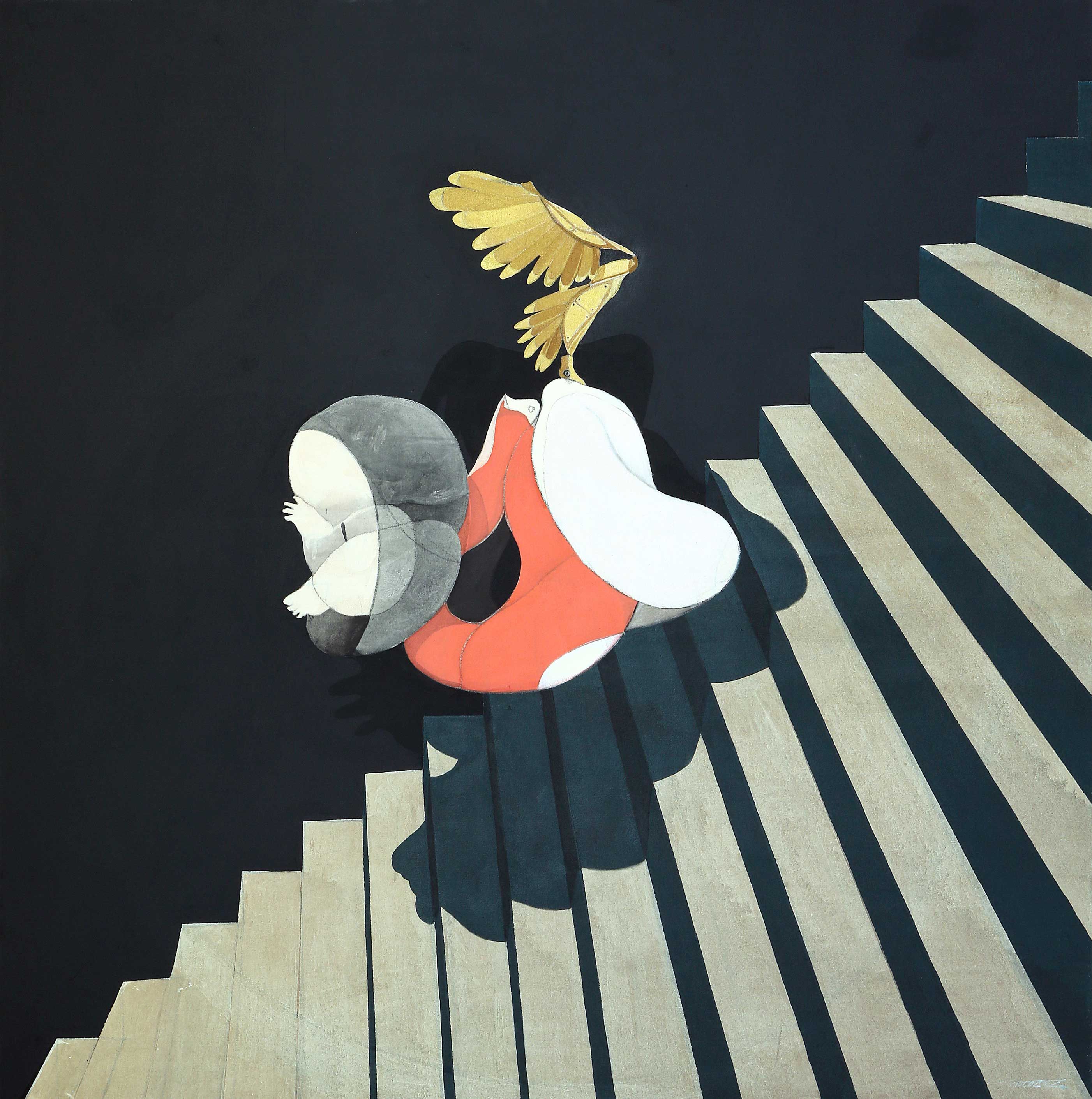
‘The First Question.’ Mohammad Zaza. 2014. Acrylic on canvas. 190×190 cm. Courtesy of the artist.
13 minutes read
December 30, 2026
We race through days, gathering what we can and believing we have seen the whole picture, while an entire world lies hidden beyond the narrow frame through which we view our lives. So much beauty escapes our notice for want of a closer look: wonder tucked away in the details, stories waiting to be read, and shifting light calling for our attention. When we lift our gaze and turn our focus to art, wonder awakens in the ordinary. Space opens up for reflection, feeling, and imagination. Fleeting details take on new forms and a distinct presence, offering us another way of seeing the world, where joy and wonder are suddenly within reach.
Here, we invite you on a journey through three artistic experiences, each distinct in its approach, yet all encouraging us to pay closer attention, reflect, and find joy.
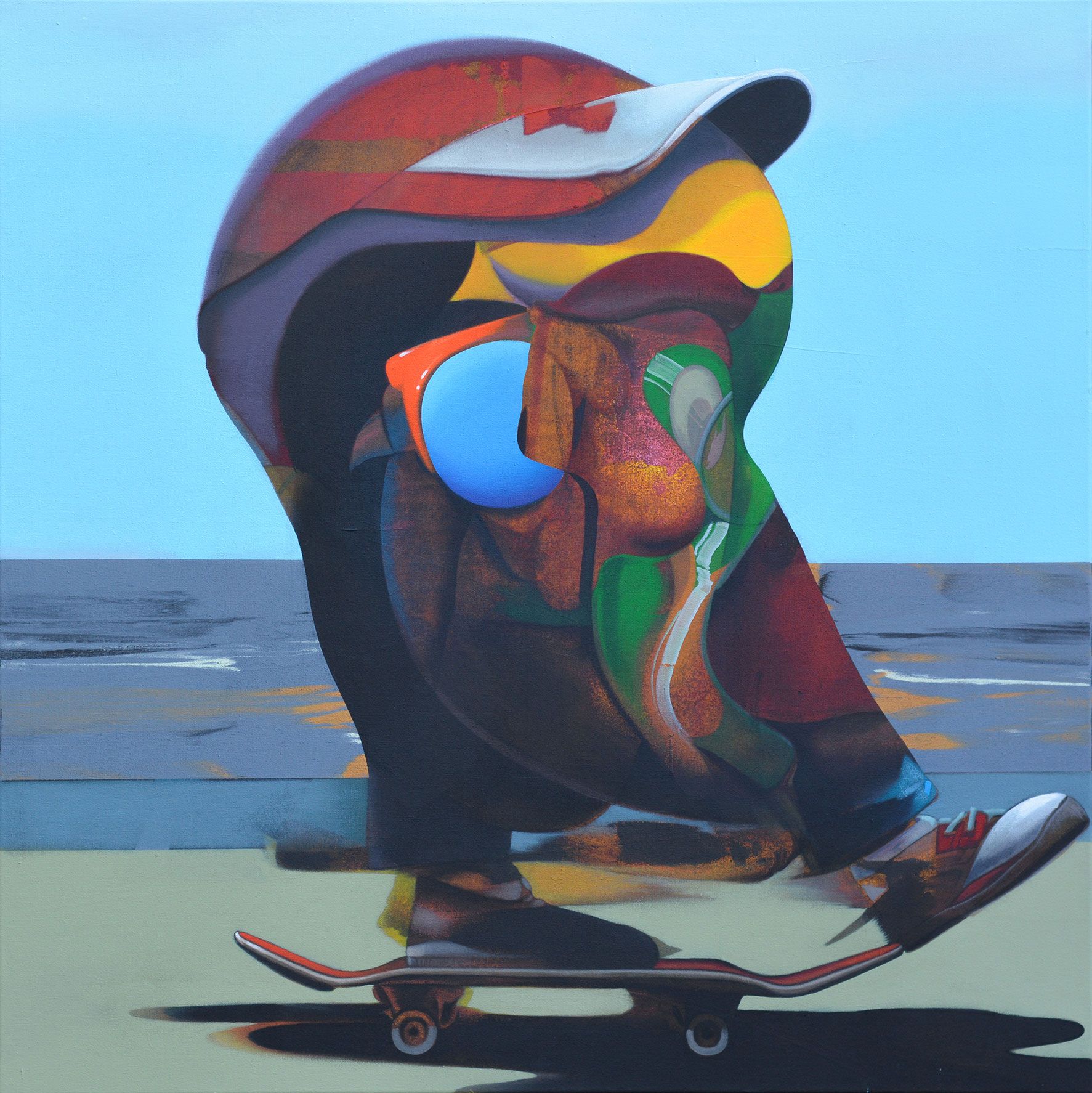
‘Neighborhood.’ Mohammad Zaza. 2022. Acrylic on canvas. 124×124 cm. Courtesy of the artist.
Mohammad Zaza: Between Creation and Erasure
Mohammad Zaza is a Syrian visual artist born in Riyadh who studied fine arts at the University of Aleppo. His work blends realism and surrealism with a playful spirit, drawing inspiration from his encounters with diverse cultures. He has participated in solo and group art exhibitions across the Middle East, Europe, and Asia.
Q1. What does art mean to you?
Art is a shared language that transcends human differences. It is also the soul’s direct engagement with matter. Art is not simply what we produce, but the way in which we see, or learn to see, the world.
Q2. Looking at your body of work, what idea do you find yourself returning to time and again?
I keep returning to the space between constructing and dismantling a form, as if I were circling something I know intimately, yet cannot reach without losing it.
I stand before the canvas with a clear idea of what I want to see: a particular form, a specific face. I begin to paint it, working with the belief that it must emerge, until I reach a moment where everything changes. Somewhere past the halfway point, a feeling creeps in that what I have built must be torn down, lose its boundaries, or dissolve into something else. I begin taking it apart, abstracting it, concealing it beneath new layers. I try to erase it, but I cannot let go of it entirely. I love it, yet I do not want to see it. I want it to remain, but as it first appeared. And when it fades away, I begin searching for it again.
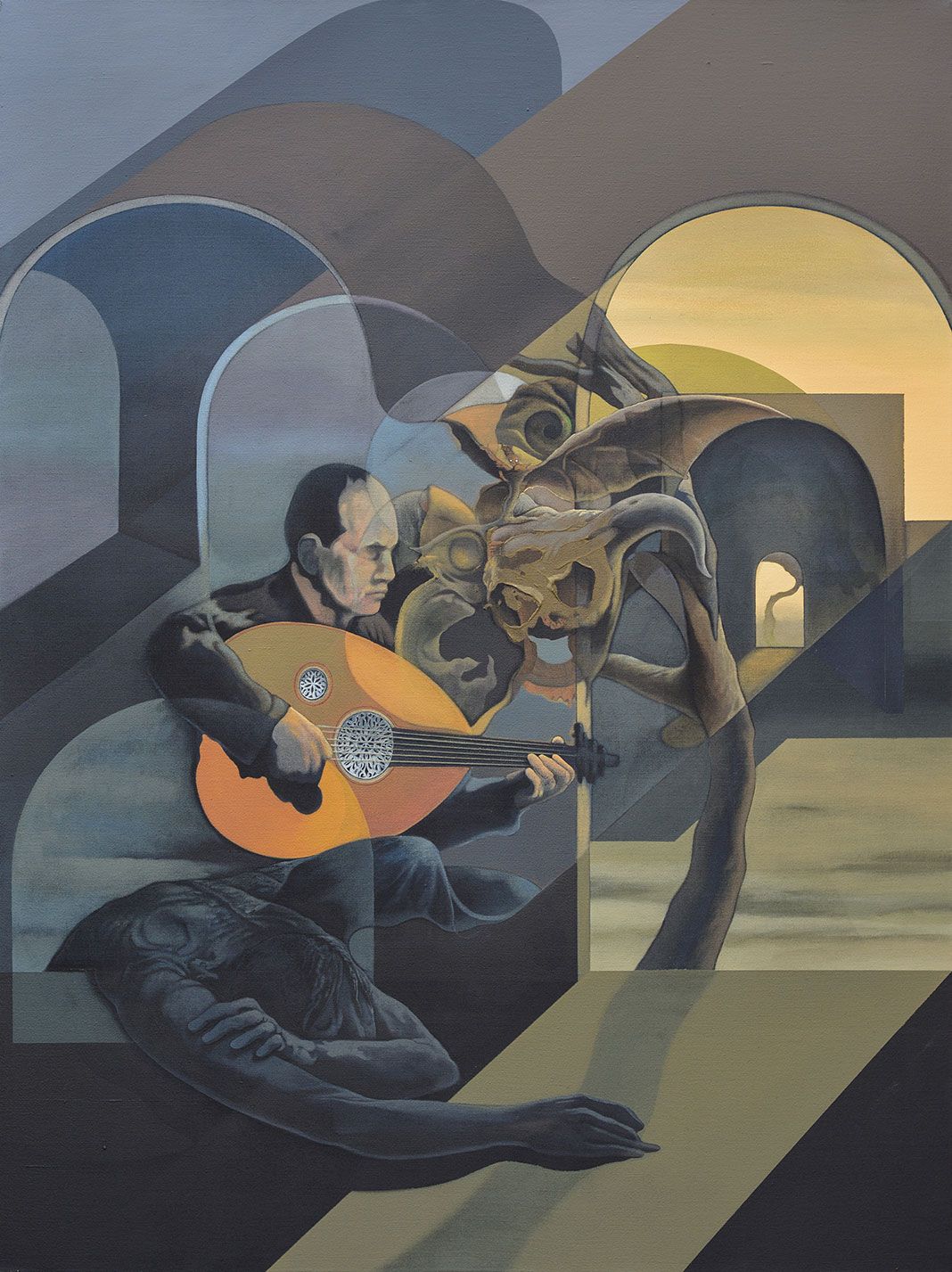
‘Dance with Waves.’ Mohammad Zaza. 2019. Acrylic on canvas. 160×120 cm. Courtesy of the artist.
Each time, I promise myself that I will not follow the same path again, yet before long, I find myself taking it once more, as though the painting keeps bringing me back to the same question whenever I think I have moved beyond it.
I do not know whether I am the one guiding this process or responding to something taking shape beyond my control. What I do know is that my relationship with this state remains unresolved, and I have no desire to settle it. Instead, I try to find a temporary balance within it: between what appears and what disappears, between what I choose to preserve and what I allow to fade, between the line that defines a form and the space that frees it from its boundaries.
Perhaps it is not really a matter of constructing or dismantling an image, but of that moment when the decision itself comes into question. The moment when the form no longer belongs entirely to me, when I am no longer certain whether I am protecting it or resisting it, searching for it or trying to escape it.
Yet what concerns me most is not finding a way out of this cycle, but freeing myself from the need to think of it as an artistic problem. I want to move beyond the awareness that watches everything, weighs every decision, and constantly puts the form to the test. I want to give the painting room to simply be.
I believe that what I am searching for is not an idea I possess, but something that precedes thought, something I cannot reach through planning or control. Everything I do, with all its construction, erasure, and hesitation, is an attempt to create a space in which it can emerge. I am not sure whether I paint what I want to see or dismantle what I see in order to draw closer. But I believe that, in its most honest moment, a painting does not need me to know the way. It only needs me to be present enough not to stand in its way, to allow it to pass through me. And perhaps that is where the real work begins.
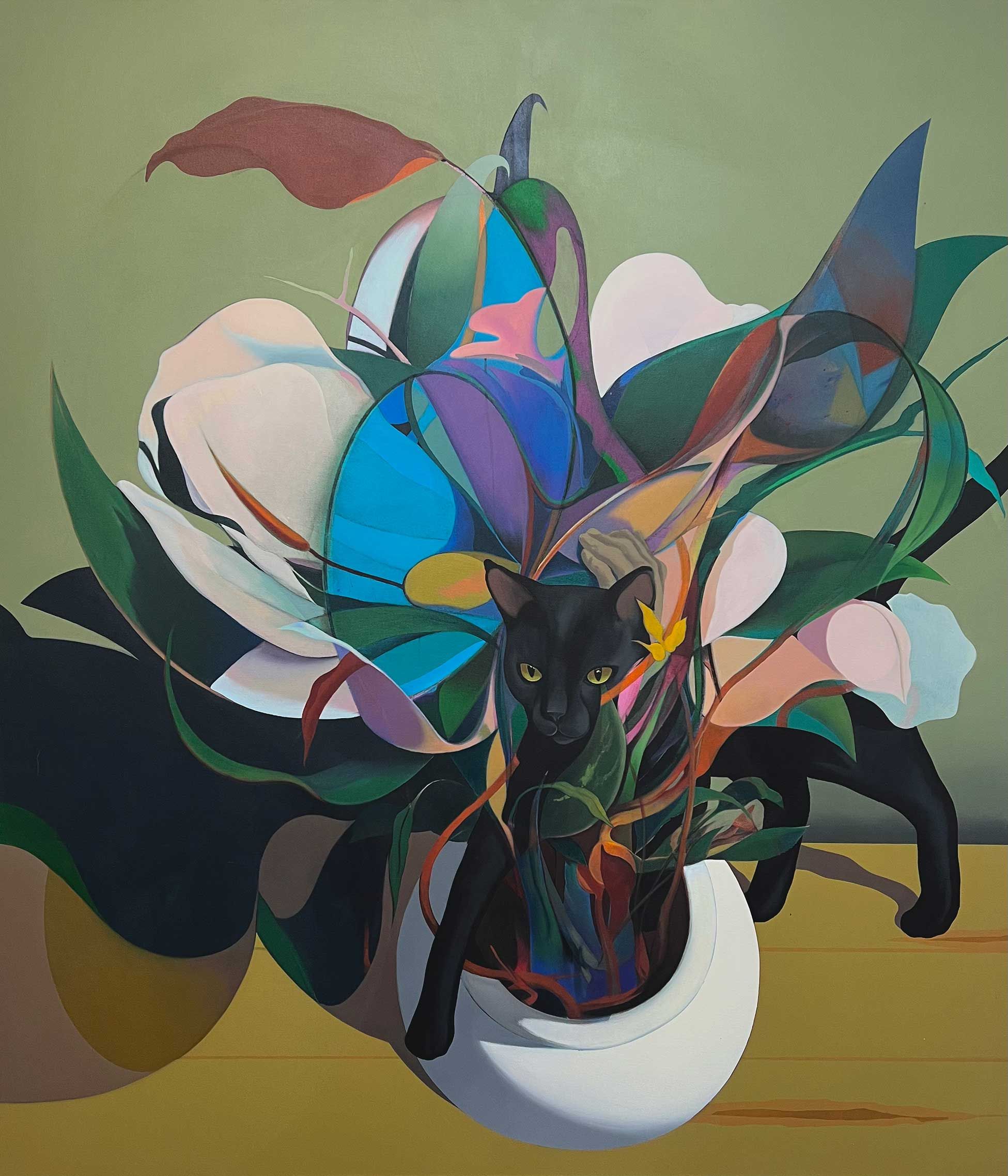
‘Reality Shock.’ Mohammad Zaza. 2025. Acrylic on canvas. 175×160 cm. Courtesy of the artist.
Q3. What drives you to begin a new work?
What drives me to begin a new work is the feeling that I have never painted before, or that I never quite found what I was searching for in my previous one. With every beginning, it feels as though I am painting for the very first time. Sometimes, I begin with an insistent image that imposes itself, a composition that excites me, or an idea in its simplest form. Other times, there is nothing at all, just complete uncertainty. I surrender to the lines and let them take their own course toward something I have yet to define.
I often begin with abstraction and gradually move towards form, or allow abstraction and form to emerge together and intertwine on the canvas. I do not always know where the work will take me, and perhaps that is precisely where the need to paint lies for me.
Q4. Has a particular work marked a turning point in your artistic journey? What made it significant?
There are three works that I consider essential to everything I have painted since. They were more than milestones in my artistic journey; they were moments that changed the way I looked at painting.
The first, The First Question (acrylic on canvas, Riyadh, Saudi Arabia, 2014), was my first glimpse of what would become my artistic style. Through it, I realized that my practice was gravitating towards neo-surrealism, and that the background was not merely a space surrounding a subject, but a stage that played its own part in creating meaning.
The second, Sects 1 (acrylic on canvas, Brussels, Belgium, 2018), taught me how a wealth of words and ideas could be distilled into a single visual statement. I stopped seeing the canvas as a place to present multiple ideas and began to see it as a means of bringing them all together in one concentrated image, open to interpretation.
The third, Bab al-Mandab (acrylic on canvas, Brussels, Belgium, 2019), marked a point where I felt my exploration of form had reached its conclusion. Form was no longer an end in itself, and everything I have painted since has been an attempt to move beyond it.
Q5. Our issue invites readers to look away from their screens, reconnect with the world around them, and rediscover moments of joy, wonder, and lightness. How is this idea reflected in your work?
Ever since I graduated from the College of Fine Arts, I have told myself that creating a new painting has become almost impossible. Artists have already painted everything, or at least explored most of the techniques, tricks, subjects, and scales imaginable. This presented me with a different kind of challenge. Perhaps something new could be created by exploring the relationships between what already exists.
I began treating the canvas as a space where different artistic styles and experiments could come together, like a mosaic of painting’s history and memory. I was searching for moments when seemingly contradictory elements could exist side by side, sparking a sense of wonder in the viewer. Not just through the forms themselves, but through the hidden connections between them, and the ways different artistic languages could come together in a single work.
In a way, this is what artificial intelligence attempts to do today: bring together vast quantities of images, styles, and references, and recombine them into new possibilities. But I believe there is a fundamental distinction between AI and human beings. For me, art is not merely a matter of rearranging what already exists or producing a new image derived from previous ones. Art is about sensing the essence of beauty and transforming that perception into an experience.
And so, although I have spent a long time searching for something new within the image, I now feel that what I am looking for must transcend the boundaries of the screen itself. I look forward to presenting something new soon.
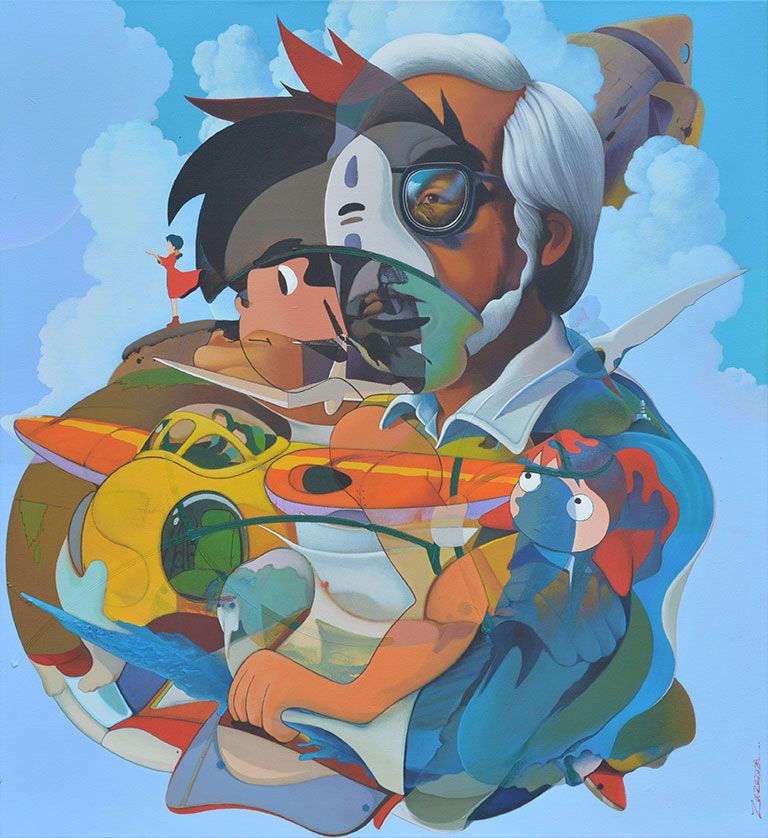
‘Stop Motion.’ Mohamed Zaza. 2025. Acrylic on canvas. 109×100 cm. Courtesy of the artist.
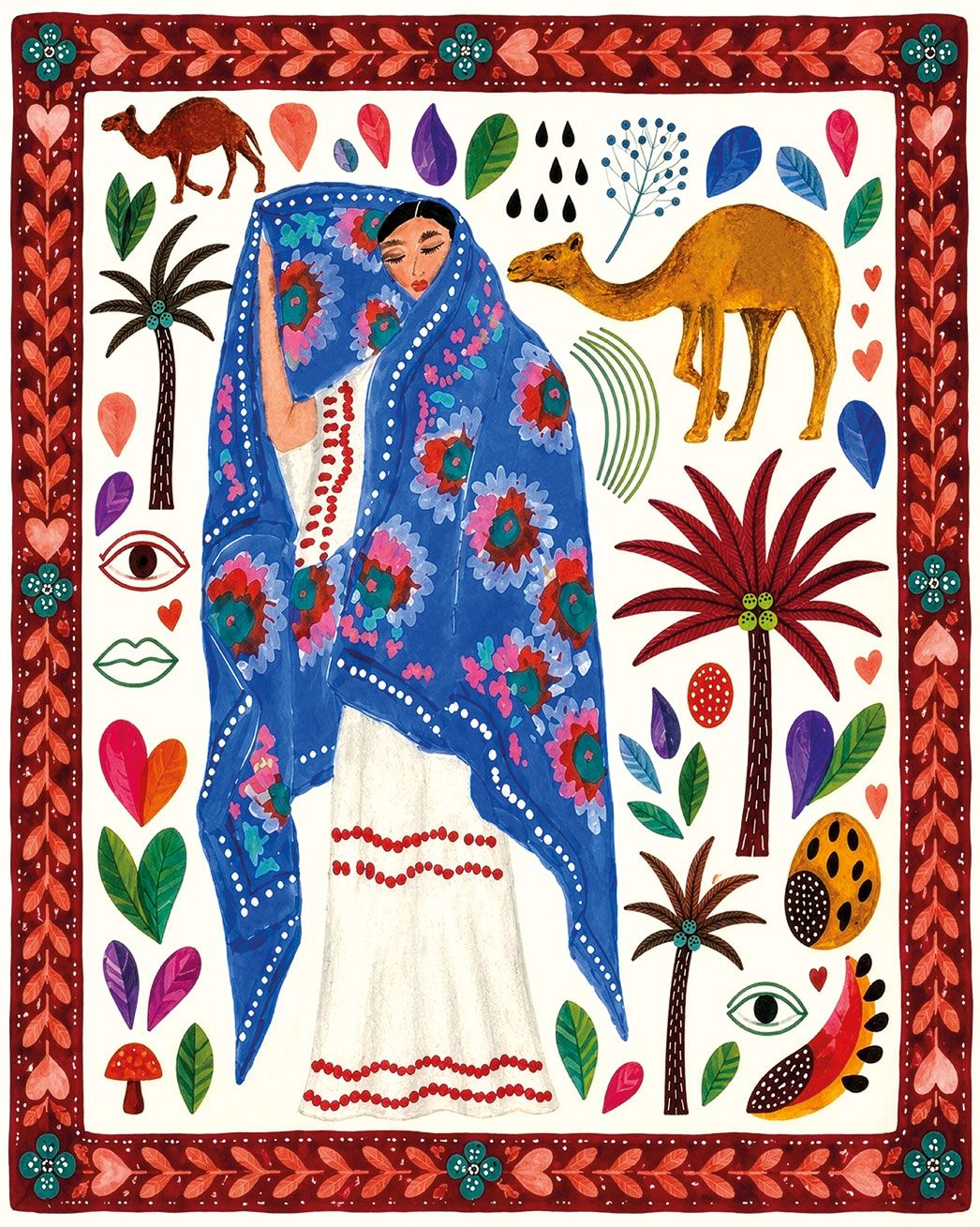
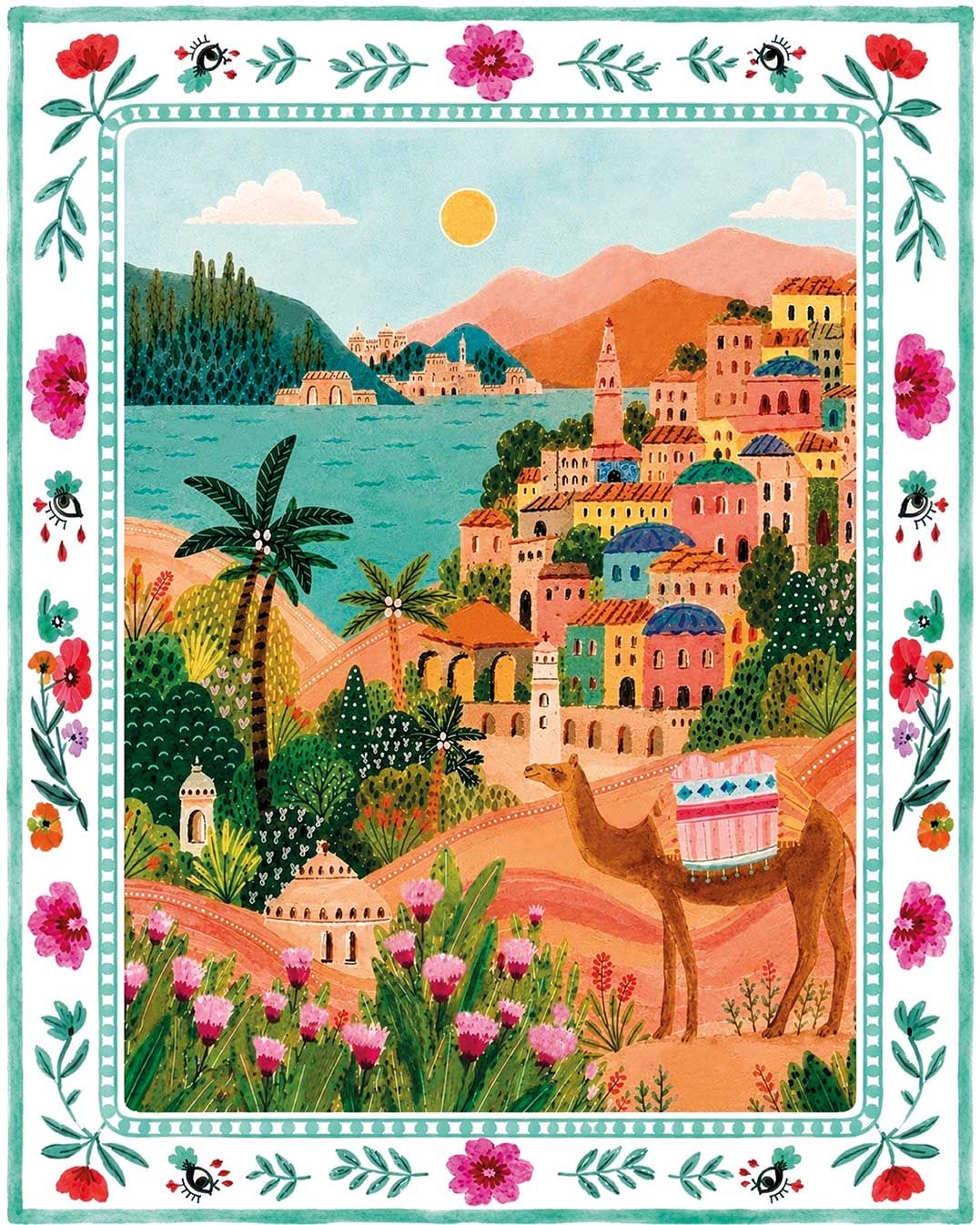
‘Whispering of the Camel.’ Roeqiya Fris. 2026. Courtesy of the artist.
Roeqiya Fris: A World of Her Own Making
Roeqiya Fris is a Dutch-Egyptian painter and artist. Bursting with color and intricate patterns, her work draws inspiration from Arab culture, nature, fashion, and travel, celebrating diversity, femininity, and the bonds between women. A graduate of the Willem de Kooning Academy for the visual arts, she primarily creates her pieces using colored inks, markers, gouache, and pencils.
Q1. What does art mean to you?
What I love about art is that it can touch you without you really understanding why. I can have that with a painting; but also with music, dance or a film. You feel a connection with something someone else has made, even if you know nothing about that person.
When I see something that inspires me, I often want to make something myself. That has been there since I was a child. Once I am drawing, I can become completely absorbed in it and forget about everything else for a while. I love working with my hands and colors, and being surprised by what comes out.
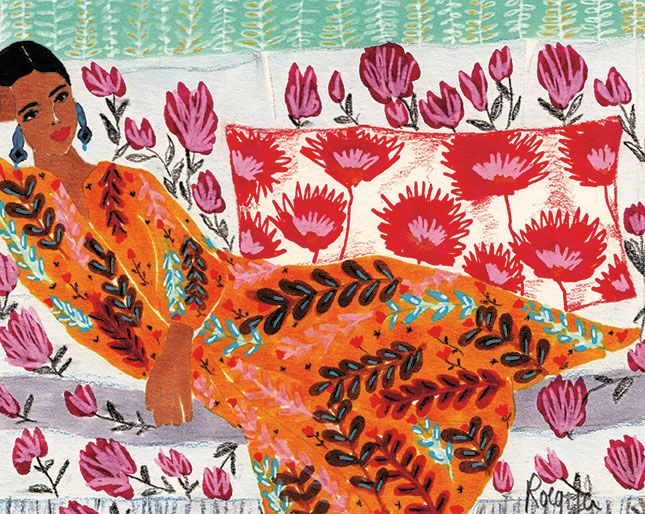
‘Watching TV.’ Roeqiya Fris. Courtesy of the artist.
Q2. Looking at your body of work, what theme do you find yourself returning to time and again?
Freedom comes back quite often in my work. There are boats, cars, gardens and places I would like to visit. I love traveling and discovering how people live, what their houses look like, what grows there. I can get very excited about all those things.
For a long time, I could not travel much because of caring for my son. During that period, I painted places I wanted to go to, using memories and images I collected. I do not think I realized at first how much that desire to travel was coming through in my drawings.
Now that I have more opportunities to travel, there are new experiences to draw from. But I still enjoy making up places, combining things that would never actually be together. On paper, I can put them however I like.
Q3. What inspires you to begin a new work?
It can start with all kinds of things. A scene in a film, a beautiful dress, a garden, or somewhere I have visited. Sometimes it is just two colors together that make me want to draw.
Once I have an idea in my head, I suddenly see things that fit it everywhere. I gather images of plants, people, buildings, fabrics—whatever interests me at that moment. Gradually, I get a picture in my mind of what I want to make.
Then I start drawing and painting. I use colored ink, markers, gouache and pencils, often in the same piece. I do not decide everything beforehand. The colors develop as I go, and sometimes the painting takes a different direction. I like that. I want to leave room for something unexpected.
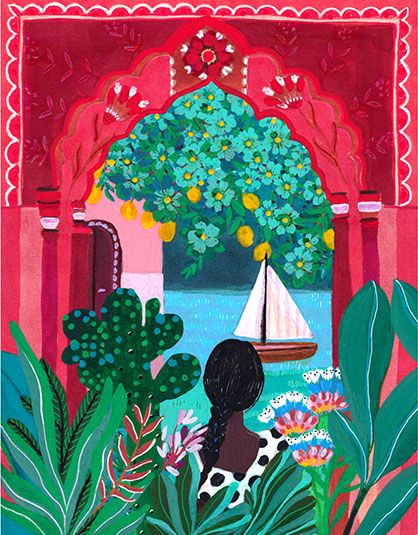
‘Samra.’ Roeqiya Fris. Courtesy of the artist.
Q4. Has a particular marked a turning point in your artistic journey? What made it significant?
For me, the turning point was a period rather than a particular piece. Around ten years ago, I temporarily stopped working as an art teacher to care for my son. During that time, I started drawing again for myself.
I had always loved making art, but other things had taken up a lot of my time and attention. When I began again, I realized how much I had missed it. I kept making drawings, trying things and following whatever interested me.
That was the beginning of the work I make now. It did not happen through one big decision. I just started again, enjoyed it, and this time I did not stop.
Q5. Our issue encourages looking away from screens, reconnecting with the world around us, and reclaiming moments of joy, wonder, and lightness. How is this concept reflected in your work?
I think a lot of my work comes from enjoying small things. I can be very happy looking at flowers growing against a colored wall, a beautiful piece of clothing or a garden full of plants. I notice patterns everywhere. Sometimes I find something wonderful in a place where I would never have expected it, like an old wallpaper shop.
A painting of mine called “Laundry Day” is about being in a garden on a warm day, with flowers around you and washing clothes and drying outside. I love the thought of the fresh smell of the laundry and having time to sit there and dream a little.
When I go outside or visit somewhere, there is always something that catches my eye. Many of my paintings begin that way.
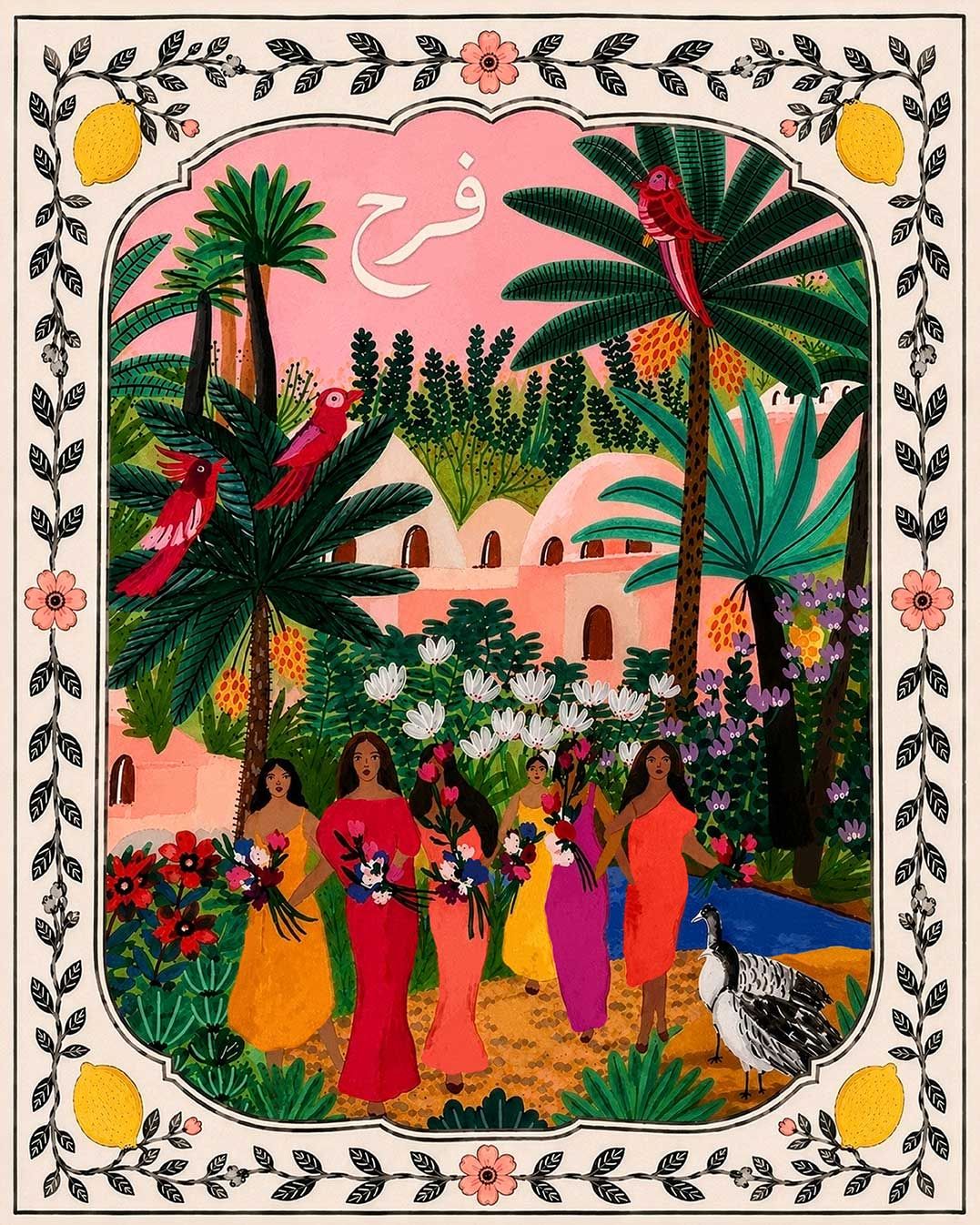
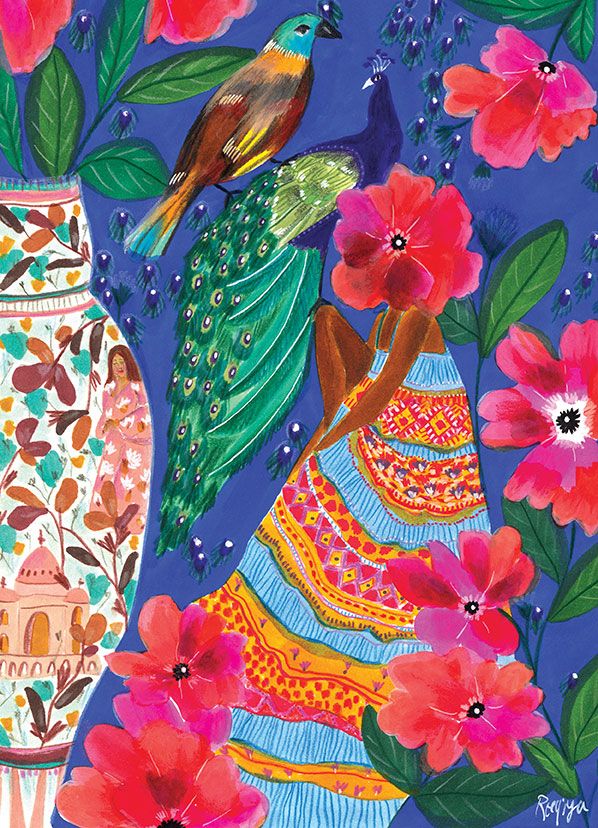
Ghada Al Muhammedi: The Art of Belonging
Ghada Al Muhammedi is a Saudi visual artist whose work blends traditional and modern elements. Her practice focuses on exploring cultural identity and Saudi heritage through contemporary artistic techniques and styles.
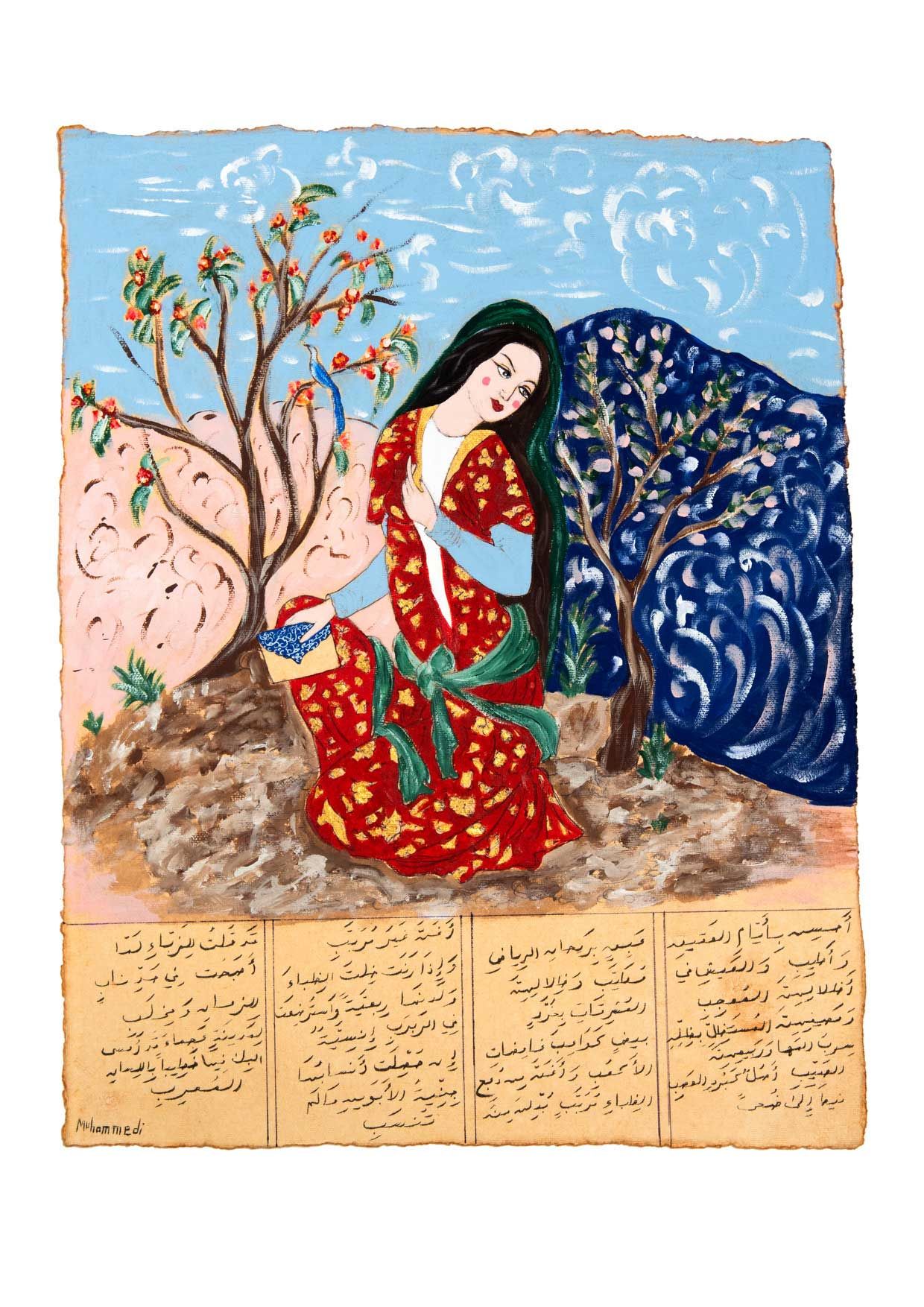
‘Untitled.’ Ghada Al Muhammedi. Courtesy of the artist.
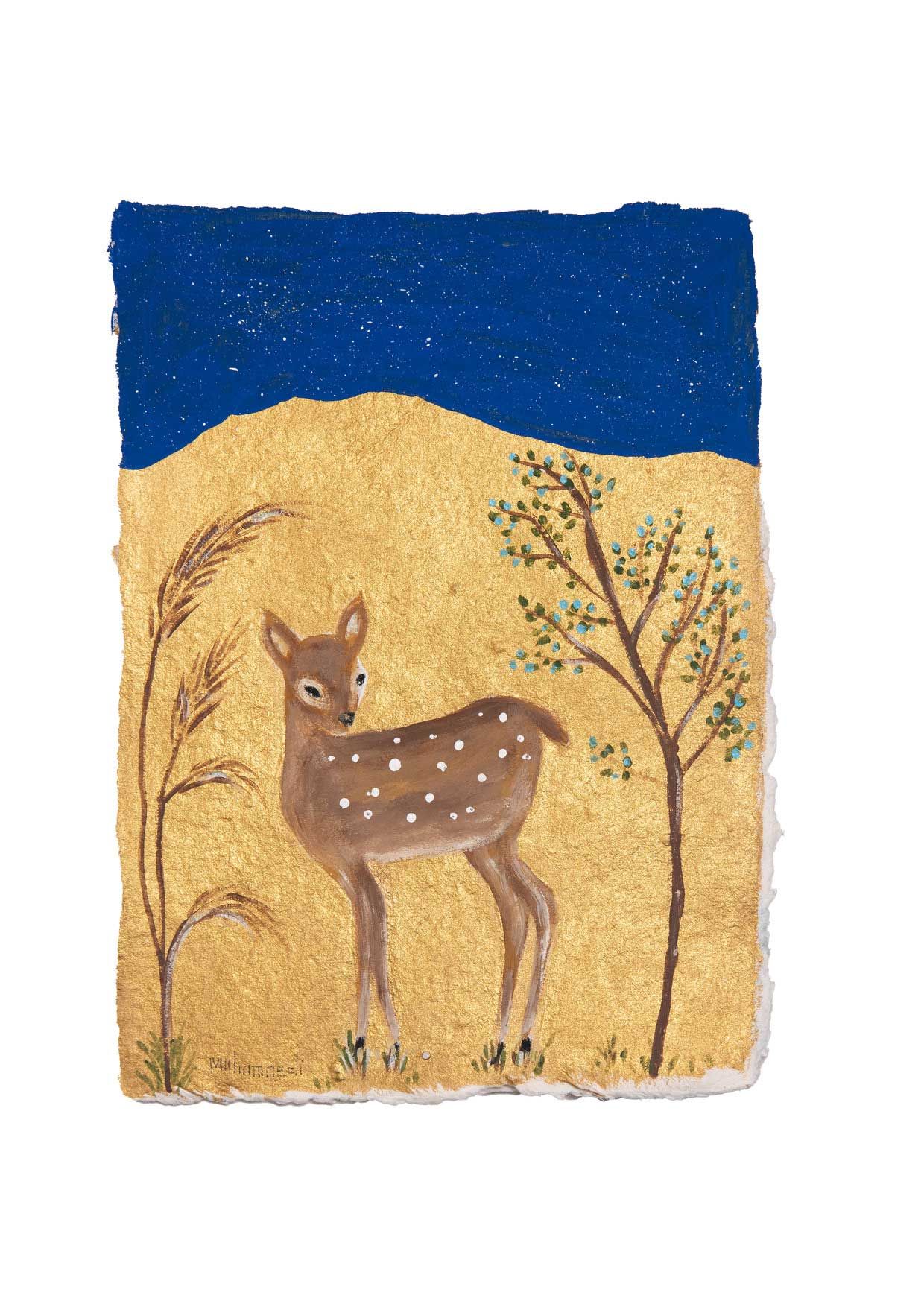
‘Untitled.’ Ghada Al Muhammedi. Courtesy of the artist.
Q1. What does art mean to you?
At its core, art is an expression of the self. It can convey emotions such as love, sadness, fear, loss, joy, and nostalgia. It can explore questions of identity: who we are and what we feel belongs to us. It can express a personal vision, revealing how an artist sees the world, rather than merely how the world appears.
Art is also about beauty, the search for harmony, wonder, and meaning, even amid painful experiences. It can serve as a repository for memory, preserving people, times, places, and feelings. It can create connections, allowing someone who has never met you to recognize something of themselves in one of your paintings. Ultimately, art gives meaning to experiences, feelings, and ideas by transforming them into something others can see and feel. And perhaps the most beautiful thing about art is that it does not have to mean just one thing.
Q2. Looking at your body of work, what theme do you find yourself returning to time and again?
Identity has been at the heart of my work from the very beginning. Over time, my exploration of identity has evolved from expressing my own personal identity to exploring Arab and Islamic identity.
Q3. What drives you to begin a new work?
Stories have always been what drives me to create. I consider myself a narrative artist, and I often take on the role of a storyteller.
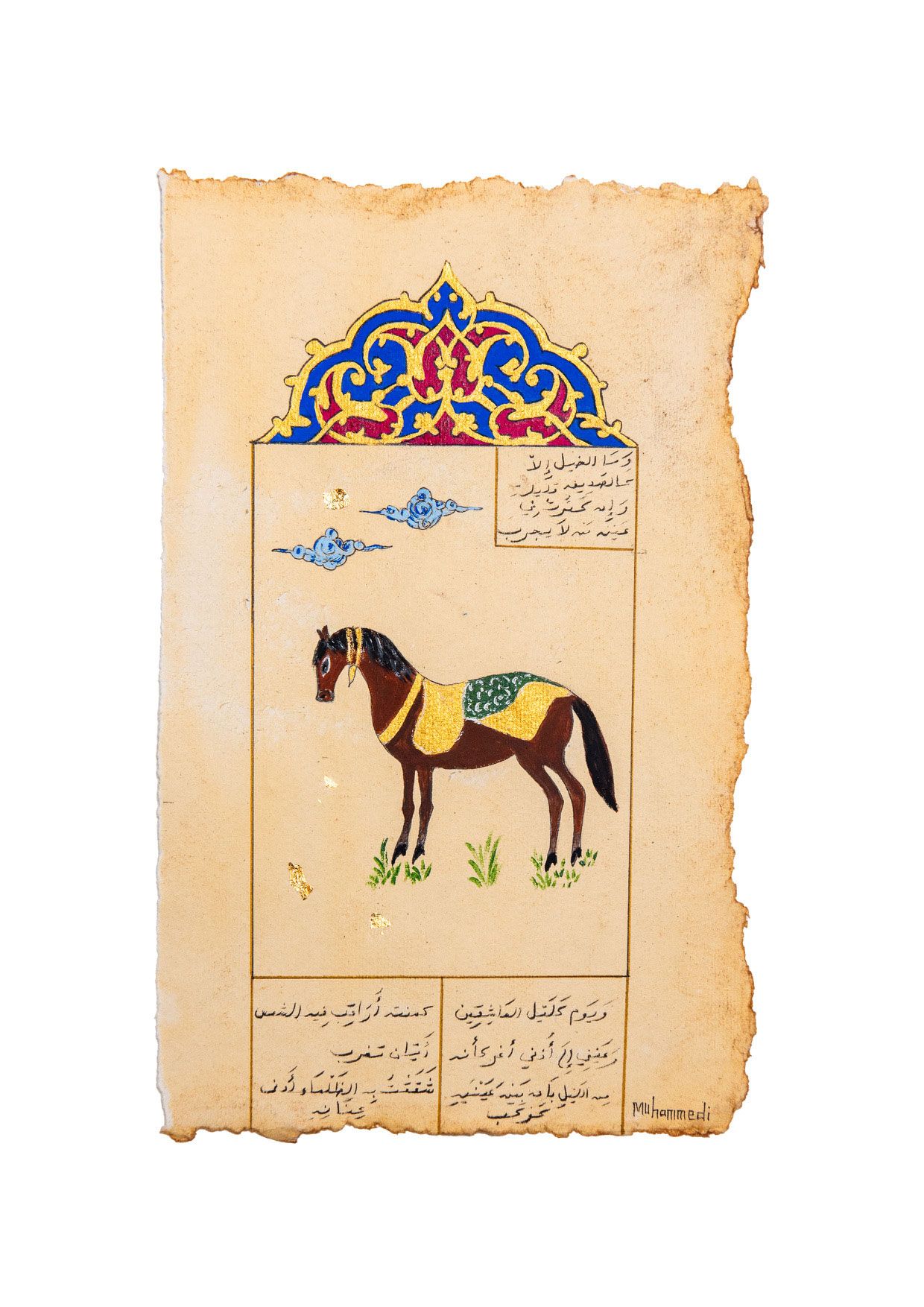
‘Untitled.’ Ghada Al Muhammedi. Courtesy of the artist.
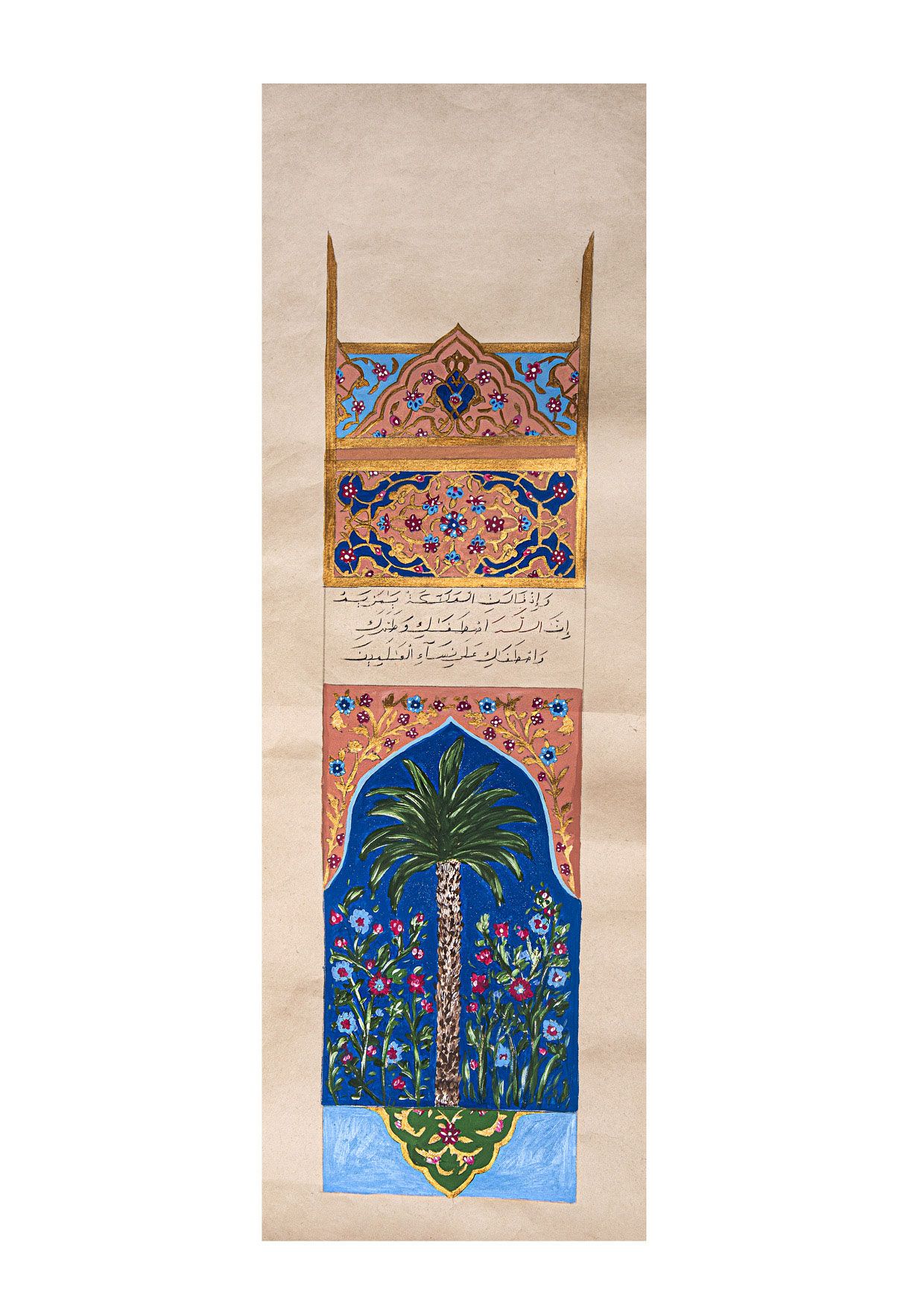
‘Untitled.’ Ghada Al Muhammedi. Courtesy of the artist.
Q4. Has a particular work marked a turning point in your artistic journey? What made it significant?
Islamic miniatures and manuscripts marked a major turning point in my artistic journey, particularly the process of taking manuscripts beyond their traditional forms and transforming them into works with a contemporary spirit. For me, this combination was extraordinary, like mixing gunpowder with perfume.
Q5. Our issue invites readers to look away from their screens, reconnect with the world around them, and rediscover moments of joy, wonder, and lightness. How is this idea reflected in your work?
I used to write on my Instagram page: “I want my work to evoke a sense of wonder”. For me, art should express amazement and lightness; the world certainly doesn’t need any more tragedy.
Each artist brings a distinct approach to their work, yet all share a desire to tell stories from a different perspective, breathe new life into color, and discover new ways of seeing the world and appreciating its details. Their works invite us to lift our gaze, look a little closer, and allow the world around us to awaken our sense of wonder once more.