Casting Roots: Sculpting the Shape of Memory
‘Refugee Woman of Smyrna.’ George Petrides. 2022. Courtesy of the artist.
Before the chisel touched stone, hands shaped meaning from mud and memory. Sculpture emerged from humanity’s earliest search for identity, belonging, and permanence. It is one of the world’s oldest crafts and artistic expressions, transforming raw material into vessels of memory and meaning. Across time, we carved those who inspired us from granite, turned grief and devotion into marble, and preserved our stories and memories in wood. Every mark became a conversation with ancestors, each shape telling both our story and their own. We sculpt to leave a testament, a hope that something of us will outlast the body, rooted in its own place and time.
Famous statues continue to captivate us. They speak silently of the hands that shaped them and the heartbeat those hands tried to keep, and in their silent gaze we find ourselves wondering about their story, their maker’s, and our own. This is not simply the history of a medium, but the story of our relationship with creation itself.
There are sculptures that commemorate history, and there are sculptures that begin at home. For Greek American sculptor George Petrides, born in 1964 in Athens, the two have never been separate.
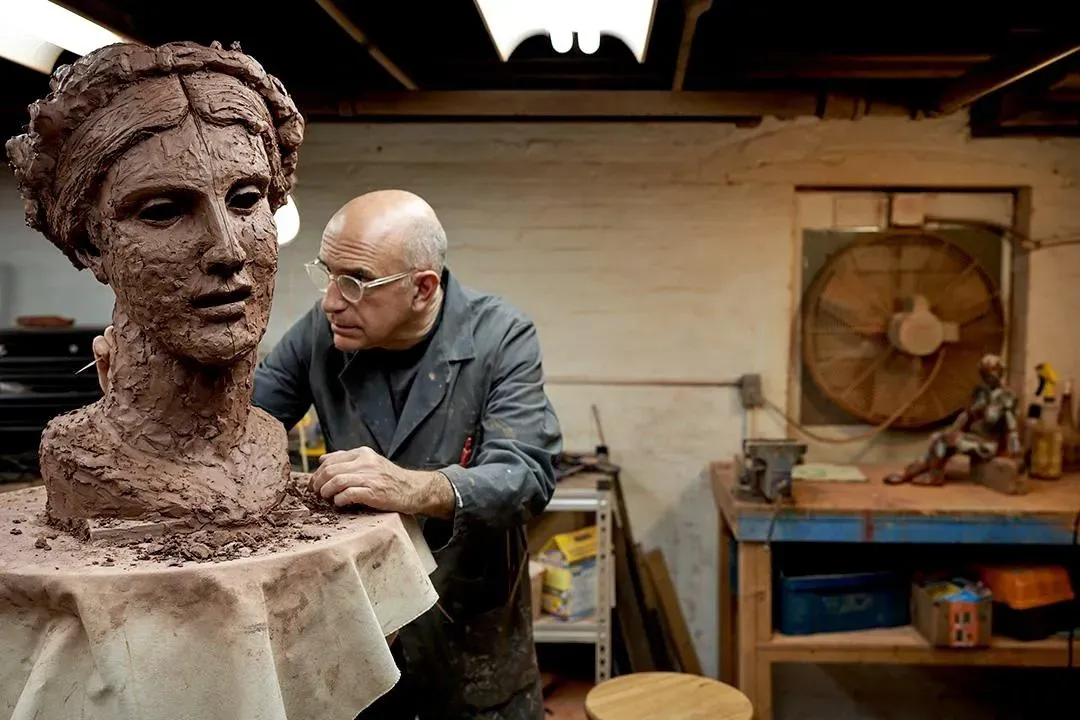
George Petrides in the studio. 2021. Courtesy of the artist.
His latest body of work, Hellenic Heads, traces a century of his family’s story through five sculptures, each rooted in a different generation and historical moment. Together, they become an exploration of inheritance, transcending the people we descend from, to honor the experiences, memories, and values that continue to shape us long after they have passed.
And, this unique series begins with his grandmother; Maria. "My grandmother, Maria. She is the root of the series," Petrides says. "I could have gone back further and chosen an earlier ancestor, but she is the one I grew up with; she lived with my parents and me in Athens and then in New York, where we moved."
Maria inspired ‘Refugee Woman of Smyrna,’ a sculpture born from both family memory and one of the defining tragedies of modern Greek history. Yet when a Greek municipality commissioned a larger public version to mark the centennial of the burning of Smyrna, Petrides discovered that the work had already outgrown his own family.
"At the unveiling, several residents came up to me and said, ‘That’s my grandmother.’ So my root was their root too."
That moment captures the quiet ambition behind Petrides’ work. His sculptures begin with individuals, but they seek something shared. Portraits become archetypes. Private memories become collective ones.
"Art is everything to me," he says. "It is gratifying to be recognized for it, but that is secondary. What is primary is that this is the way I can offer something of value to other people. It heals me, it makes me content, and it makes me a better human being."
As he assembled Hellenic Heads, Petrides found himself studying not only faces, but the historical forces that shaped them. His grandmother’s displacement, his parents’ generation rebuilding their lives, and his daughter’s place at the end of that century-long journey became chapters in a larger narrative.
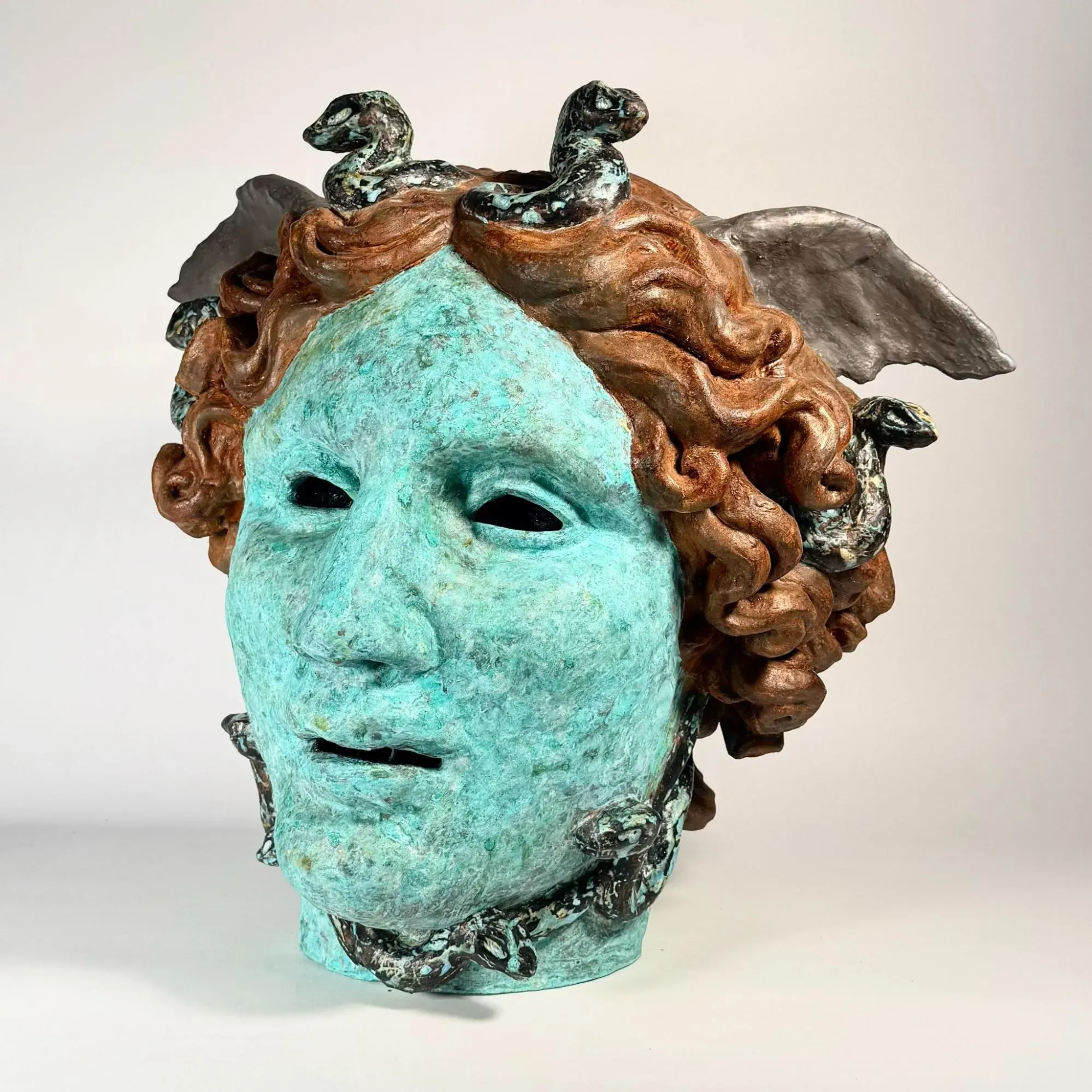
‘Medusa of Serifos.’ George Petrides. 2026. Courtesy of the artist.
“It helped me understand my grandmother: her life as a refugee, and how she rebuilt it in a new land. At the other end of those 100 years, I am proud to present my daughter in a different light: optimistic and lighter. The generations before her did the hard work of clearing the obstacles and establishing a new foundation.”
His practice follows that same process of excavation. Although Hellenic Heads is organized as a series, Petrides sees his work as a continuous return to the same enduring questions.
“Across the series and the one-off works, however, I return to the same questions of family, history, resilience, and how a private likeness can become a public archetype.”
Truth, rather than beauty, remains his guiding principle. “The value I pursue is truth — the truth of emotions and observations,” he says. “Conventional prettiness is not my thing. If I get the truth right, that is the beauty I want.”
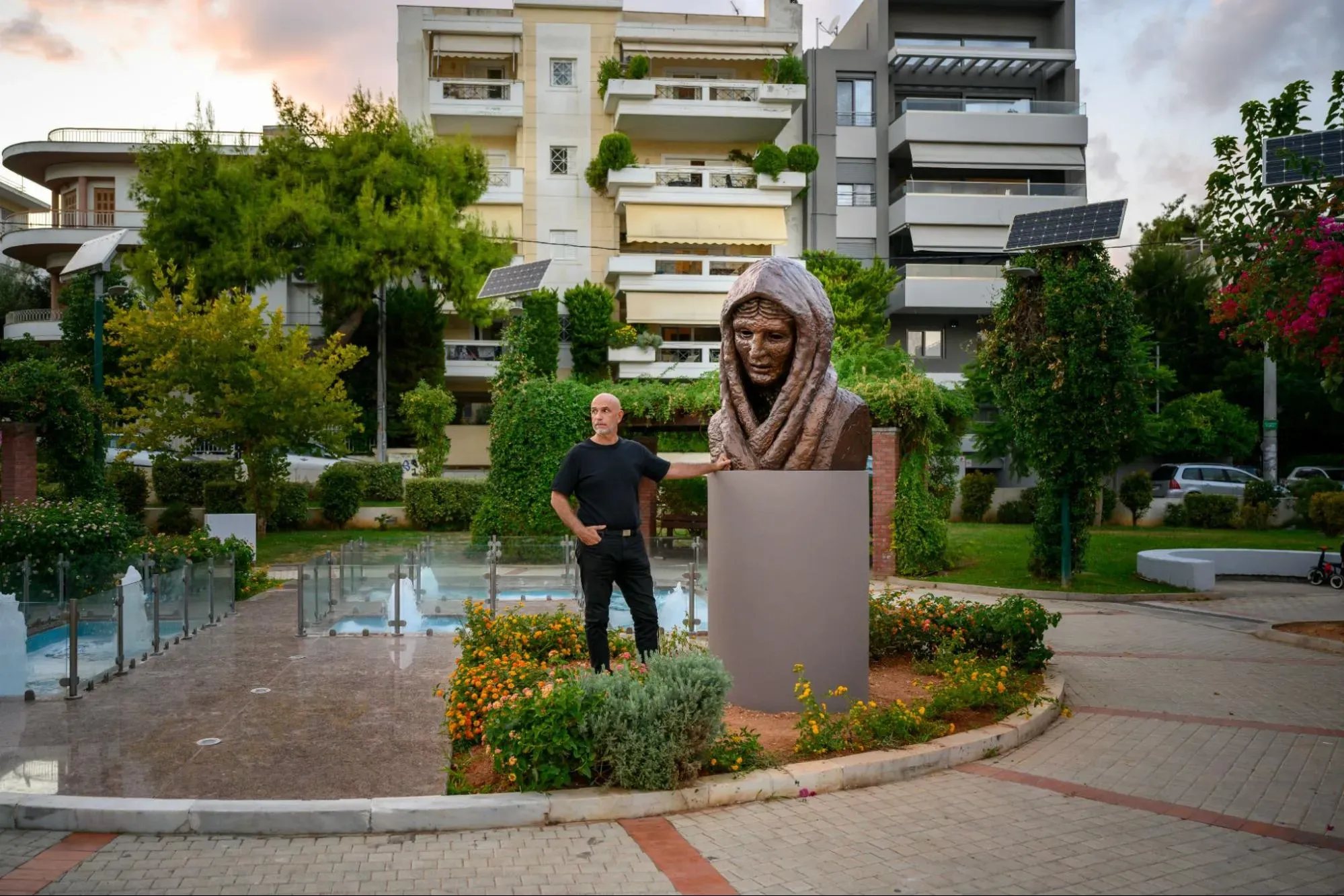
‘Refugee Woman of Smyrna.’ George Petrides. 2022. Courtesy of the artist.
That philosophy extends to the surfaces of his sculptures. Marks of process are left intact, layers remain visible, and imperfections are embraced as evidence of human experience. Even the medium itself reflects continuity rather than nostalgia. Most works begin with natural river clay shaped by hand before digital scanning and metal casting become part of the process.
"I look to the end result, and I will use whatever tools get me there," Petrides explains. "The sculpture will be judged on two questions: is it truthful, and does it serve other people?"
That same instinct has also led him beyond Greece. While reflecting on the cultural landscapes surrounding the Mediterranean and the Arabian Gulf, Petrides became increasingly interested in the unexpected affinities between them. Those observations eventually became The Aegean and the Gulf: Parallels in Art, Space, and Civic Imagination, an essay exploring the shared ideas that have shaped both regions across millennia.
Despite their distinct artistic and cultural traditions, he argues that both civilizations were formed by maritime worlds where stories traveled alongside people and trade. Oral poetry, civic gathering spaces, architecture, and craftsmanship all emerged as ways of preserving collective memory.
"Across three millennia," it notes, "the Aegean and the Arabian Gulf have been maritime crossroads." Beneath the obvious visual differences lie "formative mythologies, a focus on order and measure, ideals that structure public space, and the translation of collective memory into durable materials."
The parallels continue in the built environment. Greek courtyards and porticoes, Gulf wind towers and mashrabiyas, marble and coral stone all reveal societies responding to climate with beauty as much as function. Likewise, the geometry of Islamic art and the proportional harmony of Greek temples arrive through different traditions at a shared pursuit of order.
"Beauty is inseparable from an ethics of proportion: how things should be rightly related."
For Petrides, those relationships matter most where art enters public life. "The Greek agora and theatre, and the souq, the majlis, and the Friday mosque, each organized counsel, exchange, and shared time in different ways," he says. "In both worlds, art has often been a civic medium rather than a private luxury."
That understanding informs his own work. Today his sculptures inhabit museums, hospitals, municipalities, universities, and public institutions; places where art accompanies everyday life rather than standing apart from it.
The distinction between history and heritage, he surmises, runs through the same outlook. "History is the record of the past, heritage is what a community chooses to preserve and pass on, tangible and intangible alike, and it is bound up with identity, memory, and values."
As an artist, he works with both. Historical research provides the framework; family stories, artistic precedents, and lived experience give that history its emotional weight. Tradition, in turn, becomes something inherited, interpreted, and renewed by each generation.
Petrides speaks warmly of the region’s growing investment in culture and hopes the series will find its first audience there. When asked about what he hoped Arab audiences will take away from his work, he answered: "For the series, the highest accolade will be for people to recognize their own families in mine."
Perhaps that explains why Maria (his grandmother) continues to stand at the beginning of the story. She is not simply the first sculpture in a sequence, but the point where memory becomes heritage and one family’s history becomes recognizable to others.
"My message is in the work," says Petrides. "Our roots are not only behind us… In telling the story of my own family, I hope other people recognize something of their own — and perhaps look again at the people who made them who they are."
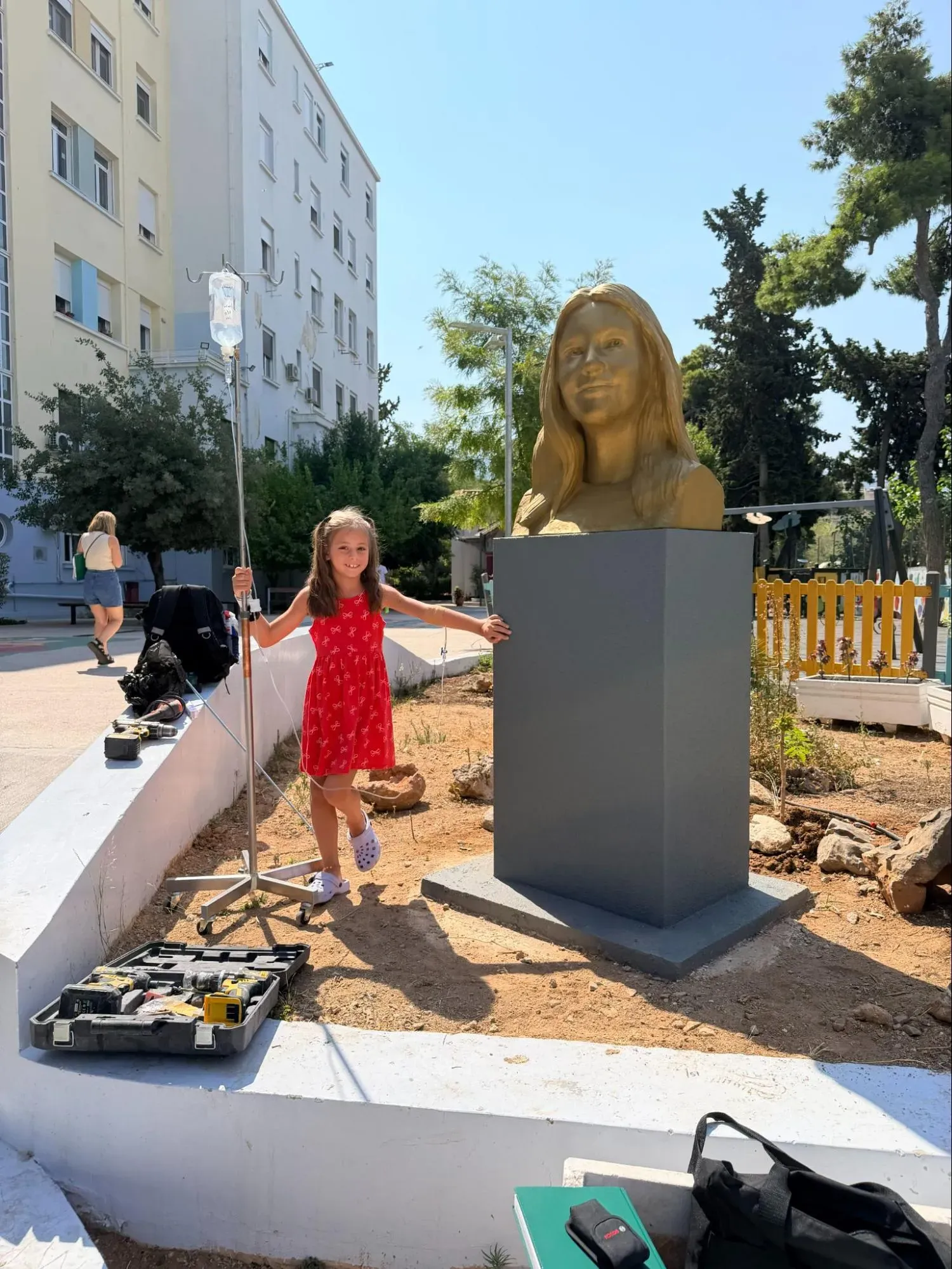
‘Kore.’ George Petrides. 2024. Photo taken by the artist near Aglaia Kyriakou General Children’s Hospital on July 21, 2026. Courtesy of the artist.
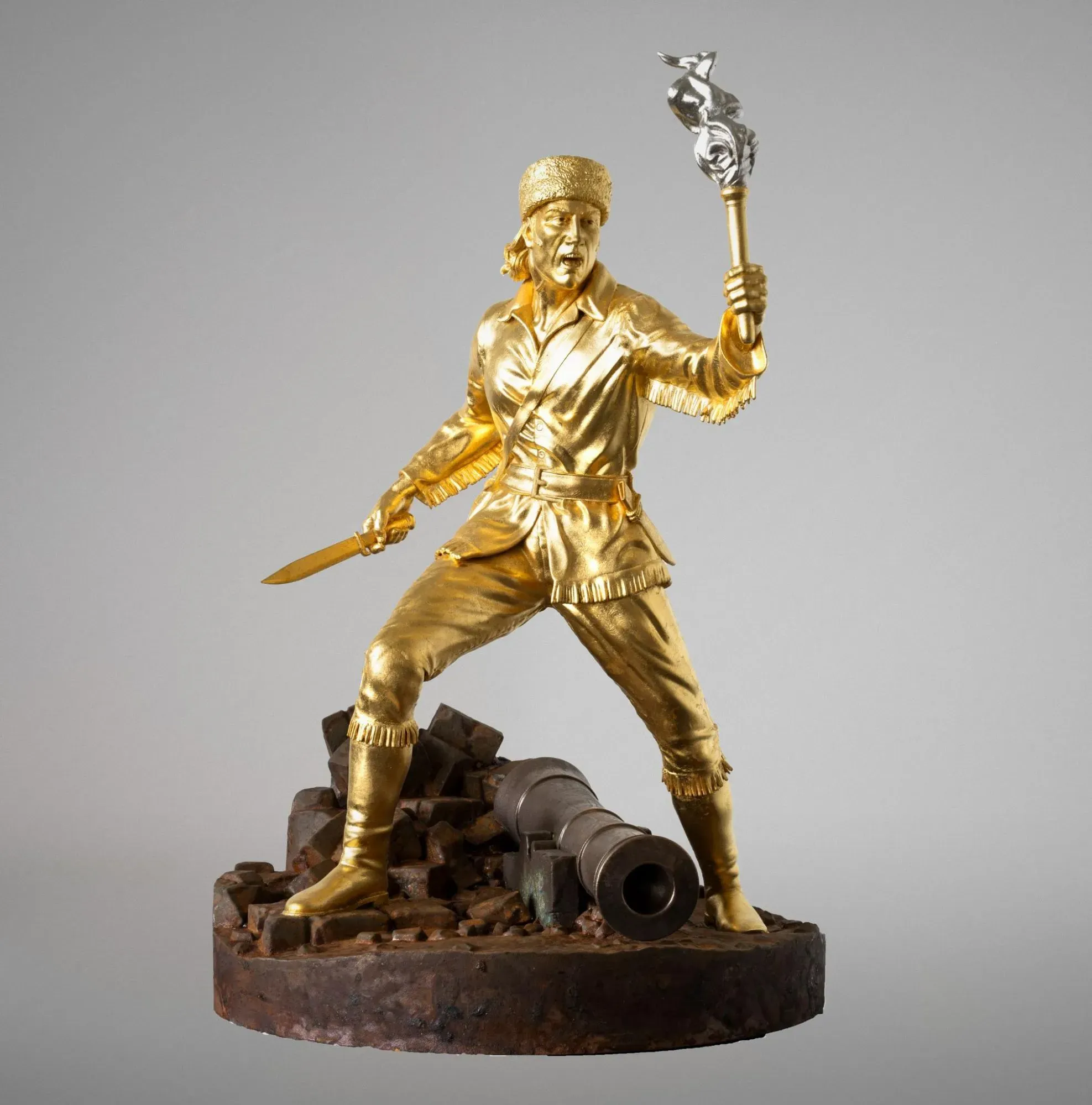
‘Davy Crockett at the Alamo.’ George Petrides. 2025. Part of the White House collection. Courtesy of the artist.
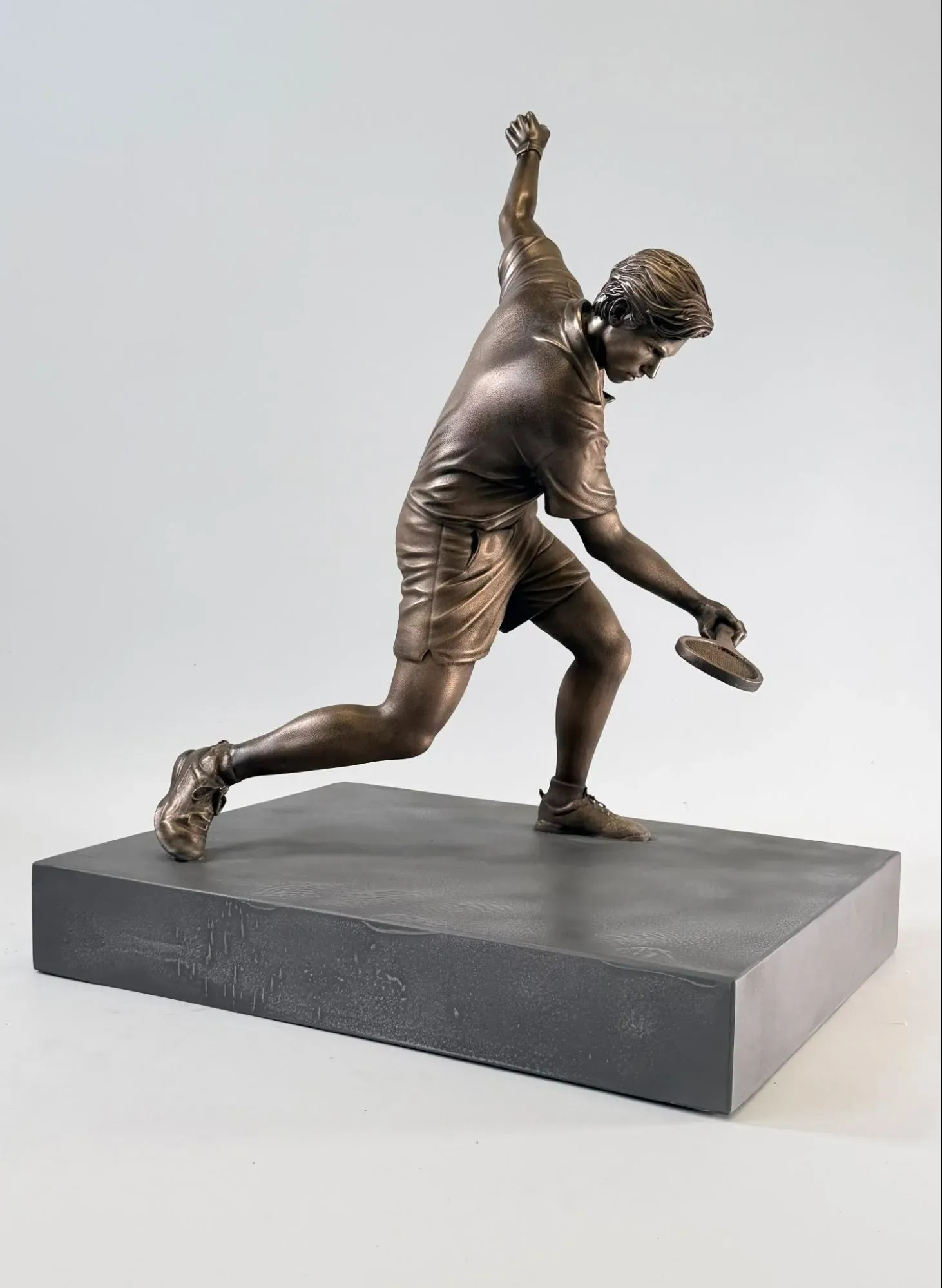
‘Court Tennis: Underarm Twist Serve.’ George Petrides. 2026. Courtesy of the artist.
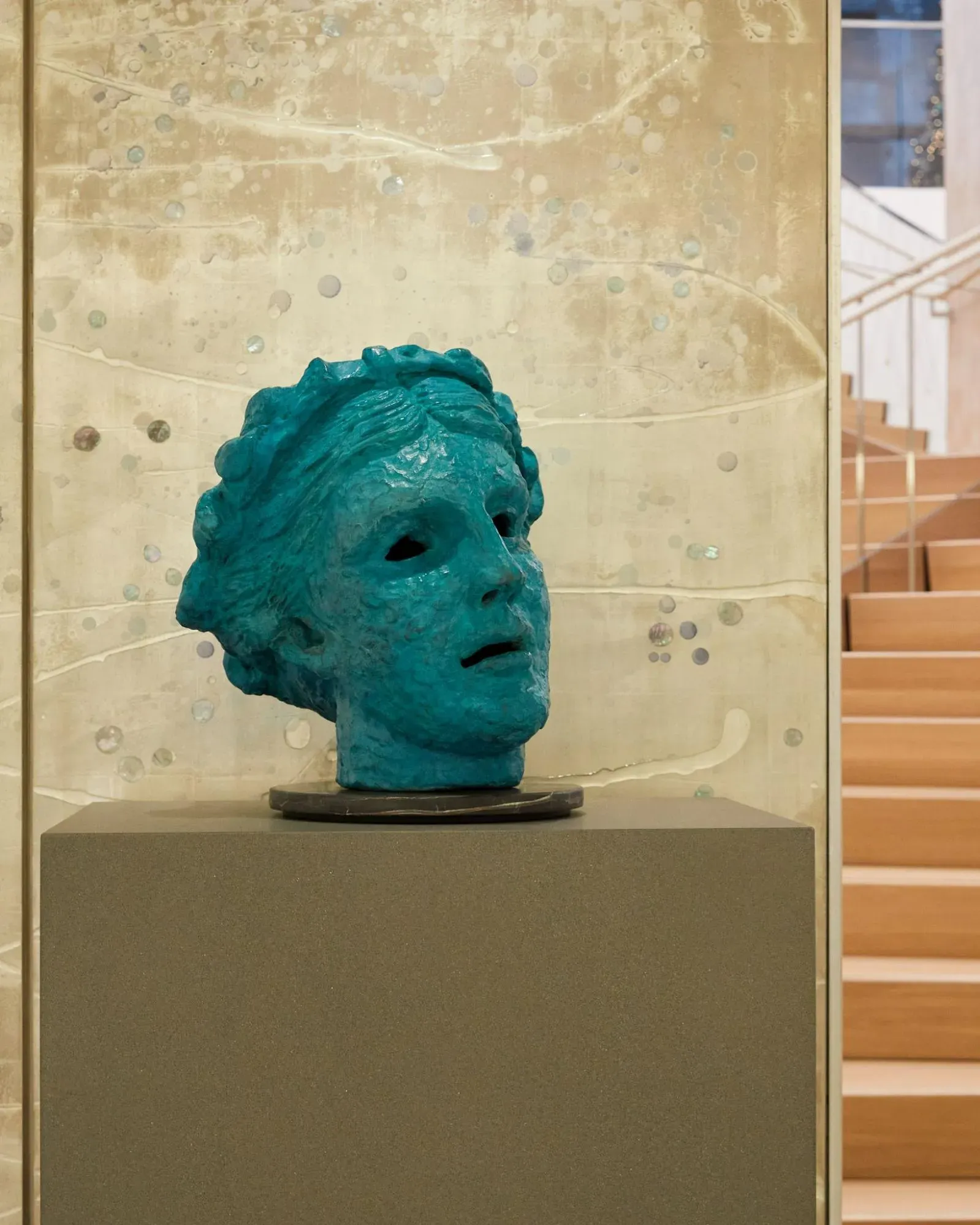
‘Head of Thalia II.’ George Petrides. 2022. Courtesy of the artist.
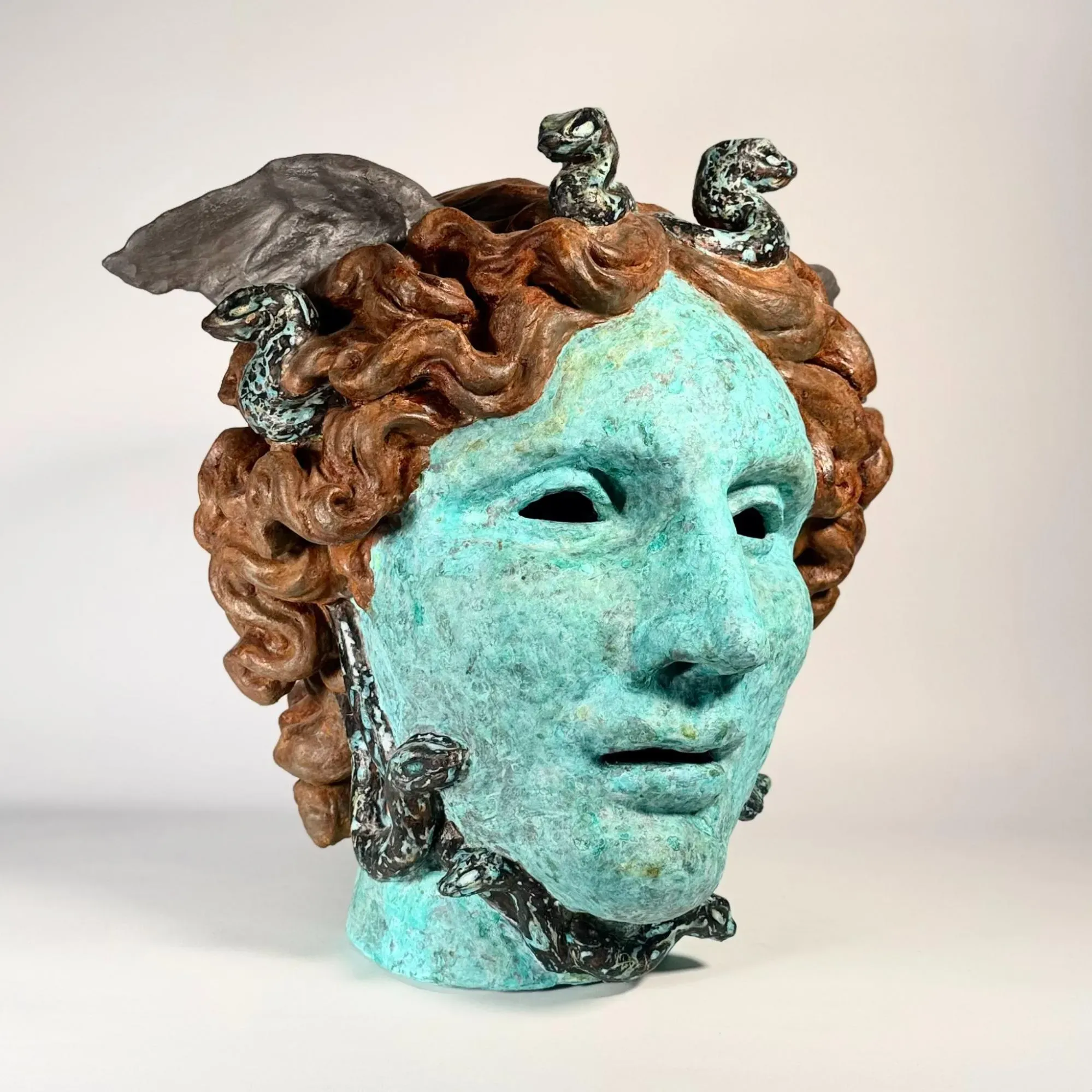
‘Medusa of Serifos.’ George Petrides. 2026. Courtesy of the artist.