The Tracks We Left Behind
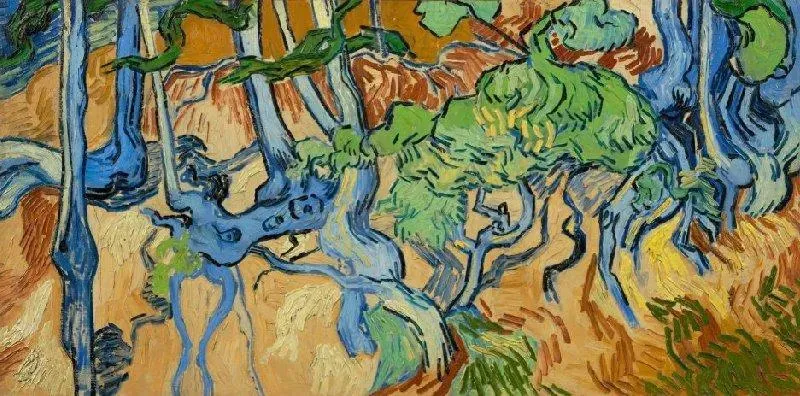
‘Leleh.’ Sara Al Abdali. 2018. Natural pigments, gold, and gouache on paper. 23 × 29 cm. Courtesy of the artist.
Roots transcend their role as mere remnants of the past to become the starting point from which our awareness of the world takes shape — a hidden force that continues to shape the present we inhabit, connecting us to our memory and to the history that formed our society and culture. Returning to our roots, then, is more than an act of nostalgia. It is an attempt to understand what shaped our identity and what continues to influence the way we see the world today.
In the work of Saudi artist Sara Al Abdali, a painting does not begin with the first stroke of color or with the first element taking shape on its surface. It begins earlier, with reading, research and a return to the archives. What ultimately appears as a finished artwork is simply another step in a research journey that, for her, is far from over.
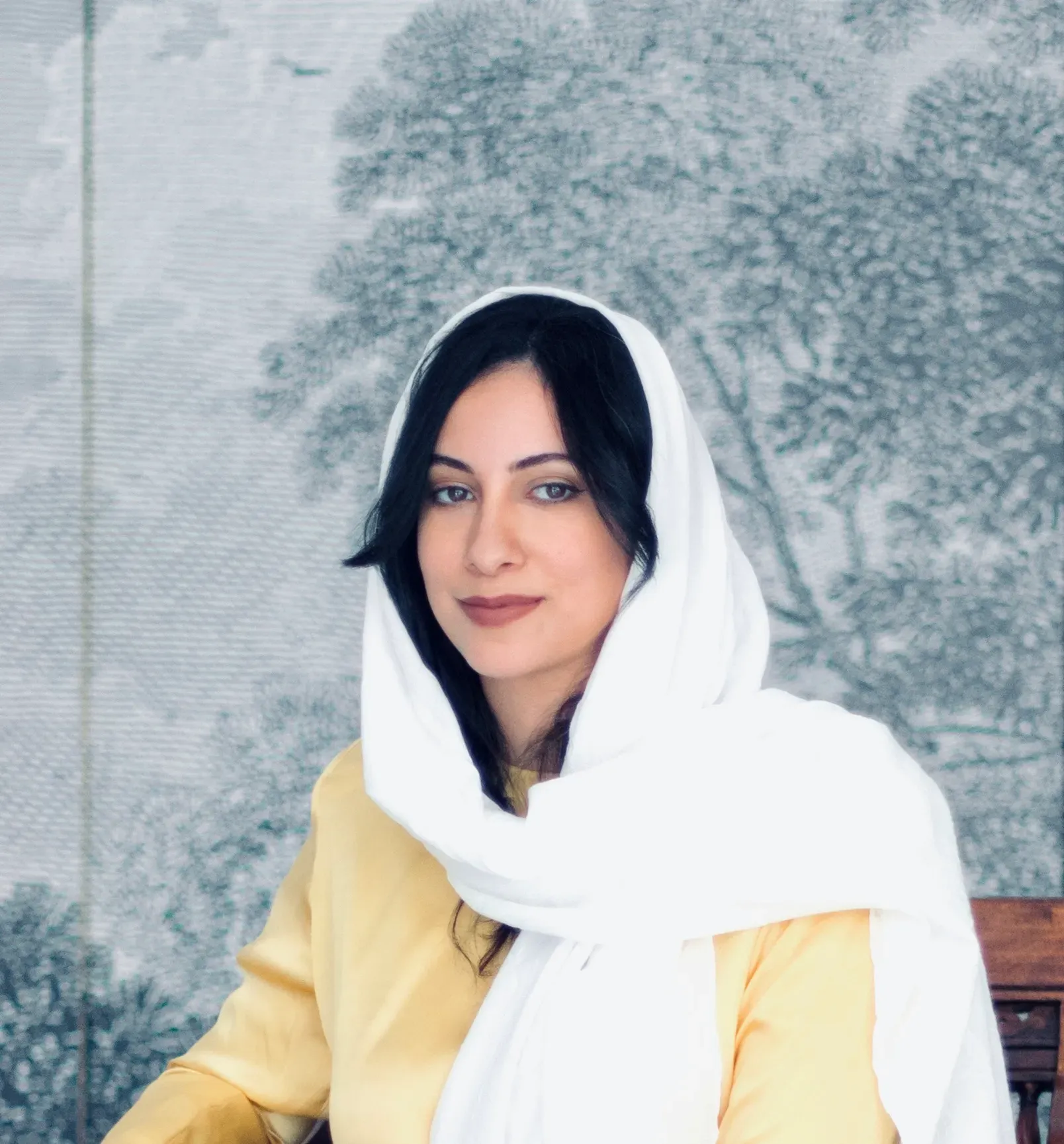
Artist Sara Al Abdali.
In this interview, we take a closer look at the practice of Sara Al Abdali. An artist and researcher, her work centers on identity and culture, as well as questions of belonging and historical narratives in the region. Through her artistic world and practice, we discover how she brings forgotten historical contexts back to life by telling stories that have gone untold.
Al Abdali describes the relationship between art and research as a complex one: "Some works emerge after years of research, where my research topics come together and vary within a single framework. An important artwork may transcend interpretation, or it may be connected to a particular research topic."
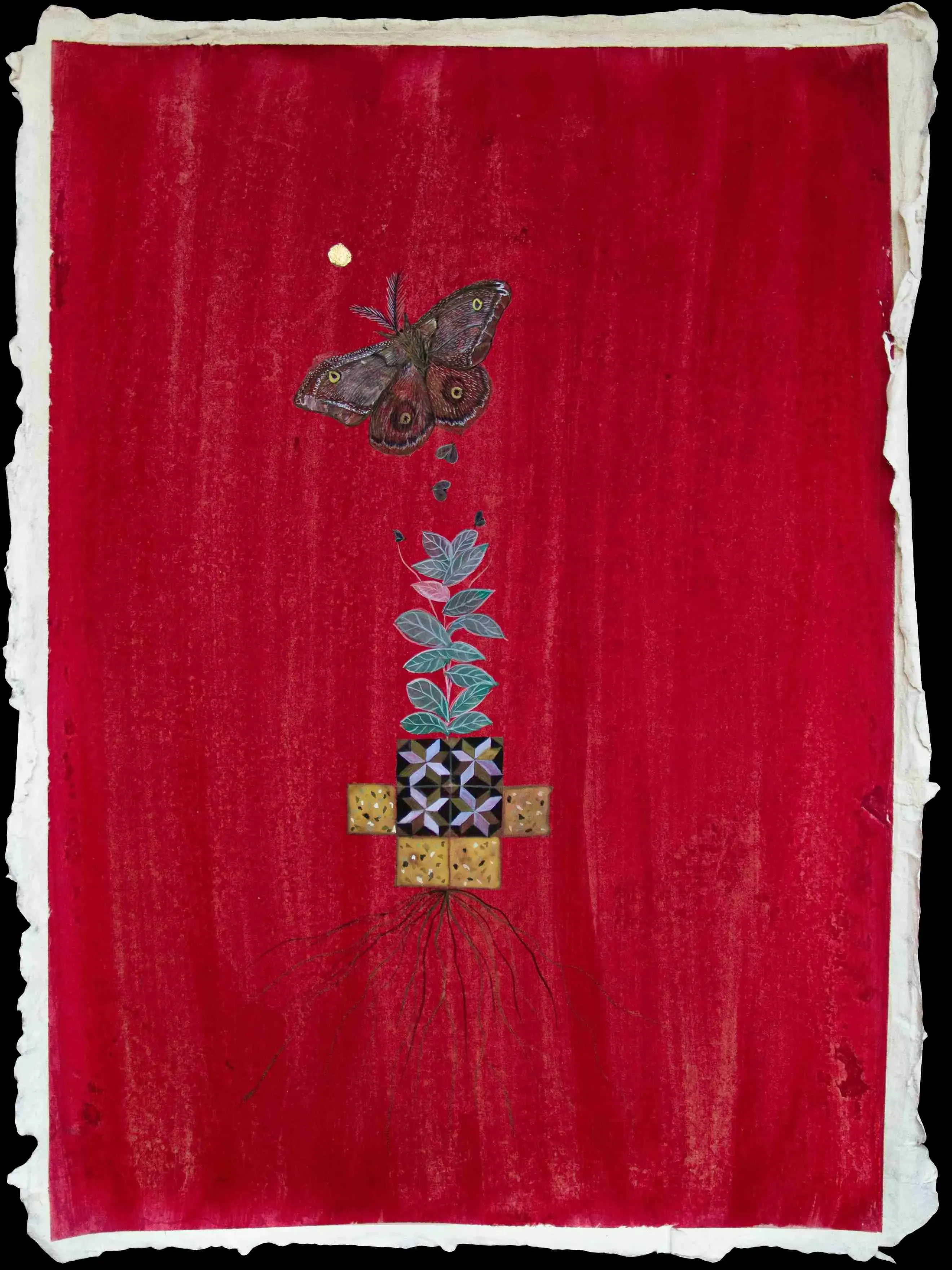
‘Circle of Life.’ Sara Al Abdali. 2024. Gouache and gold on crimson-dyed wasli paper. 38 × 43 cm. Courtesy of the artist.
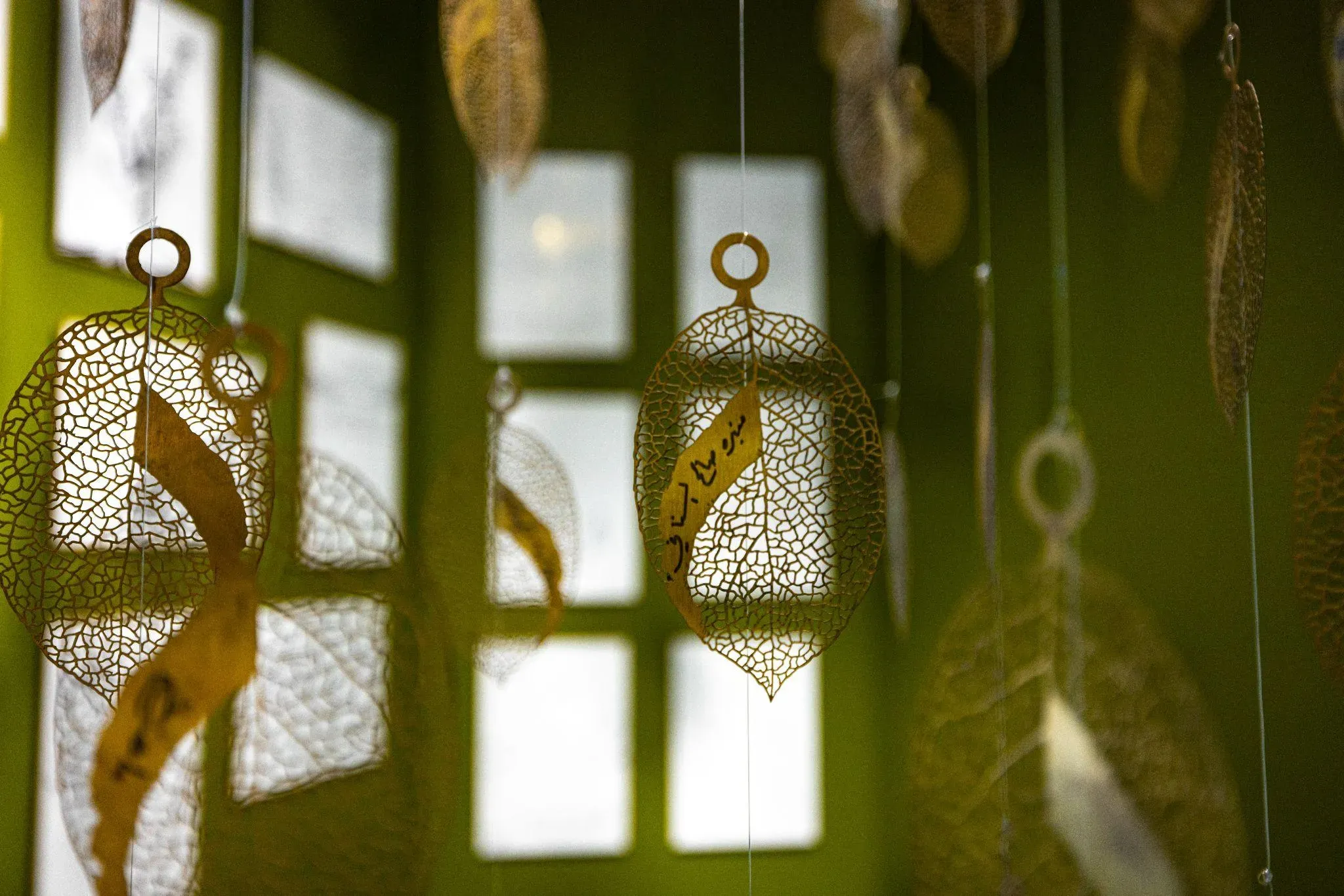
For this reason, Al Abdali sees history as more than material for documentation; it is also a space for rereading and reinterpretation. In "After Hijrah", commissioned by the 2023 Islamic Arts Biennale, she revisited gravestones from Al Ma'alah Cemetery alongside a sound installation that traces a timeline of events in Makkah and its political and social history. This work later extended into a series of works documenting the culture of death and mourning in the Hijaz through an artistic retelling of the poems inscribed on gravestones. This historical exploration also found its way into her first novel, "Departure in the Depths of Madinah."
Those who follow her work will notice that she does not seek to retell history as it was, but rather to question it and let it speak. She explains: "I look for ways to make history speak, whether through art or writing, because without a thoughtful projection onto present realities and contemporary events, history remains neglected and confined to academic research and scholarly articles. As an artist, experimentation and breaking conventions are part of my nature. I find both challenge and pleasure in trying to understand history and engage with it in new ways."
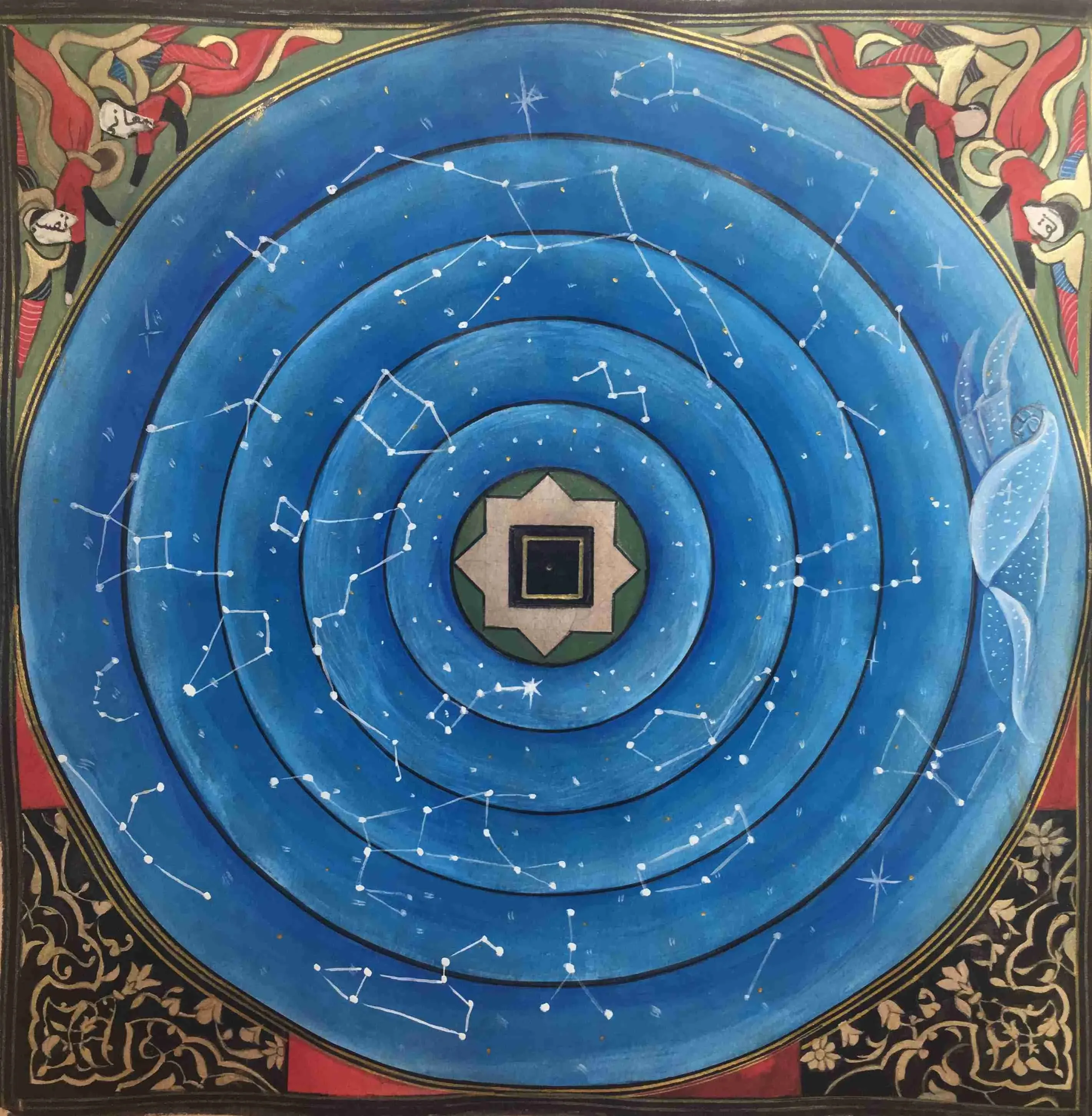
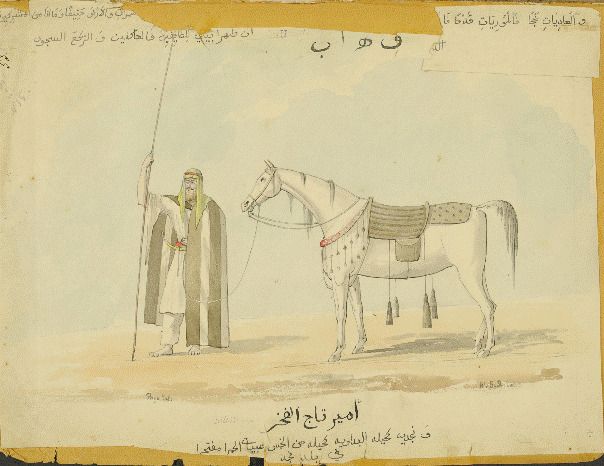
‘Al-Bait Al-M’amur.’ Sara Al Abdali. 2018. Natural pigments and gouache on paper. 20 × 20 cm. Courtesy of the artist.
Researching archives, oral histories, and material culture does not lead her only into the history of the wider world. At times, it also reveals her own personal history as well. She explains: "One of the things that surprised me most while researching before writing my novel Departure in the Depths of Madinah was something I found in an issue of Al Qibla newspaper, which was published during the same period in which the people of Madinah endured the Seferberlik siege. By chance, I discovered that some of my grandmother’s relatives had been forcibly deported to Bulgaria. My research was originally driven by a desire to understand the collective psyche of the people of Madinah, who had buried so many memories of that painful siege. I never imagined I would encounter a history that touched me so closely; one that I had never heard about from my own family."
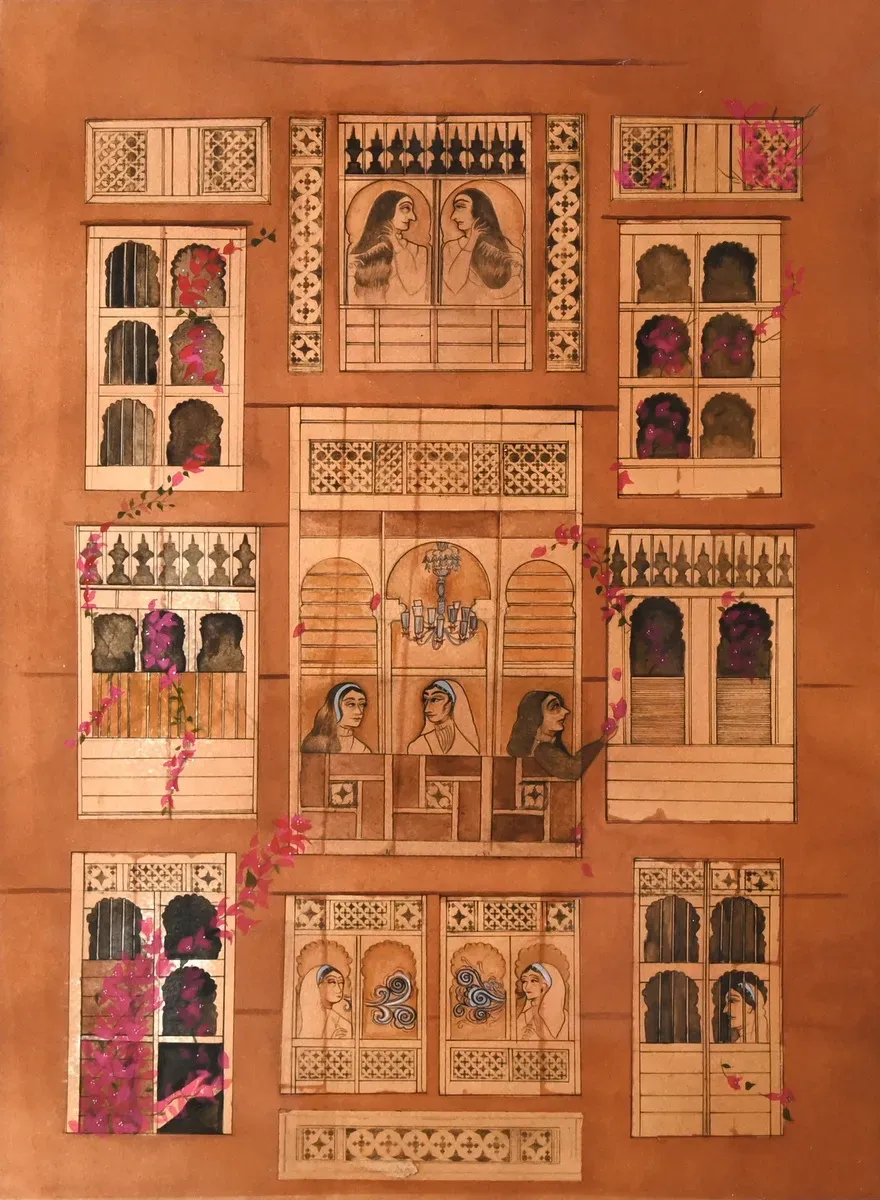
‘Women and the Bougainvillea.’ Sara Al Abdali. 2018. Gouache and tea stain on paper. 42×59 cm. Courtesy of the artist.
Architecture, ornamentation, and traditional crafts feature in her artistic practice as more than visual elements. She explains: "These elements reflect the society and the city they come from. Through their details, whether rich or minimal, we can understand a person’s social standing, the kinds of work or lifestyles connected to a household, and even the level of influence its inhabitants may have had. Within these details are the stories of families and communities, waiting to be read piece by piece until they reveal a clearer picture of society at that time. They also reflect society today: the way people choose architecture, collect art, or even live with the simplest material objects can tell us a great deal about their tastes, their identity, and the cultural influences that shape them."
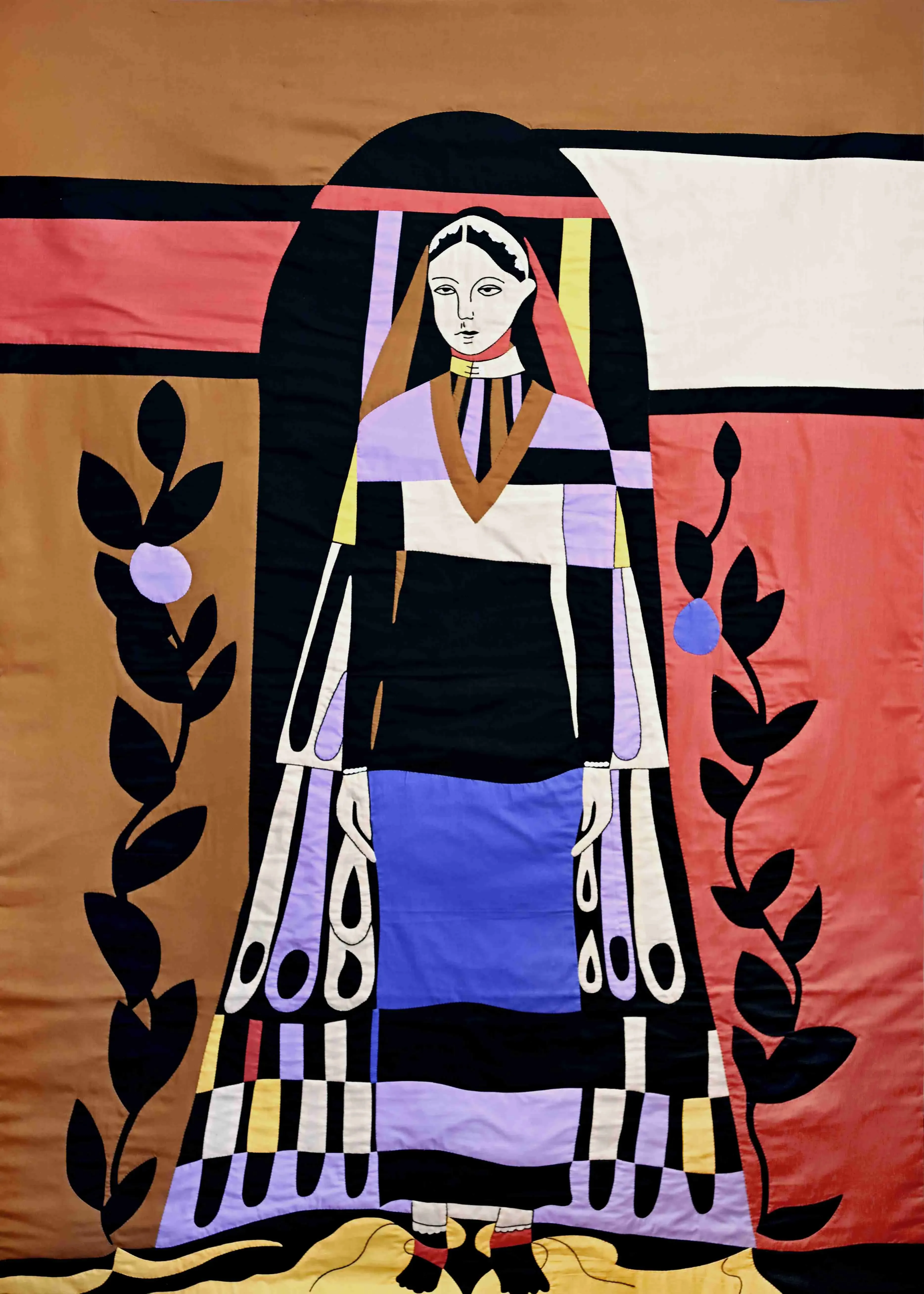
‘Bride.’ Sara Al Abdali. 2026. Appliqué embroidery on cotton fabric. 124 × 179 cm. Courtesy of the artist.
On art and its role in preserving memory, she says: "Art can play an effective role in preserving memory and in finding innovative, contemporary ways to bring its features into our modern age. Art renews the life of every past, while also having the capacity to build bridges between different professional practices."
Perhaps this is why Jiddah and the Hijaz remain a constant thread throughout her artistic practice. The deeper she ventures into research and artistic practice, the more convinced she becomes that vast areas remain unexplored.
And on returning to one’s roots and remaining faithful to them while embracing experimentation, she says: "I see no conflict between the two, as long as respect for one’s roots and origins remains firm and assured." She adds, regarding the process of delving deeper into one’s roots: "It requires great courage, an enormous degree of honesty and a willingness to accept criticism, given the controversy it may provoke. I do not believe an artist can venture very far without undertaking that difficult journey. The seed that gave rise to such extensive questioning and experimentation, and that set the artistic journey in motion in the first place, cannot mature without taking that path and seeing it through. Even as an artist matures in thought, they continue to journey around those roots, however far they may travel from them."
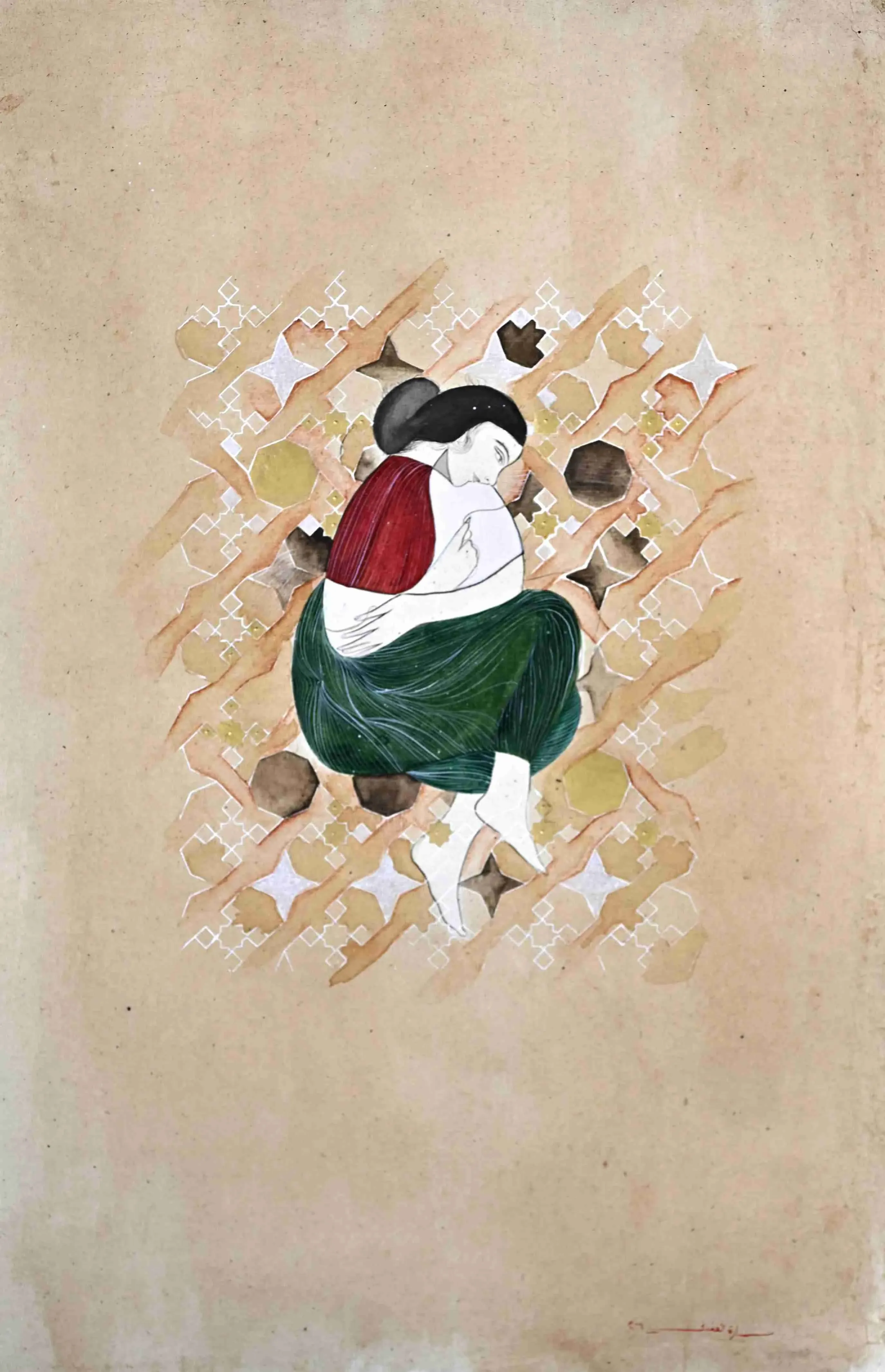
‘Glimpse of Eve 2.’ Sara Al Abdali. 2026. Japanese gouache, ink, and gold on handmade wasli paper. 42 × 64 cm. Courtesy of the artist.
When asked about art and its boundaries in the face of what cannot be said, she explains: "I believe the complexity of art lies in its ambiguity, its capacity to accommodate multiple interpretations, and the extent to which many works prove worthy of entering the realm of the timeless, both in their intangible and material value. Despite all of this, the human being remains central to making art speak." She adds: "Art has no voice without people and their appreciation of it."
Despite her artistic and research-based engagement with history, memory, and identity, one question continues to guide her work, and she has yet to come close to answering it. She says: "The deliberate forgetting of memory, which sometimes hides behind neglect, leads me to many places as I try to understand this phenomenon. I do not know whether I have offered any answers. For me, art is a metaphorical tool for asking questions rather than answering them."
Enjoy more of Sara Al Abdali’s remarkable work.
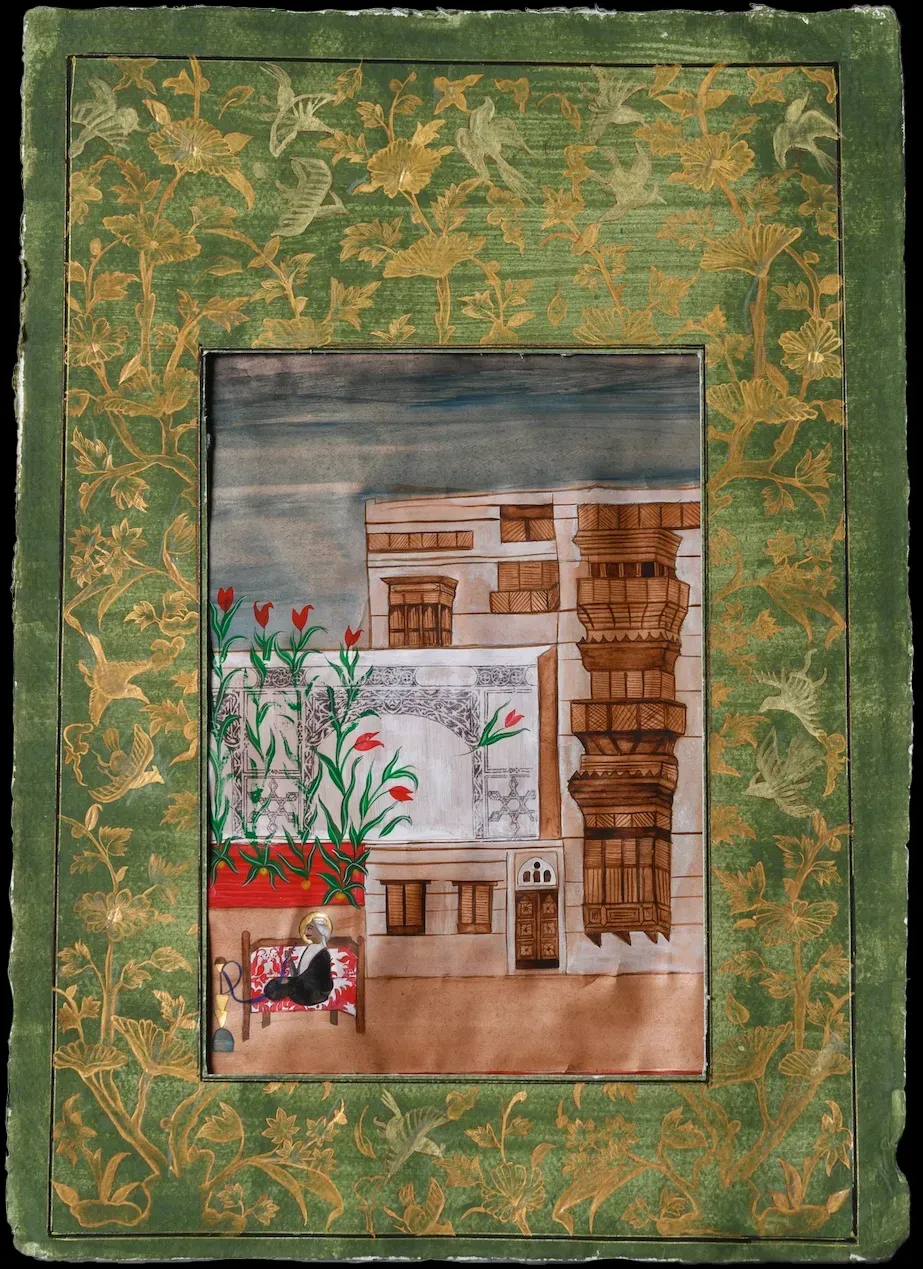
‘Sukoon.’ 2018. Sara Al Abdali. Natural pigments, gold, and gouache on paper. 18 × 34 cm. Courtesy of the artist.
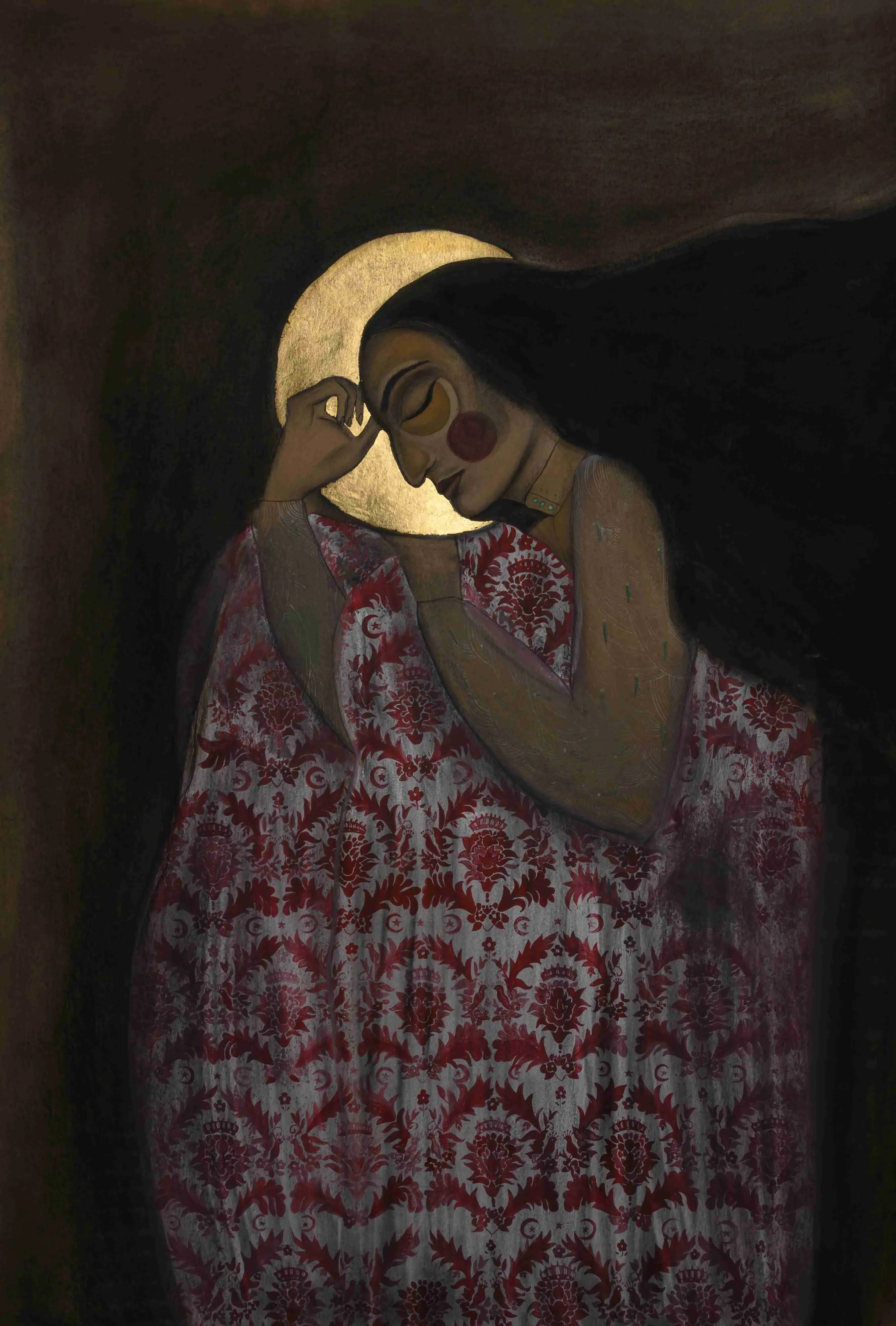
‘Layla falls asleep.’ Sara Al Abdali. 2019. Gouache, charcoal, and gold on paper. 70 × 160 cm. Courtesy of the artist.
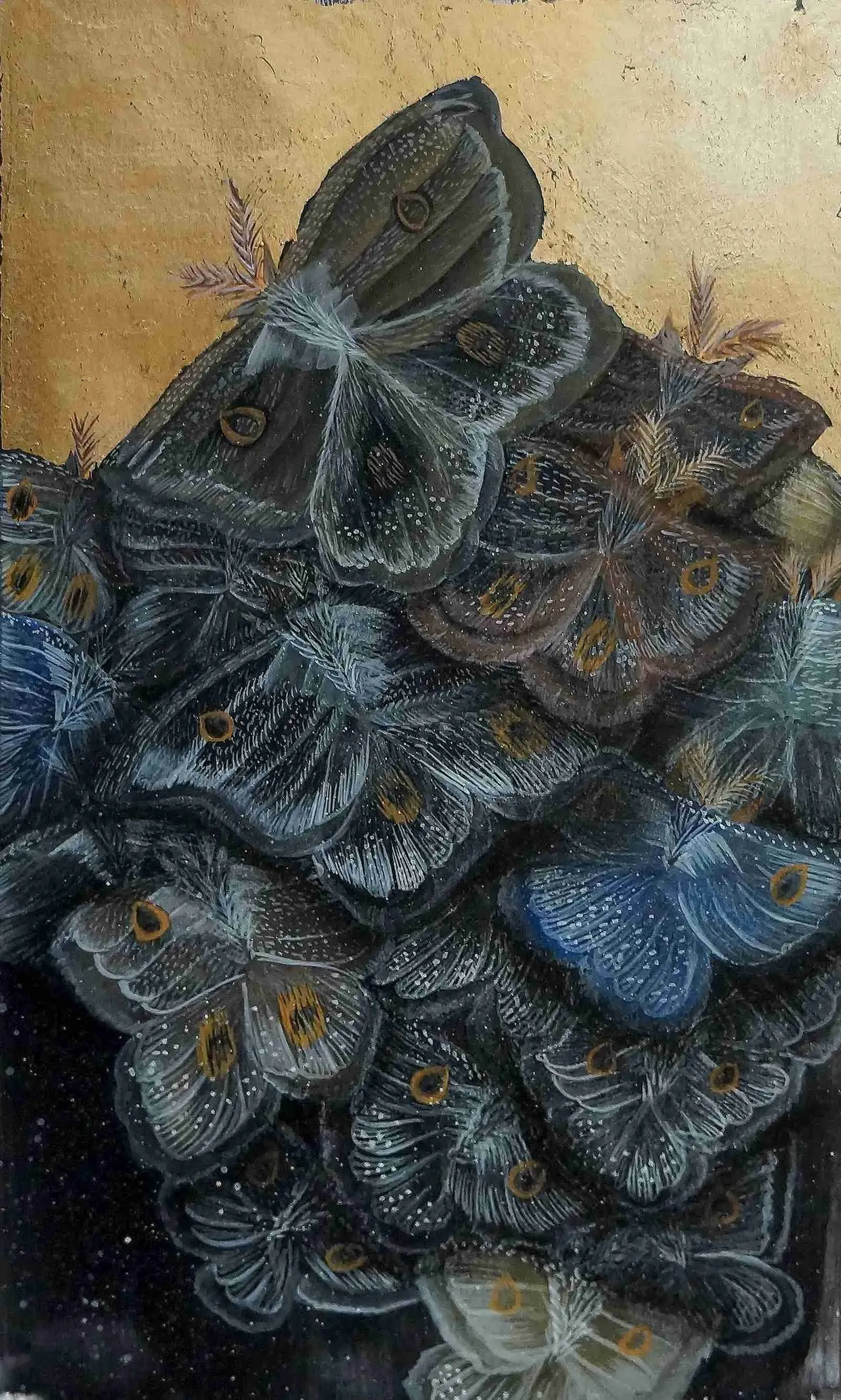
‘Burning from love.’ Sara Al Abdali. 2024. Gouache, charcoal, and gold on paper. 14 × 24 cm. Courtesy of the artist.
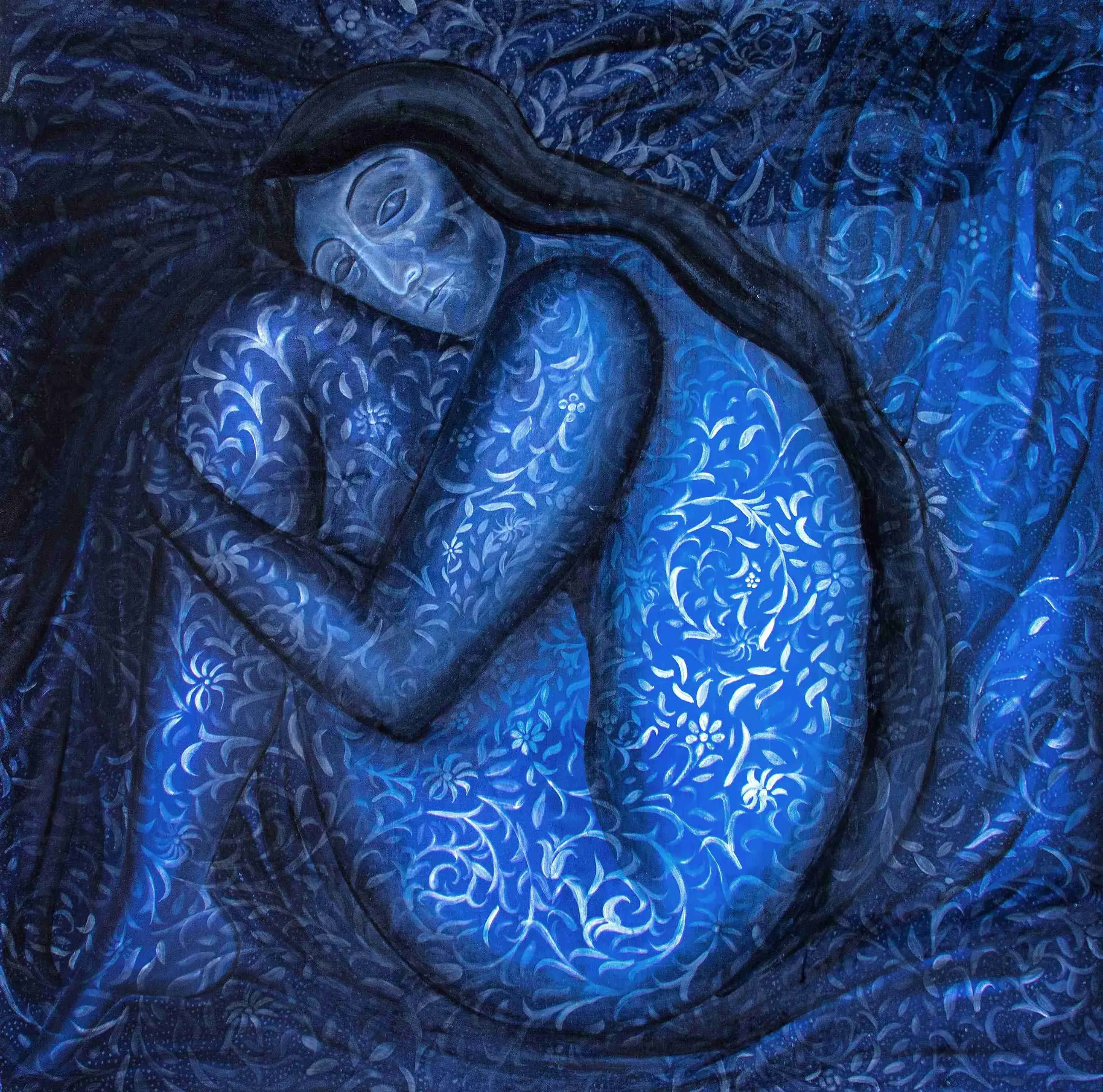
‘Against the Howling Wind.’ Sara Al Abdali. 2023. Acrylic and oil paints on wood. 100 × 100 cm. Courtesy of the artist.