Artistic Expressions: A Wait Without Arrival
Edward Hopper, Cape Cod Morning, 1950, oil on canvas, 34 1/8 x 40 ¼ in. (86.7 x 102.3 cm.), Smithsonian American Art Museum, Gift of the Sara Roby Foundation, 1986.6.92.
Have you ever wondered how time appears in paintings? Apart from an obvious hourglass or a clock, how can time exist without being explicit or fleeting, hidden in the heart and in the details of these paintings?
In a painting, as in life, time is not measured in minutes, but rather felt through waiting. Moments that pass incomplete by a lack of arrival, where light reflects on a wall, or a gaze that fixates on a door or window. These all suggest that time is not merely passing in a mechanical sense, but a sensation that grows with the soul, echoing between pleading and emptiness, between movement and stillness.
There is also more silence than spoken words. Quiet people, waiting women, and others lost in contemplation. It is true that waiting and reflection in art have mostly befallen women, waiting for the unknown, a wait without arrival. This is something that I never understood.
Art is the memory of time, and a painting is a moment held captive. In this article, we will take a journey through and towards time and how it is portrayed in art; a time held still in a gaze, in the distance between desire and its becoming.
Edward Hopper is viewed as the painter of still cities and scenes drowned in solitude. His paintings contain no central event. Nothing happens, and yet everything happens. Loneliness dominates his characters who are alone even when surrounded by others.
Time is a structural element in his art, in emptiness, slowness, or stillness. Waiting in Hopper’s paintings is not for an external event, but for an internal one. Waiting for the self or perhaps for a moment that was lost forever.
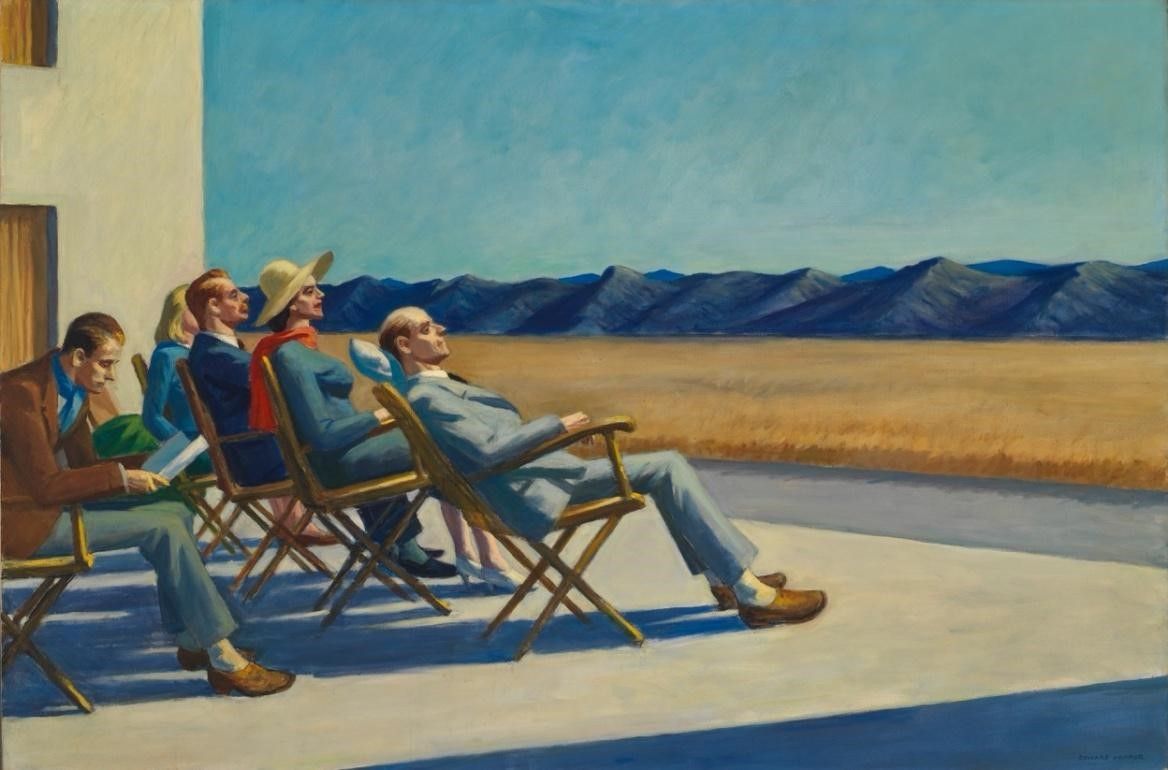
Edward Hopper, People in the Sun, 1960, oil on canvas, 40 3/8 x 60 3/8 in. (102.6 x 153.4 cm.), Smithsonian American Art Museum, Gift of S.C. Johnson & Son, Inc., 1969.47.61.
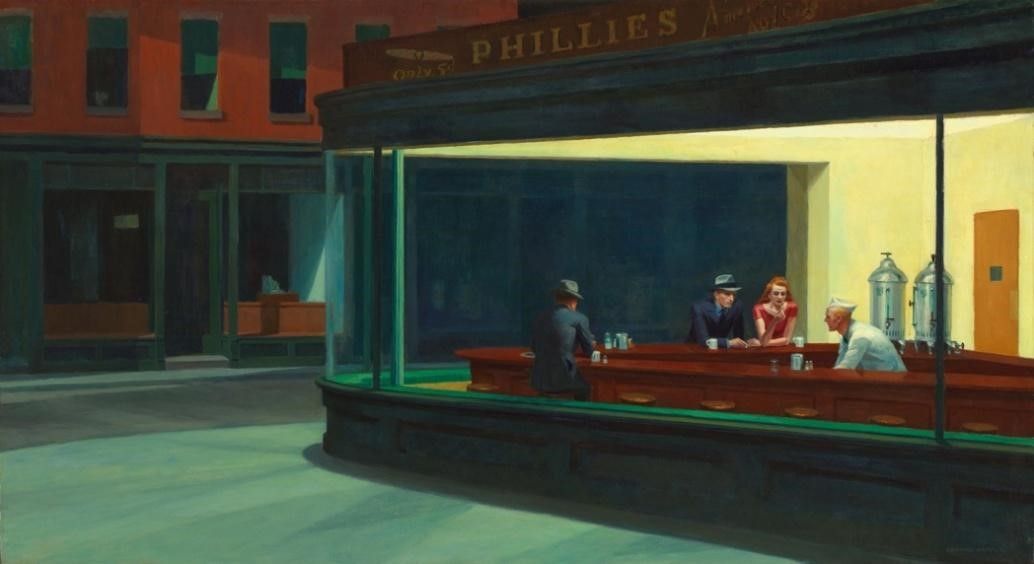
Edward Hopper, Nighthawks (1942). Oil on canvas, 84.1 x 152.4 cm (33.1 x 60.0 in.) Art Institute of Chicago. Credit: Wikimedia.
The paintings by Alfred Stevens embody moments where time pauses. Modern women living in scenes full of stillness. That stillness embodied in them hints at a wait without arrival. Time in his painting is still, while light and shadow tell the whole story.
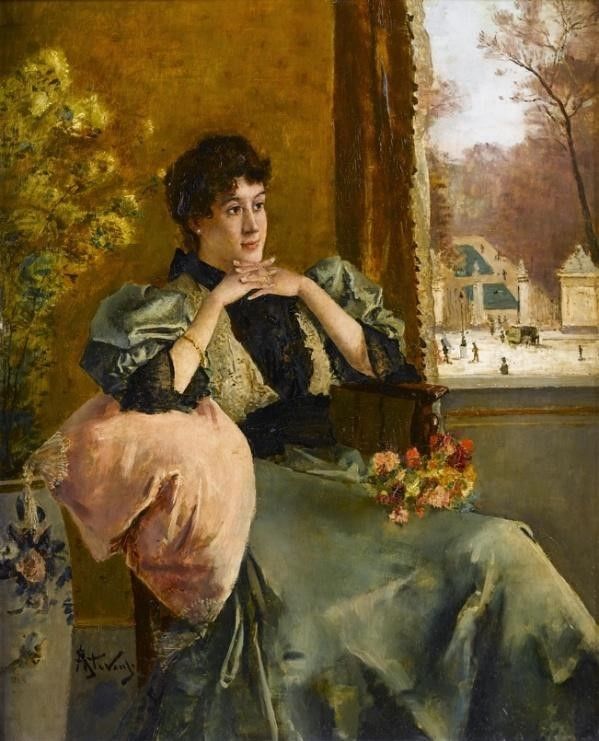
Alfred Stevens, Femme pensive près d'une fenêtre (1906). Oil on panel, 56 x 46 cm. Credit: Wikimedia.
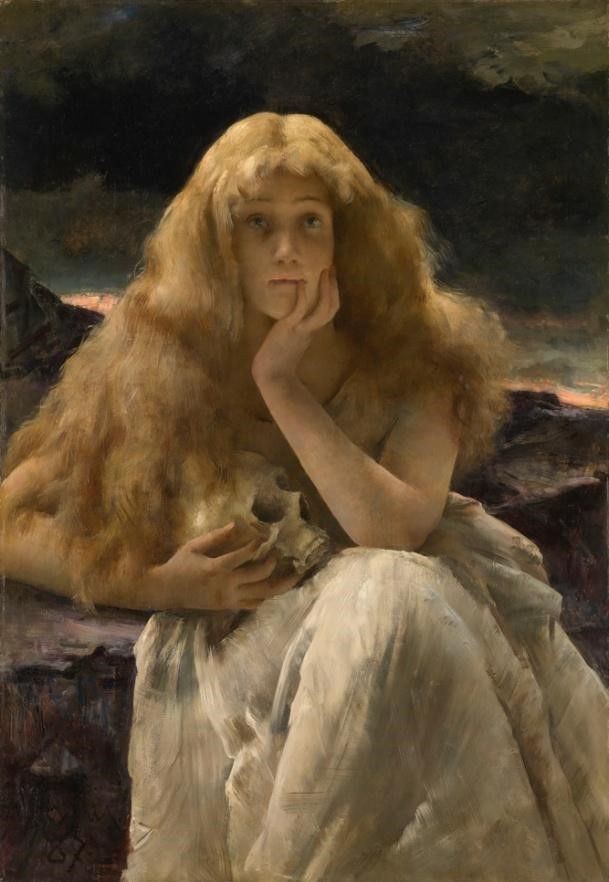
Alfred Stevens, Mary-Magdalene (1887). Oil on canvas, 111.8 x 77.3 cm (44 x 30.4 in). Museum of Fine Arts Ghent. Credit: Wikimedia.

Alfred Stevens, Moonlight (1885). Oil on panel, 27.3 x 21.8 cm (10 ¾ x 8 9/16 in). Clark Art Institute. Credit: Wikimedia.
Rooms in pale muted colors, doors half-open, distant windows, and women embodying stillness in the background. These are some of the images that pop to mind when you hear the name Vilhelm Hammershøi. Nothing moves in his paintings except light that reflects on the walls or the floor. Time is still visible, only through emptiness.
In an article titled “Vilhelm Hammershøi: The End of Waiting,” W. Song suggests that Hammershøi’s works feel as though they exist at the end of waiting, meaning that the wait has either been completed or abandoned, settled in stillness.
Explore how emptiness is reflected by Hammershøi, through the following paintings:
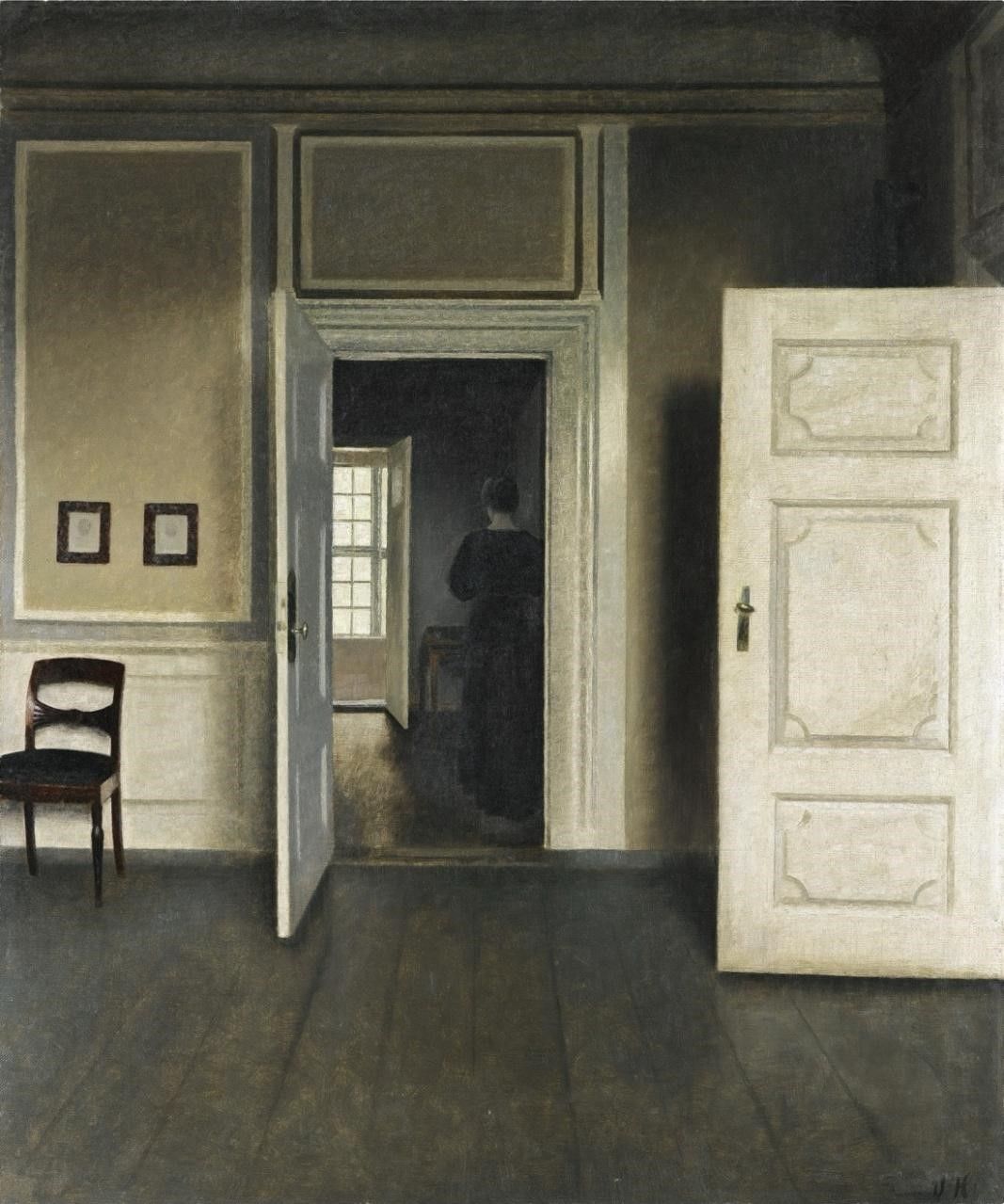
Vilhelm Hammershøi, Interior. Strandgade 30 (1901). Oil on canvas, 66 x 55 cm. Credit: Artvee.
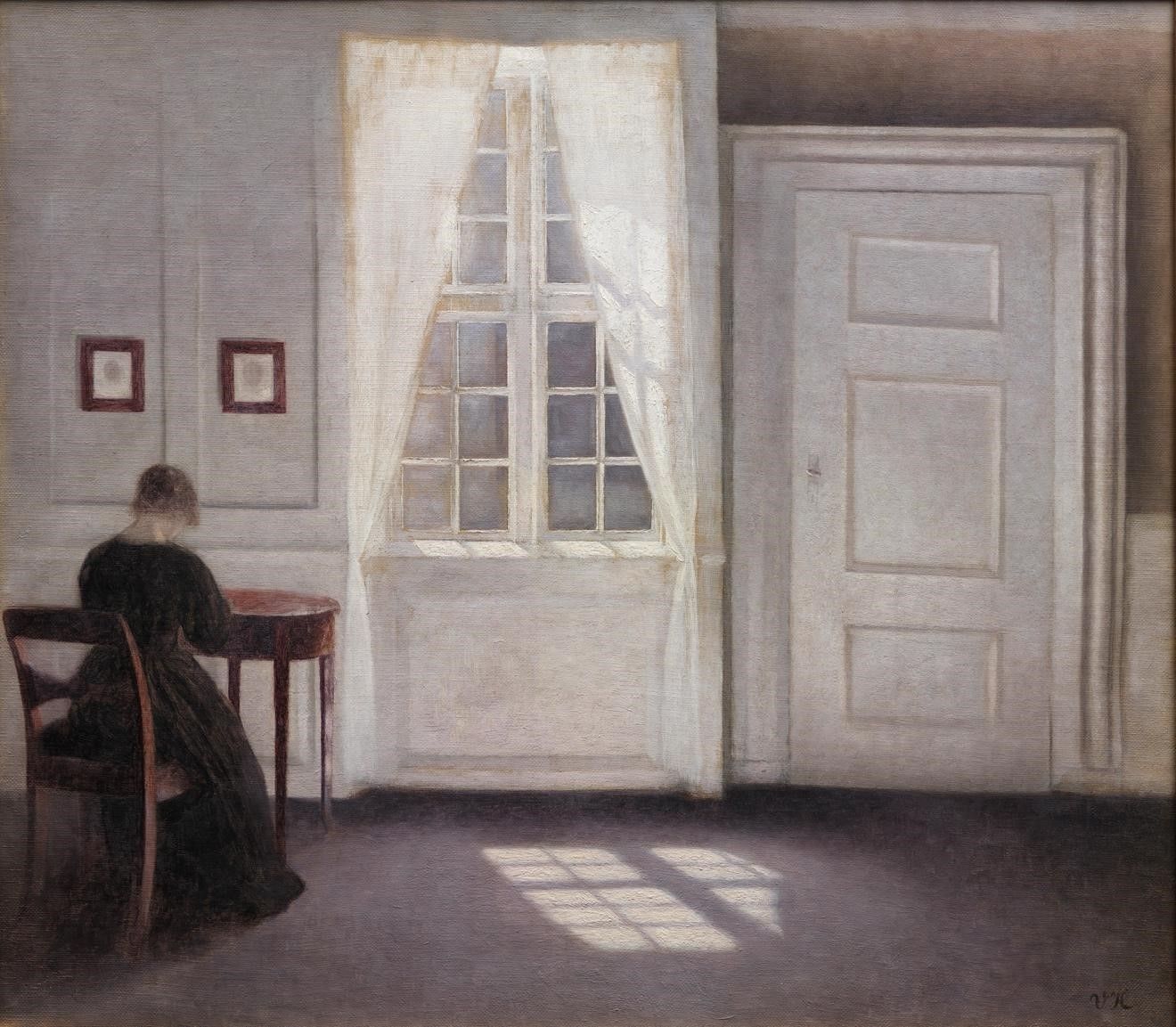
Vilhelm Hammershøi, A Room In The Artist’s Home In Strandgade, Copenhagen, With The Artist’s Wife (1901). Oil on canvas, 18.3 x 20.47 in. Credit: Artvee.
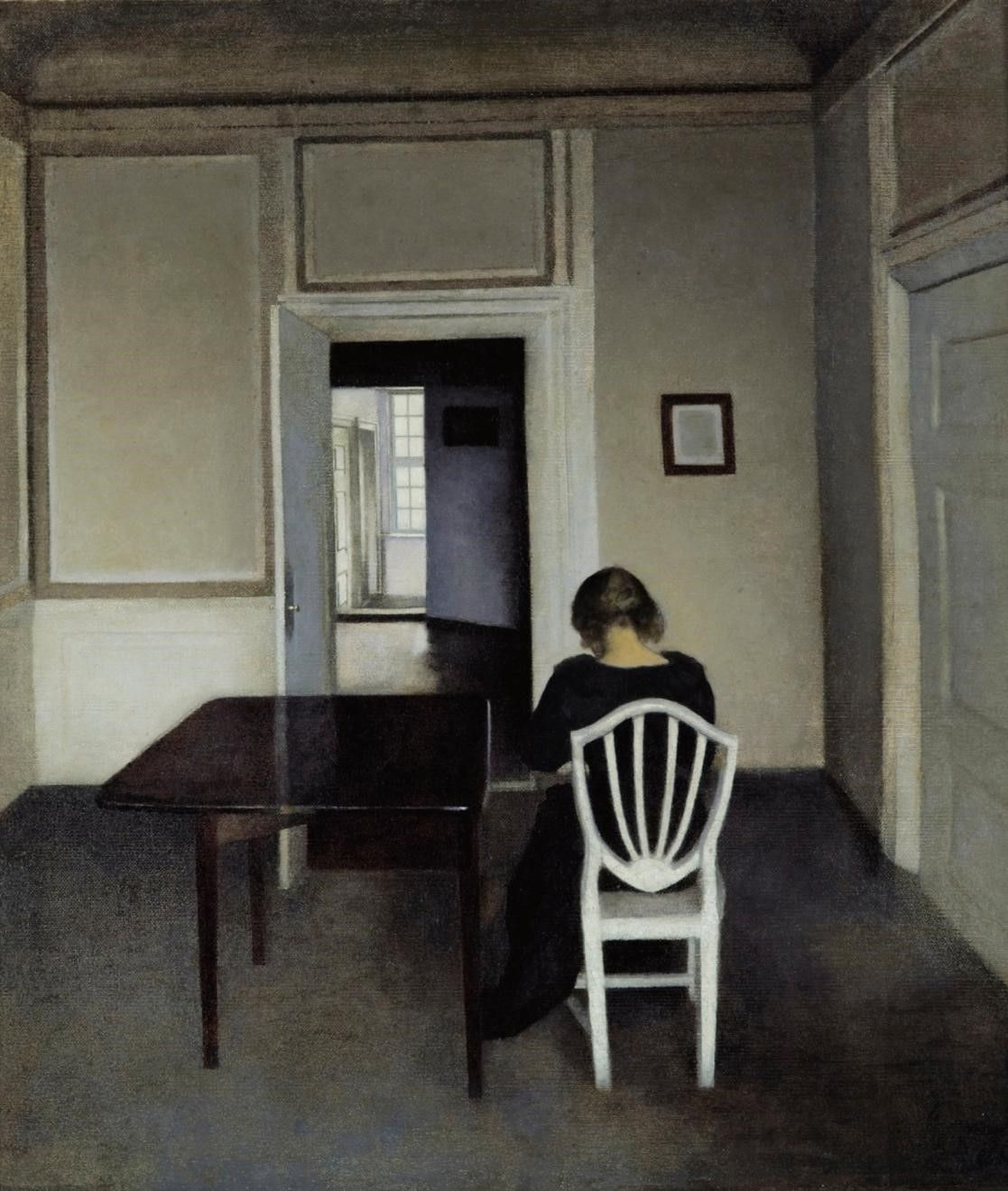
Vilhelm Hammershøi, Interior With Ida in A White Chair (1900). Oil on canvas, 57 x 49cm. Credit: Artvee.