Fact or Fable: The Abbasid Clock That Ticked in Charlemagne’s Court
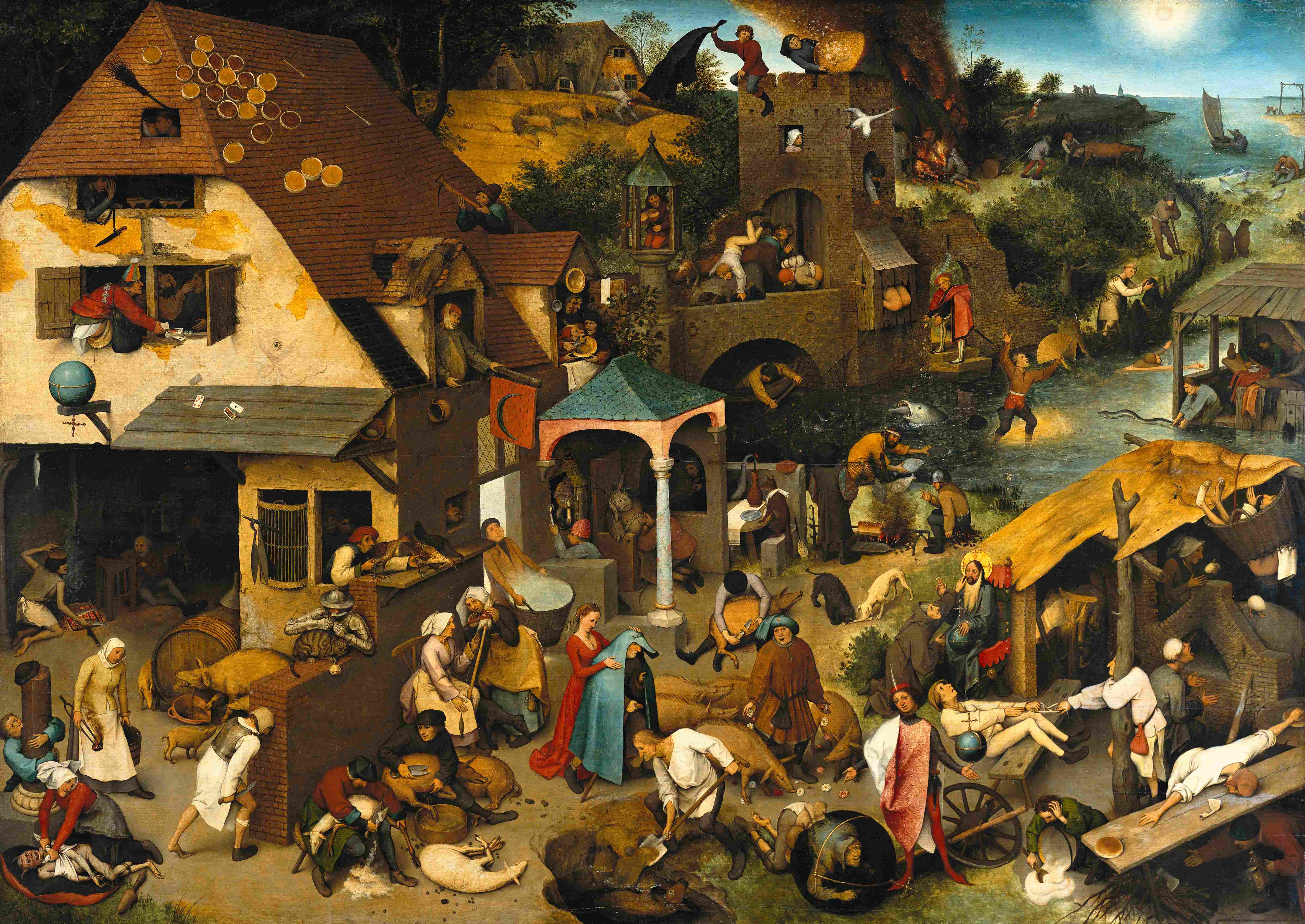
Tribute of the Caliph Harun al-Rashid to Charlemagne from Jacob Jordaens series titled “The History of Charlemagne,” between 1665 – 1675 CE. Credit: Wikimedia Commons.
“… the said king’s [Harun al-Rashid] gifts were many precious silken cloaks, and perfumes and unguents and balsam; and also a clock (horologium), made in wondrous mechanical art from auricalcum, in which the course of the twelve hours was turned by means of a clepsydra (a water-clock), with as many brass little balls, which at the completion of the hours would fall, and by their fall, having dropped, would make a cymbal ring beneath; with added in it also twelve horsemen of the same number, who through twelve windows, at the hours being complete, would go out, and by the impulse of their going forth, would close as many windows which before had been open; and moreover there were many other things in the clock itself, which now to enumerate would be long.”
_ The Frankish Annals, 807 CE
In 807 CE, the Abbasid caliph Harun al-Rashid is said to have dispatched a gift to Charlemagne in Aachen: a brass water-clock (or clepsydra) with automata, symbolic of technological splendor. The Royal Frankish Annals describe this “marvelous mechanical contraption” whose twelve balls would drop each hour, triggering cymbals, and twelve small horsemen would emerge from windows, closing them after their performance.
Witnesses in the Royal Frankish Annals describe a court transfixed. The king himself admired the craftsmanship, yet legend has it that not all shared his wonder. Monks, uneasy with its rhythmic clatter and metallic chime, whispered that it was enchanted; possessed. And so, they dismantled it, believing they were casting out an evil spirit; they simply could not conceive of metal moving with purpose. Whether truth or myth, the story captures the awe and fear provoked by a technology centuries ahead of its time.
Yet while Western sources (Einhard, the Annals) recount this gift quite plainly and with detail, the story is far harder to corroborate in Arabic or Islamic chronicles. Abbasid-era historians, such as Al-Tabari, offer little or no account of a diplomatic mission of such fanfare to Charlemagne. Some scholars argue that routine diplomacy, especially successful ones, often went unrecorded in those sources, particularly when Byzantine affairs by comparison dominated the historiographical attention in the Abbasid sphere.
From a historiographical vantage point, the proposition is plausible but not certain. And to compare between historical sources from both sides; in the occident, the logistical and political context supports the narrative: the Carolingian–Abbasid rapprochement (aimed in part against the Umayyads in al-Andalus) is well documented, and the exchange of exotic gifts – including an elephant named Abul-Abbas – is attested in Latin sources. However, on the other hand, the absence of corroboration does not necessarily present a contradiction. Historians suggest that the silence in Arabic sources might stem from differing priorities, source preservation, or selective recording rather than proof that nothing indeed had occurred.
The weight of Western documentary evidence makes the event reasonably credible, though not beyond reproach. A generous historian would regard the water-clock gift as part historical, part diplomatic legend. The incident is rooted in real embassies but perhaps embellished in transmission. For now, it stands as a powerful symbol: whether wholly factual or partly mythic or apocryphal, it expresses the ambition of both courts to project prestige, power and mutual respect across religious and geographic divides.
It is indeed worth contemplating how an event viewed as a major incident from one side is at the same time deemed as a regular happenstance, unworthy of pinning down into text for the other, and this brings to mind the shifting gears as made manifest by power, time and collected memory.
So what do you think, is it fact or fable?
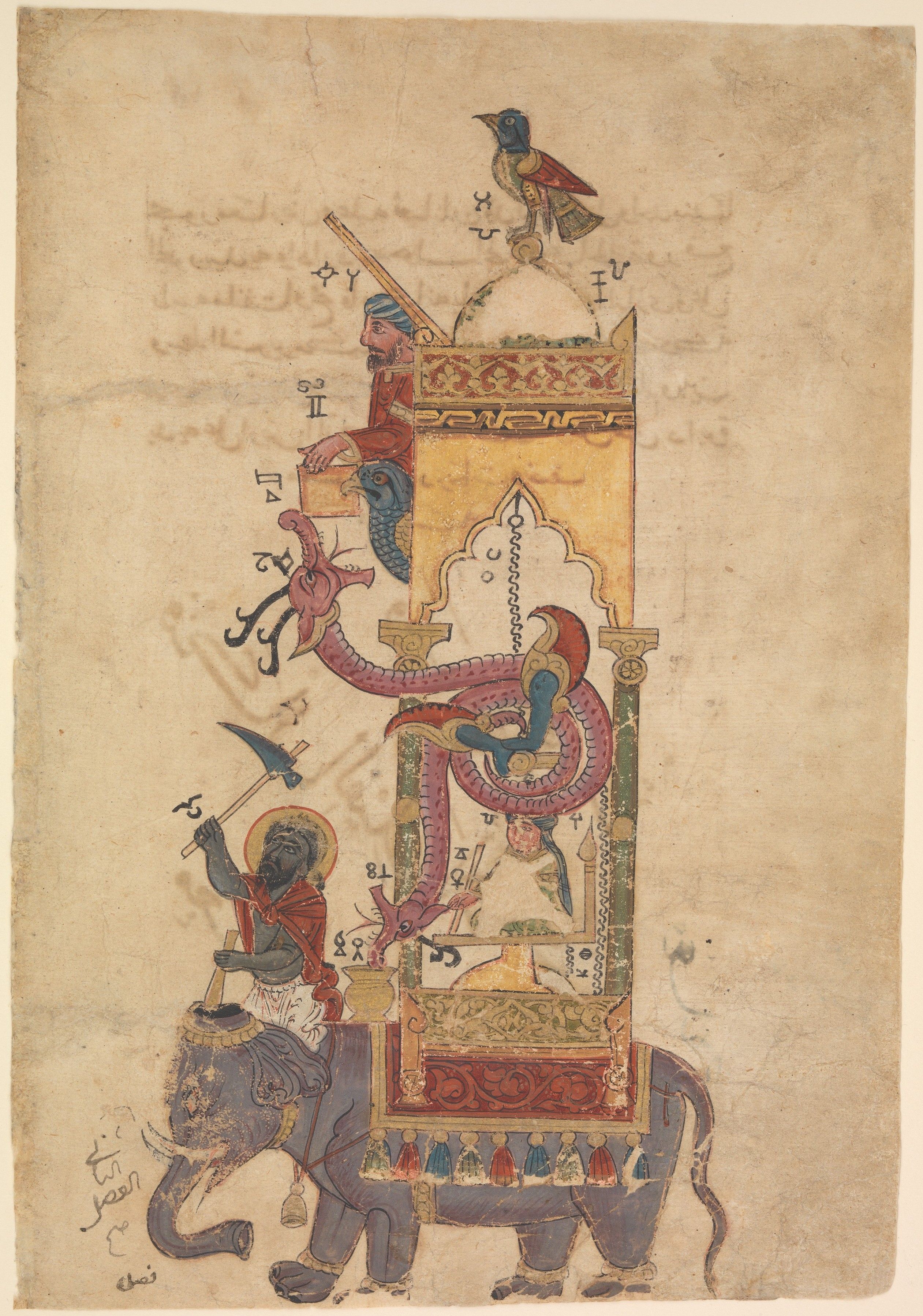
An imagined illustration of the Charlemagne Clock from Ismail al-Jazari’s Book of Knowledge of Ingenious Mechanical Devices, 1206 CE. Calligrapher Farrukh ibn `Abd al-Latif, Image from Metropolitan Museum.