The Exploration of Time Within and Without
Almanac for the City of Zubarah, ‘Abd al-Raḥmān bin Aḥmad al-Zawāwī, (d. unknown), Zubarah, c. 1173 AH/1790 CE. The Maliki scholar al-Zawāwī compiled this lunar almanac for timekeeping in the city of Zubarah. It details the months and days of the year, as well as prayer times. The document includes some marginal notes related to agriculture and seasonal changes. HC.ARC.2015.0002.0005.0001.
In our continuing collaboration with Qatar National Library (QNL) we are showcasing a selection of some of their treasures, as curated by Aysha Hassan Al Ansari, the Head of Heritage Collections at QNL.
These 18-19th century pieces reflect the criticality of time in the Islamic world. The wooden quadrants help us navigate our planet, as objects that are the physical embodiment of our constant fascination with the stars.
Meanwhile the almanac helps us navigate our souls, as a detailed calendar of daily prayer times to be guided by.
Enjoy discovering these timeless objects:
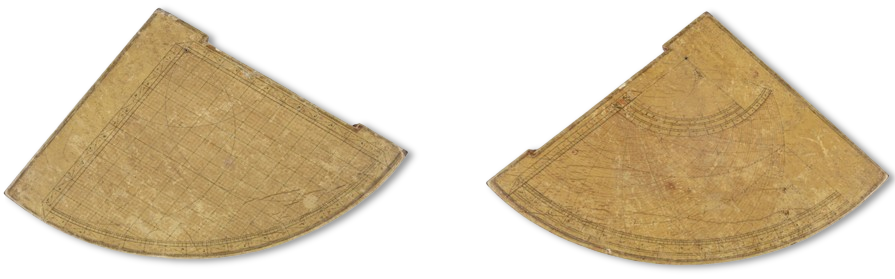
Two Ottoman Wooden Quadrants, Ottoman Turkey, 1200s AH/ 1800s CE. Quadrants were a widely used instrument in the Islamic world for navigating, by determining longitudes and latitudes and also telling the time. These have their original plumb bobs attached. The larger one is signed and dated by its maker. HC.3D.2017.0006, HC.3D.2017.0007.
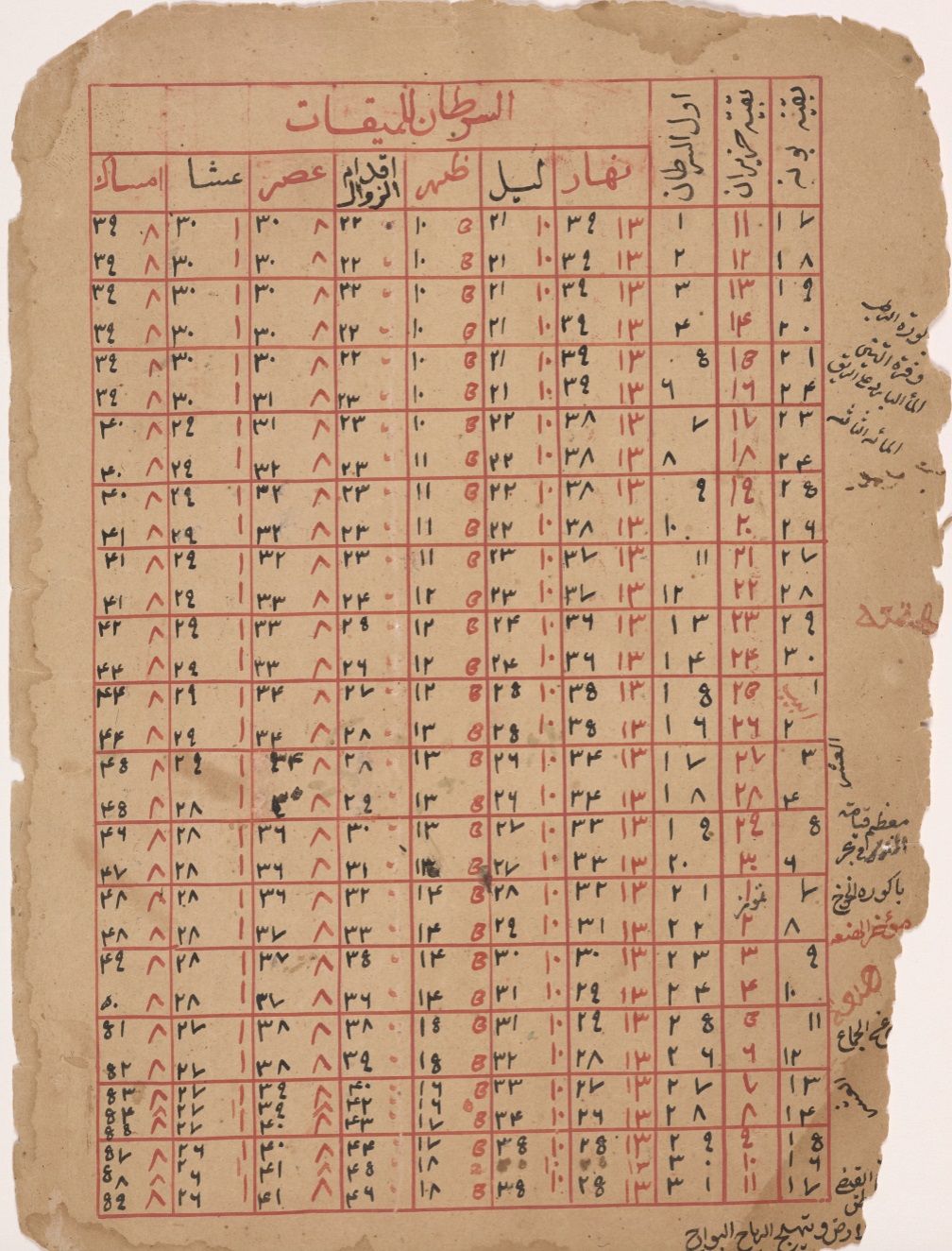
Almanac for the City of Zubarah, ‘Abd al-Raḥmān bin Aḥmad al-Zawāwī, (d. unknown), Zubarah, c. 1173 AH/1790 CE. The Maliki scholar al-Zawāwī compiled this lunar almanac for timekeeping in the city of Zubarah. It details the months and days of the year, as well as prayer times. The document includes some marginal notes related to agriculture and seasonal changes. HC.ARC.2015.0002.0005.0001.