Weaving Time and Place
Toob Toob Ya Bahar by Abdulla Buhijji and Noor Alwan. Palm fronds. Ithra Collection 2025.
The practice of khoos, or palm weaving, is a traditional craft of using palm fronds to create everyday practical or decorative objects, such as baskets, fans, trays and even just ropes. A global handicraft heritage, palm weaving is practiced in many regions around the world, but most obviously where palm trees grow naturally such as the Arabian Peninsula and Gulf regions, South Asia, North Africa, and Latin America.
In Saudi Arabia, we have to look at al-Hasa—the heart of palm trees in the Kingdom—for some of our best examples of palm weaving. The Oasis in al-Hasa, a UNESCO World Heritage site, is considered the largest in the world as it is home to more than three million palm trees. This abundance makes it fertile ground not only for local palm weavers to practice their cherished craft, but as a source of inspiration for artists, designers, and creatives everywhere.
Take the work of Saudi artist Bashaer Hawsawi, a participant in Ithra’s first Khoos Residency, titled The Chain that Rebelled Against the Earth and showcased at Ithra’s Baseqat: The Palm Tree exhibition. Their artwork invites reflection on loss and continuity while using the symbolism of palm fronds in an attempt to bridge the past and present, preserving cultural heritage through contemporary creativity.
Daniel Valero (Mestiz)’s La Cabra Chair, also showcased at Baseqat, takes palm-woven objects to the next level through a lovely chair inspired by Mexican rural tradition and mixing traditional artisanship with a contemporary touch.
Palm weaving reminds us that creativity knows no boundaries, especially across time and place.
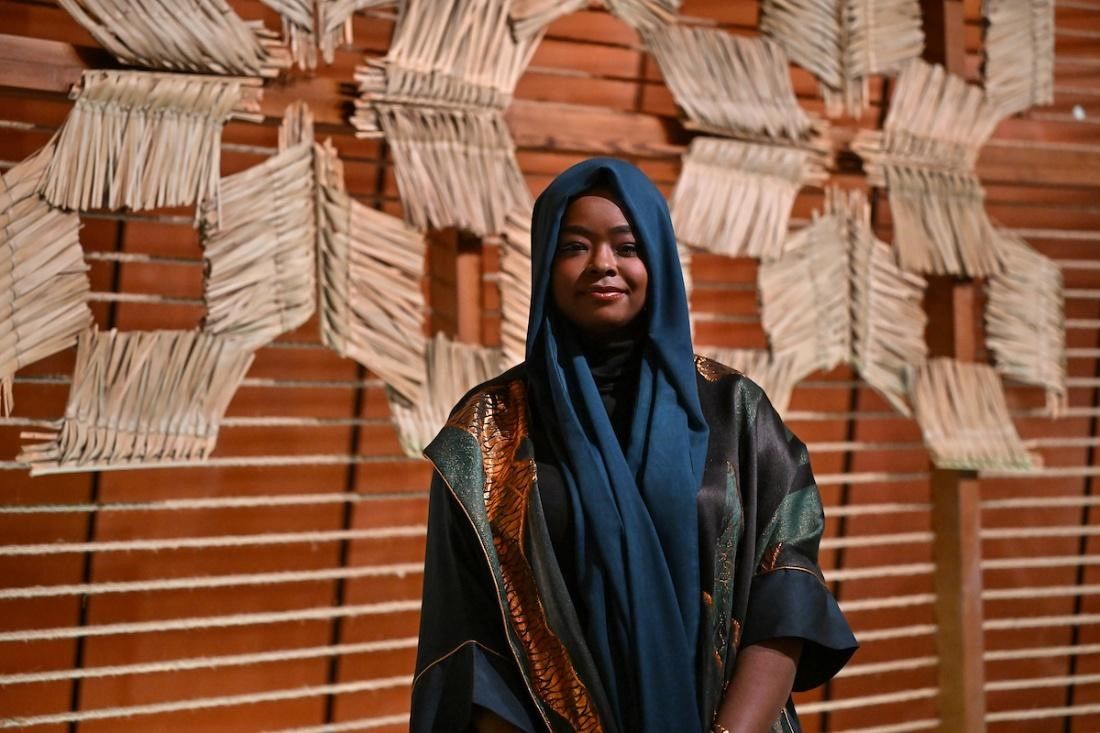
The Chain that Rebelled Against the Earth by Bashaer Hawsawi. Palm Fronds, Mixed Media. Ithra Collection 2025.
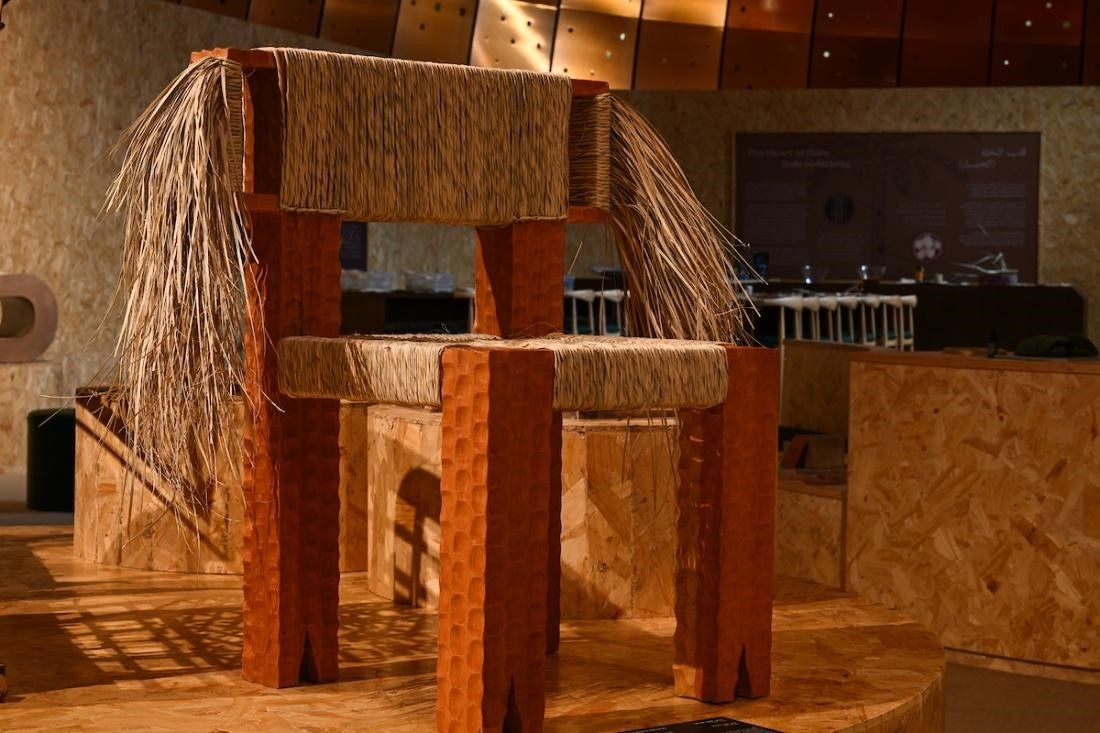
Le Cabra Chair by Daniel Valero, (Mestiz). Palm Weaving and Read Pine Wood. Ithra Collection 2025.