In Search of Water at the Diriyah Biennale
‘House of Eternity.' Théo Mercier. 2026. Sand, bentonite clay and metal. In this monumental installation, Mercier transforms the exhibition space into a vast, surrealistic landscape in which objects of different scale meet. Rising from a loose terrain of sand, four compacted sculptures echo termite mounds, desert monoliths, fossils and shells, and the wind-carved architectures of deep time. These geological forms carry the double imprint of nature and culture, at once shaped by erosion and by human hand. Courtesy of Diriyah Biennale Foundation.
Moving, searching, finding and then moving again.
The third edition of the Diriyah Contemporary Art Biennale taking place in 2026 is an exhibition of an unfolding journey, one that traces movement not as a linear trajectory, but as a series of pauses, returns, and transformations. Titled In Interludes and Transitions, and shaped by the vision of artistic directors Nora Razian and Sabih Ahmed, the Biennale draws from the deep histories of migration across the Arab World. It recalls the knowledge systems of nomadic and Bedouin communities, for whom survival depended on reading winds, stars, and, most crucially, the hidden geographies of water.
Water, in this context, is a destination, a memory, and a force that compels human movement. Across deserts and continents, the search for water has shaped routes of trade, pilgrimage, and migration. It has defined where communities gather and where they must leave behind. The Biennale’s conceptual framing of “processions” echoes this enduring reality: humanity is always in motion, often guided by the promise or absence of water. Water is both a material necessity and a narrative current, one that carries stories across time.
Among the works that crystallize this theme, Agustina Woodgate’s The Source stands out as a quietly radical intervention. Installed as a series of functional drinking fountains, the work exposes the hidden infrastructures that govern access to water. Pipes, tanks, and irrigation routes, usually buried or obscured, are laid bare, transforming a simple act of drinking into an encounter with systems of control and distribution. Drawing from research in Al Ahsa’s ancient irrigation networks, Woodgate connects contemporary water politics to a two-thousand-year-old tradition of communal resource management. Here, water is consumed, negotiated, shared, and historically contested. The work reminds us that access to water has always been a matter of collective ethics as much as engineering.
If Woodgate addresses infrastructure, Karan Shrestha approaches water as a cosmological and sensory experience. His installation, structured around a pentagonal well, invites viewers into a contemplative space where geometry, sound, and motion converge. Water flows continuously, disrupted intermittently by a kinetic sculpture of falling brass bells. The resulting rhythm, part music, part interruption, evokes the fragile balance between abundance and scarcity. Drawing from the concept of the mandala, Shrestha positions water as a boundary and a connective force, shaping spiritual and physical worlds alike. Oral histories, myths, and environmental knowledge circulate through the work, suggesting that water is also a carrier of cultural memory, one that speaks as much as it sustains.
A more ecological and mythopoetic dimension emerges in the work of Trương Công Tùng. His installation transforms gourds, traditional vessels for water, into a living system of circulation. Tubes connect the objects in a delicate network, through which water flows, overflows, and evaporates. Referencing both irrigation practices and flood mythologies, the work oscillates between nourishment and catastrophe. Water here becomes an agent of both life and rupture, echoing the precarious balance faced by communities whose livelihoods depend on increasingly unstable climates. The sensory environment, smell of moist sand, trickling sounds, and shifting textures, draws the viewer into an ecosystem that is constantly changing, never fixed.
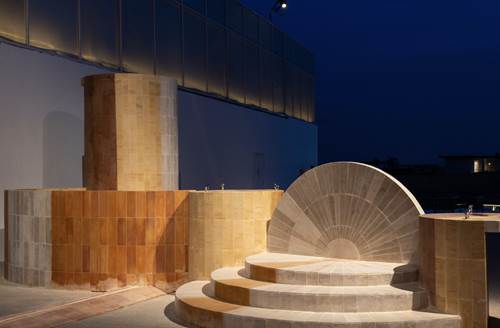
‘The Source.' Agustina Woodgate. 2026. Courtesy of Diriyah Biennale Foundation.
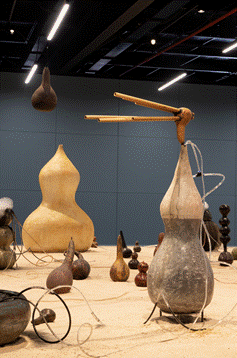
‘The State of Absence, Voices from Outside.' Trương Công Tùng. 2020 - ongoing. Courtesy of Diriyah Biennale Foundation.
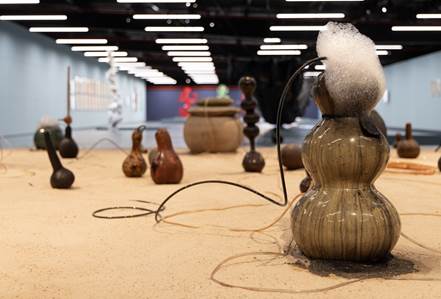
‘The State of Absence, Voices from Outside,’ by Trương Công Tùng. 2020 - ongoing. Courtesy of Diriyah Biennale Foundation.
Other works across the Biennale extend this meditation on water in more fragmentary but equally resonant ways. Rand Abdul Jabbar revisits the ancient flood narrative of the Epic of Gilgamesh (circa 2100 BCE) — the world’s earliest surviving narrative poem, which was composed in ancient Mesopotamia — reflecting on cycles of destruction and renewal. Dineo Seshee Bopape channels the sonic and ritual dimensions of water through recordings and gestures tied to earth and rain. Alana Hunt interrogates the violence embedded in dam infrastructures; Karan Shrestha’s installation expands on the idea of water as connector and transmitter; and Shadia Alem reimagines lost rivers and mythic feminine spirits as forces of potential return.
Taken together, these works suggest that water is not simply a resource but a relational field, binding humans to earth, to each other, and to histories that refuse to settle.
Gaida Al Mogren is an artistic Independent curator.
More artworks to enjoy:
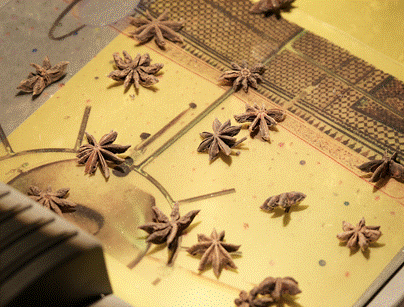
‘Matrices: thelletjang: Sedibeng, it comes with the rain.' Dineo Seshee Bopape (Raisibe). 2016-2026. Courtesy of Diriyah Biennale Foundation.
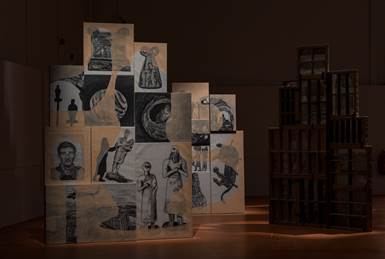
‘A Tale Before the Deluge.' Rand Abdul Jabbar. 2026. Installation of wooden molds, clay and charcoal on canvas. Courtesy of Diriyah Biennale Foundation.
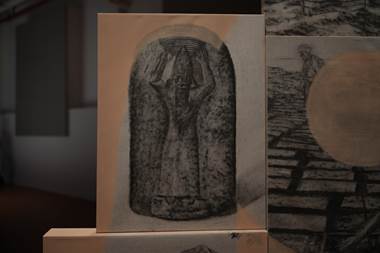
‘A Tale Before the Deluge.' Rand Abdul Jabbar. 2026. Installation of wooden molds, clay and charcoal on canvas. Courtesy of Diriyah Biennale Foundation.
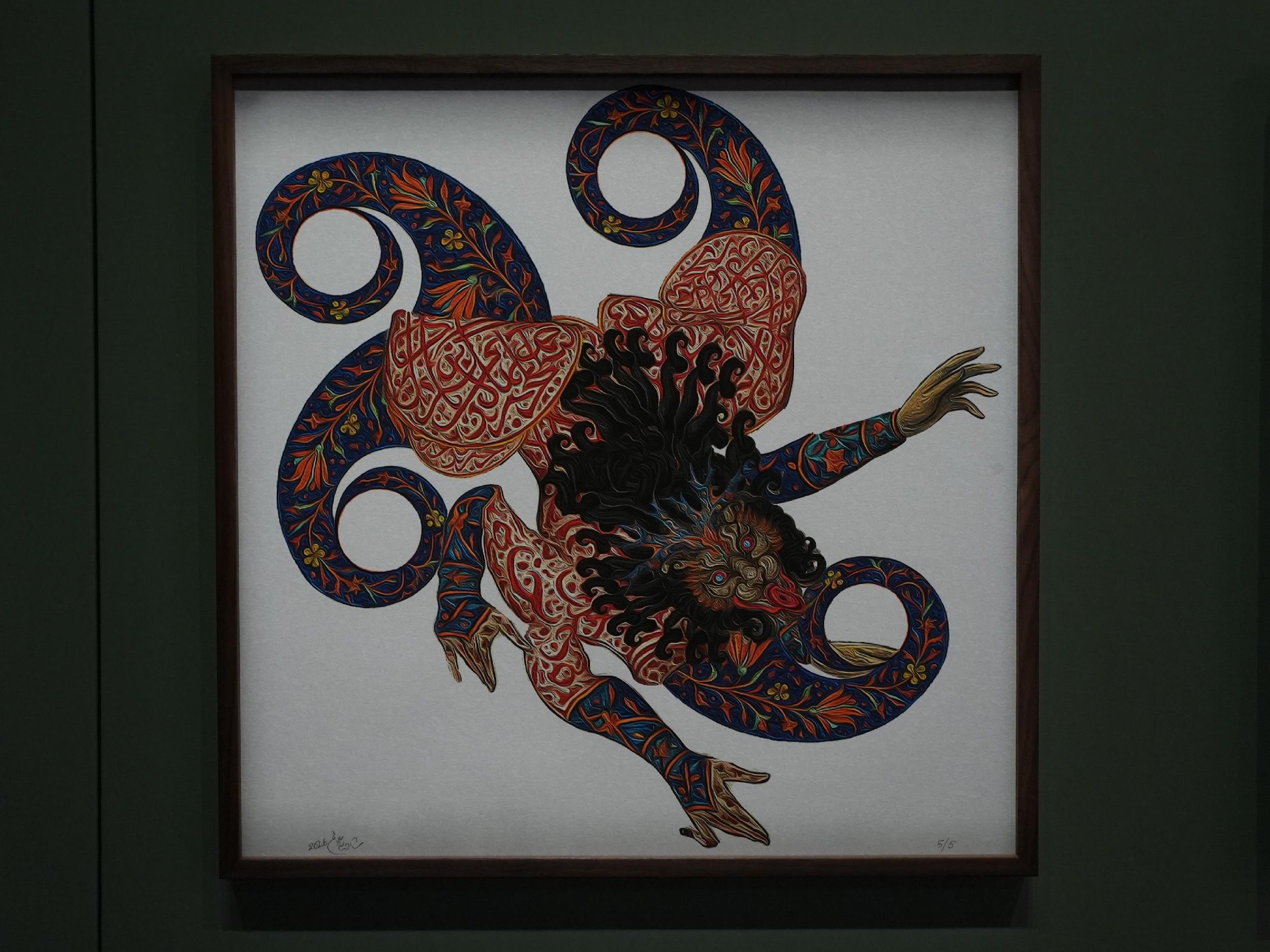
‘Jinniyat Lar.' Shadia Alem. 2000/2026. 12 prints on paper, 61 x 61 cm each. Courtesy of Diriyah Biennale Foundation.
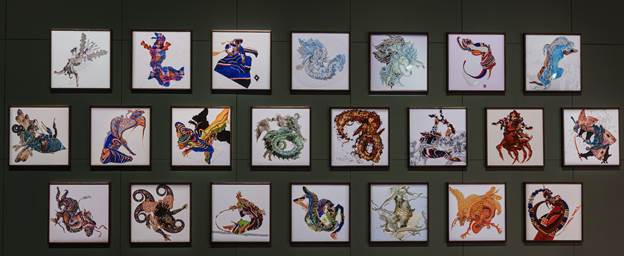
‘Jinniyat Lar.' Shadia Alem. 2000/2026. 12 prints on paper, 61 x 61 cm each. Courtesy of Diriyah Biennale Foundation.
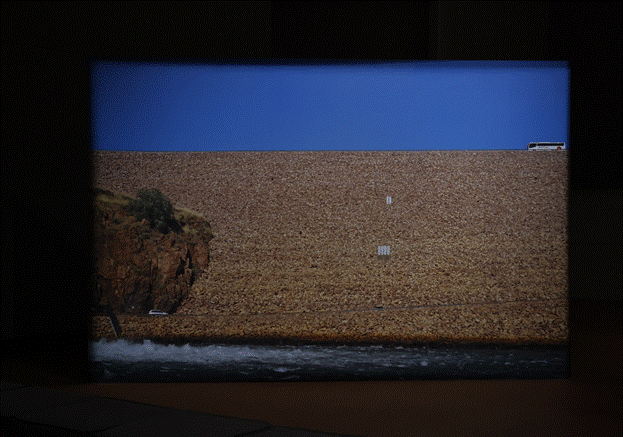
‘Faith in a Pile of Stones.' Alana Hunt. 2018. Digital print of 35 mm film photograph, wooden structure, 240 x 360 cm. Courtesy of Diriyah Biennale Foundation.
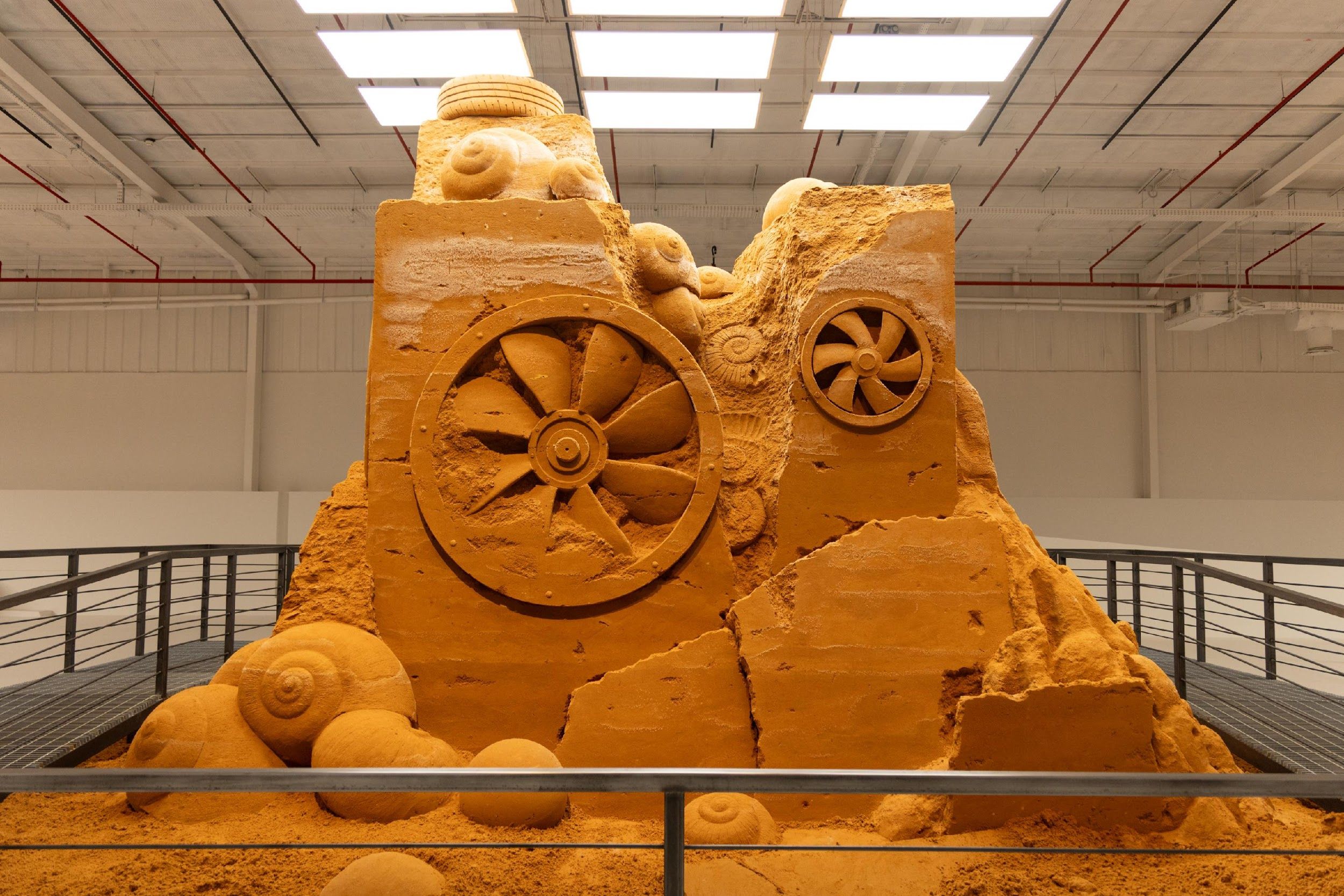
‘House of Eternity.' Théo Mercier. 2026. Sand, bentonite clay and metal. In this monumental installation, Mercier transforms the exhibition space into a vast, surrealistic landscape in which objects of different scale meet. Rising from a loose terrain of sand, four compacted sculptures echo termite mounds, desert monoliths, fossils and shells, and the wind-carved architectures of deep time. These geological forms carry the double imprint of nature and culture, at once shaped by erosion and by human hand. Courtesy of Diriyah Biennale Foundation.
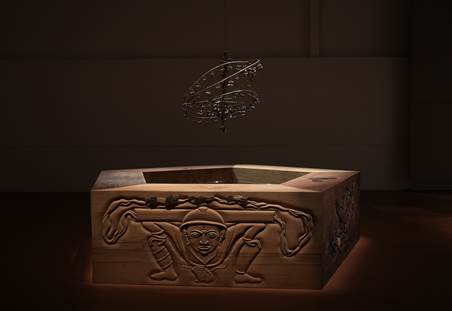
‘Sweet water rising.' Karan Shrestha. 2026. Wood, plywood, ink on paper, metal parts, brass bells, motors, 65 x 256 x 256 cm. Shrestha's installation expands on the idea of water as a connector and transmitter. The shape of a wooden pentagon, carved on all five sides, echoes a well, inviting visitors to sit around the water. Disrupting the flow of water, a kinetic sculpture (a cloud of brass bells) falls into the well, only to rise again periodically, tinkling and jingling and dripping. A hollowed ring, referencing a serpent and other mythical creatures, keeps water flowing within. Courtesy of Diriyah Biennale Foundation.