The Cycle of Fertility and Drought: The Human Experience of the Arabian Peninsula
The quiet shout of the sustainable dhows to the spreading brick and mortar cities, as a dhow waits for repair in Muharraq’s dhow graveyard. Photo by Hesham Al-Ammal. Courtesy of the artist.
People have lived in this arid desert expanse for centuries, clinging to it despite its harshness. It's a barren place year-round, with summer temperatures sometimes exceeding fifty degrees Celsius. Yet, humankind has adapted to these conditions and even found ways to utilize them to its advantage.
Looking from above at this desert landscape, one might imagine that no life exists in this vast expanse of golden sand or hard, black mountain ranges. But upon closer inspection, this perception changes, revealing that even in the harshest places on Earth, creatures thrive and have adapted to their environment.
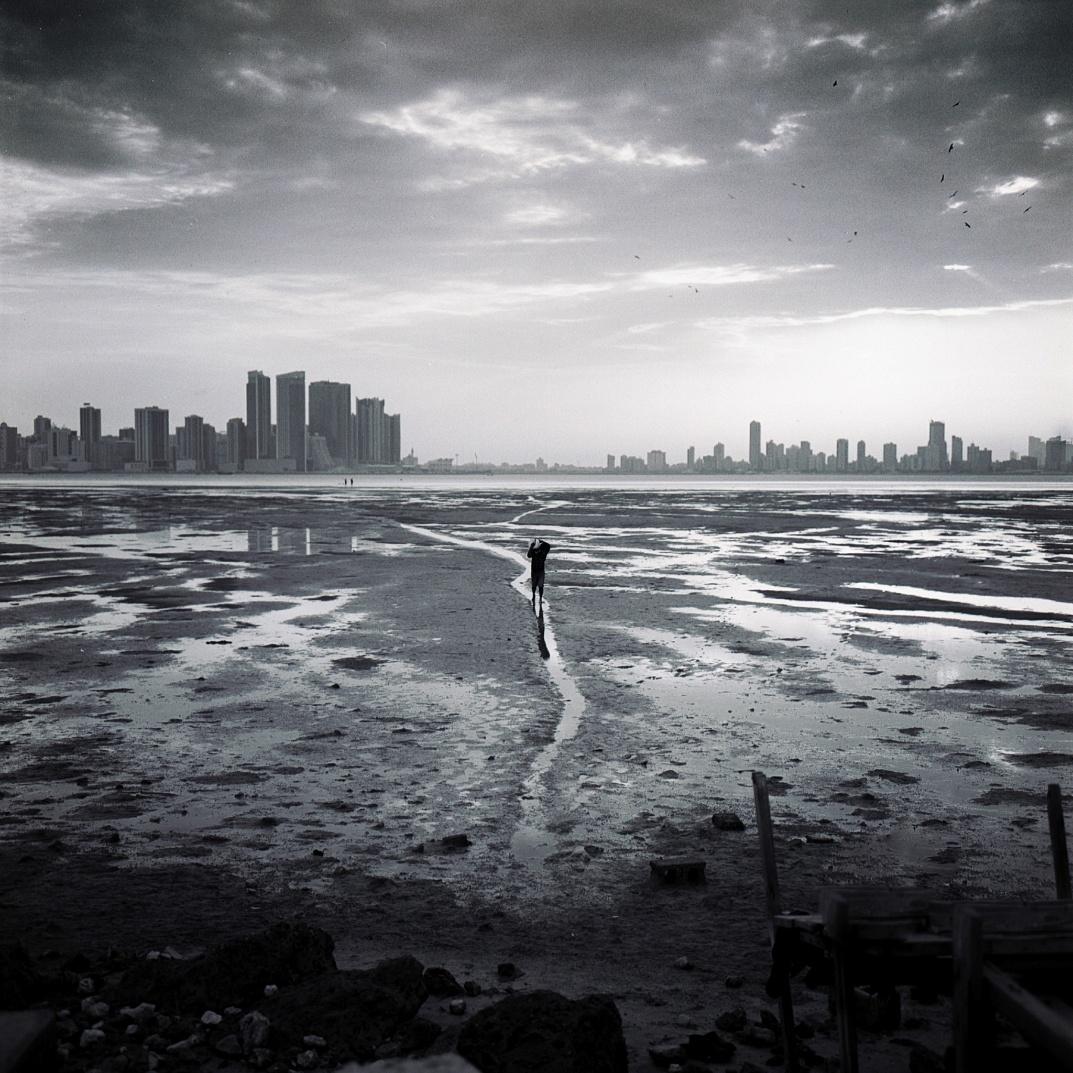
Bahrain was blessed at low tide with shallow wetlands rich with sealife, as well as fresh-water springs. Photo by Hesham Al-Ammal. Courtesy of the artist.
What if the spring were to dry up? What would happen to the people living around it? How would their lives be? What would become of the plants, trees, insects, and other creatures that depend on that spring? All these questions resurface during years of severe drought, yet the people there continue to resist fiercely, hoping for the return of rain and the flow of springs.
The large-scale migrations that have historically occurred from arid to fertile regions also carried with them the culture of the people and their connection to the places they once inhabited. We find that they name the new places where they settle after those original places, villages, and pastures, yearning for the memories that shaped their lives since ancient times. Even though they may never return, those memories remain alive in those names.
Humanity was able to search for springs in the barren land with what they had learned over the years. They dug many wells, water channels and irrigation canals and established villages around them..
They would search for underground water reservoirs, using their rudimentary knowledge of the topography and layers of the earth, until they harnessed it to their advantage. Where the water flowed, creatures drank and poets sang, remembering their beloved under the moonlight.
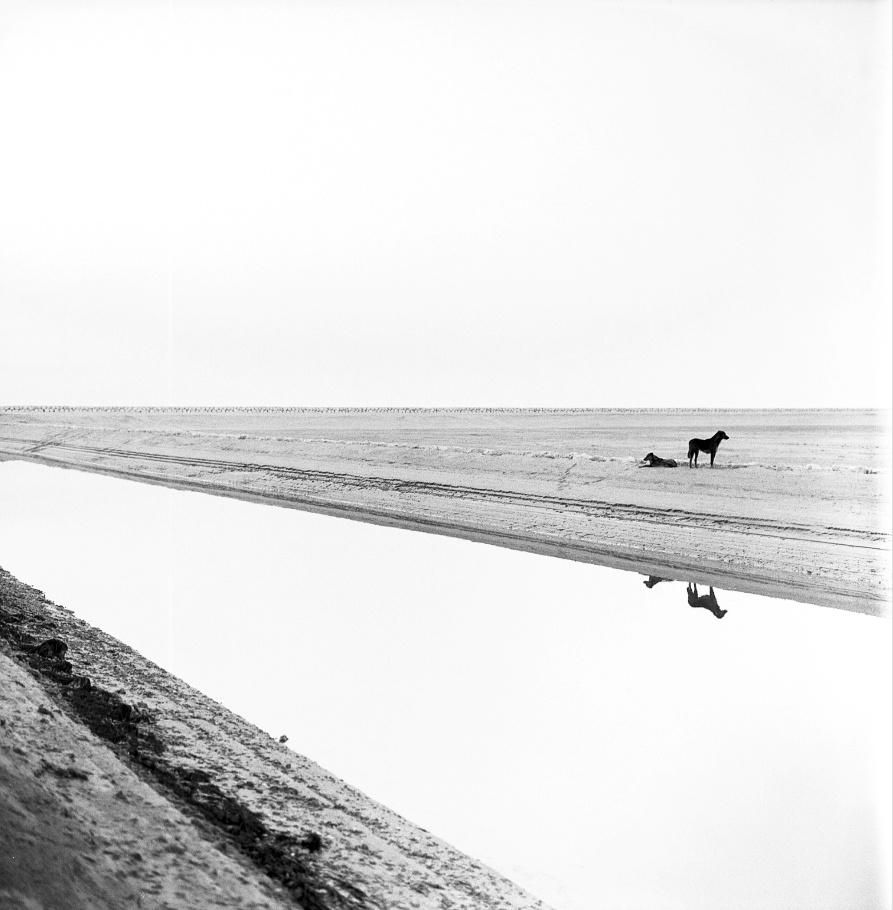
Land reclamation projects create vast empty plots of land, while destroying fragile ecologies and sea creatures. Photo by Hesham Al-Ammal. Courtesy of the artist.
Water is not merely a source of sustenance, but also a social and cultural system intertwined with their customs, behaviors, aspirations, dreams, way of life, and the very fabric of their society. Water is the essence of place and time; it determines the conditions of the people, their celebrations, their prosperity, and their hardships. It is linked to their rituals and their sorrows, a fundamental element that defines and enriches the land.
In his novel "The Endings," Abdul Rahman Munif explores the psychology of the Bedouin, deeply connected to his herd, and how his behavior shifts between times of plenty and times of drought. During times of plenty, he is hospitable, generous, and self-sufficient, selling nothing from his herd except at a price he himself dictates. His herd is abundant, and the signs of prosperity and physical well-being are evident. He spends lavishly whenever he goes to the market. But as circumstances change, his condition drastically shifts, and he becomes anxious, miserly, and needy. He sells his herd at any price to prevent it from dying of thirst and lack of grazing land.
When we apply Munif's observations to the cultural concept of the Bedouin, we observe historically that intellectual and cognitive schools have always been closely linked to years of prosperity and abundance. During these times, experiences and schools flourish, and awareness among the people increases. Conversely, in years of hardship, superstitions abound, ignorance spreads, and people tend to resign themselves to death. Migrations increase, and places, along with their former knowledge, perish.
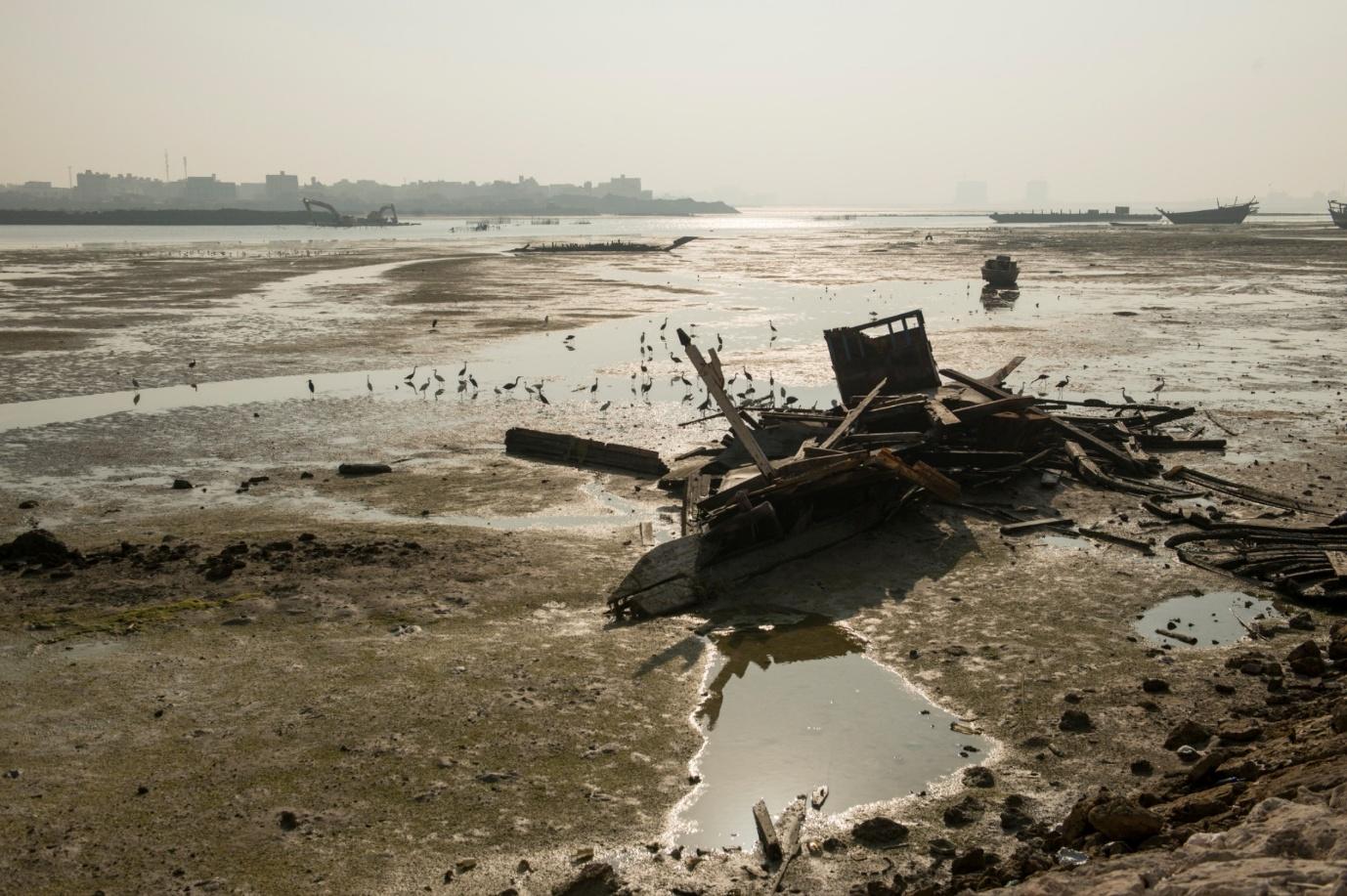
The contrast between modernity and the wood of a dying dhow gracefully returning to the sea. Photo by Hesham Al-Ammal. Courtesy of the artist.
Through anthropological studies of the people who lived in this region and who formed great civilizations that have long since collapsed, we find that after living a life of prosperity, humans were able to overcome a life of hardship and drought as well, because they carry in their genes the ways in which they can transform and adapt.
Although these transformations take with them many, many people and what they produced as well, the remaining few can start anew so that life continues, and humanity awaits on the margins of that barren life for the downpour that will fill the earth again with the water of life.
And so the cycle continues.
Special thanks to the Bahraini photographer Hesham Al-Ammal, whose work explores social, environmental, and cultural change through experimental analog and historical processes. His projects examine authenticity, modernity, resilience, and the relationship between community and ecology in the Arabian Gulf.
Zahran Alqasmi is a poet and novelist.