The Fluid Forms of Water in Poetry
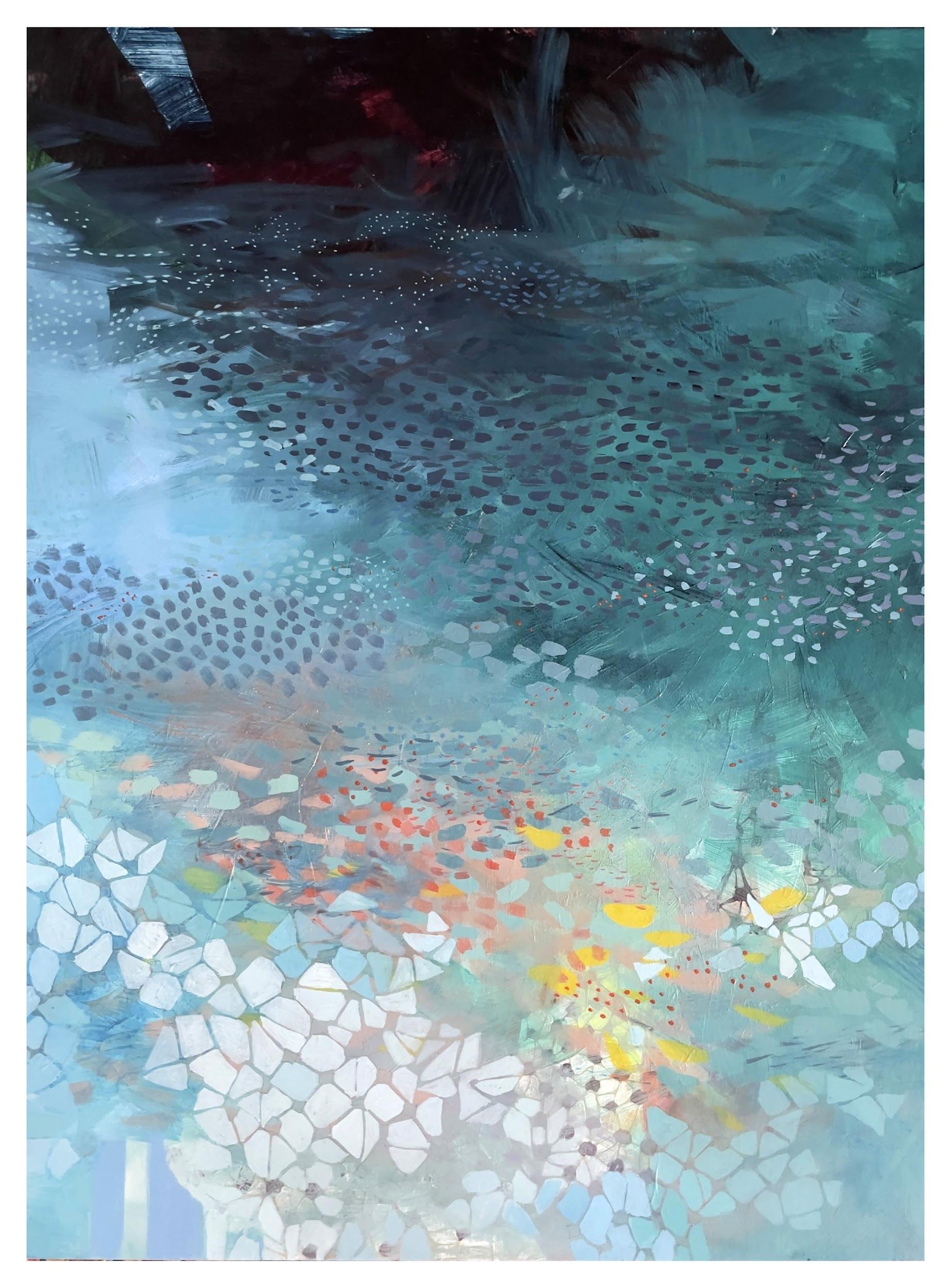
Untitled. Mohammed Naghi, Egypt. Oil on canvas. This artwork is from the permanent collection of Jordan National Gallery of Fine Arts.
Water emerges as a recurring theme across various branches of literature and the arts. Beyond being an essential element of nature, without which life cannot exist, it is a symbol rich in meaning and dimensions across diverse cultures and civilizations.
While it symbolizes fertility and growth, it has also been used in many instances as a symbol of destruction and drowning.
It has been depicted in its various physical forms: river, sea, cloud, rain, snow, ice, and many more.
Throw in all the various forms it can come in (be it sea, river, cloud, rain, snow or ice), these profound and multifaceted symbolic dimensions of water have made it an inexhaustible source of inspiration for poets, as seen by the myriad examples and references in both Arabic and world poetry.
Arabs have always been connected to water, especially considering the harsh conditions of the desert. Rain (and the clouds that carry it) are considered icons of water in their culture and poetry, to the point that it’s used as a supplication in times of sorrow and joy. For example, Al-Nabigha Al-Dhubyani says:
May the rain water a grave between Busra and Jasim
with showers of the spring rains, drizzle and downpour alike.
And may it forever be covered with basil, musk, and amber
with steady rain, followed by abundant falling showers
Supplication (duʿāʾ) may sometimes come contrary to good wishes; it can be used in satire or when a poet is angry at a people and wishes their destruction, such as the example of a saying of Jarir.
Thirst was also used to describe intense longing for a beloved, including verses attributed to Qays ibn al Mulawwah describing his thirst for his beloved:
As if on the morning of parting I were a dead man in a well
A brother of thirst, for whom the watering places were blocked.
He escaped from the dregs of water, a mere trickle
But neither drinking nor quenching his thirst could satisfy him.
There is hardly a poem in the pre-Islamic era or in the early days of Islam that does not use water as a multi-purpose symbol, which comes according to what the poet wants it to be.
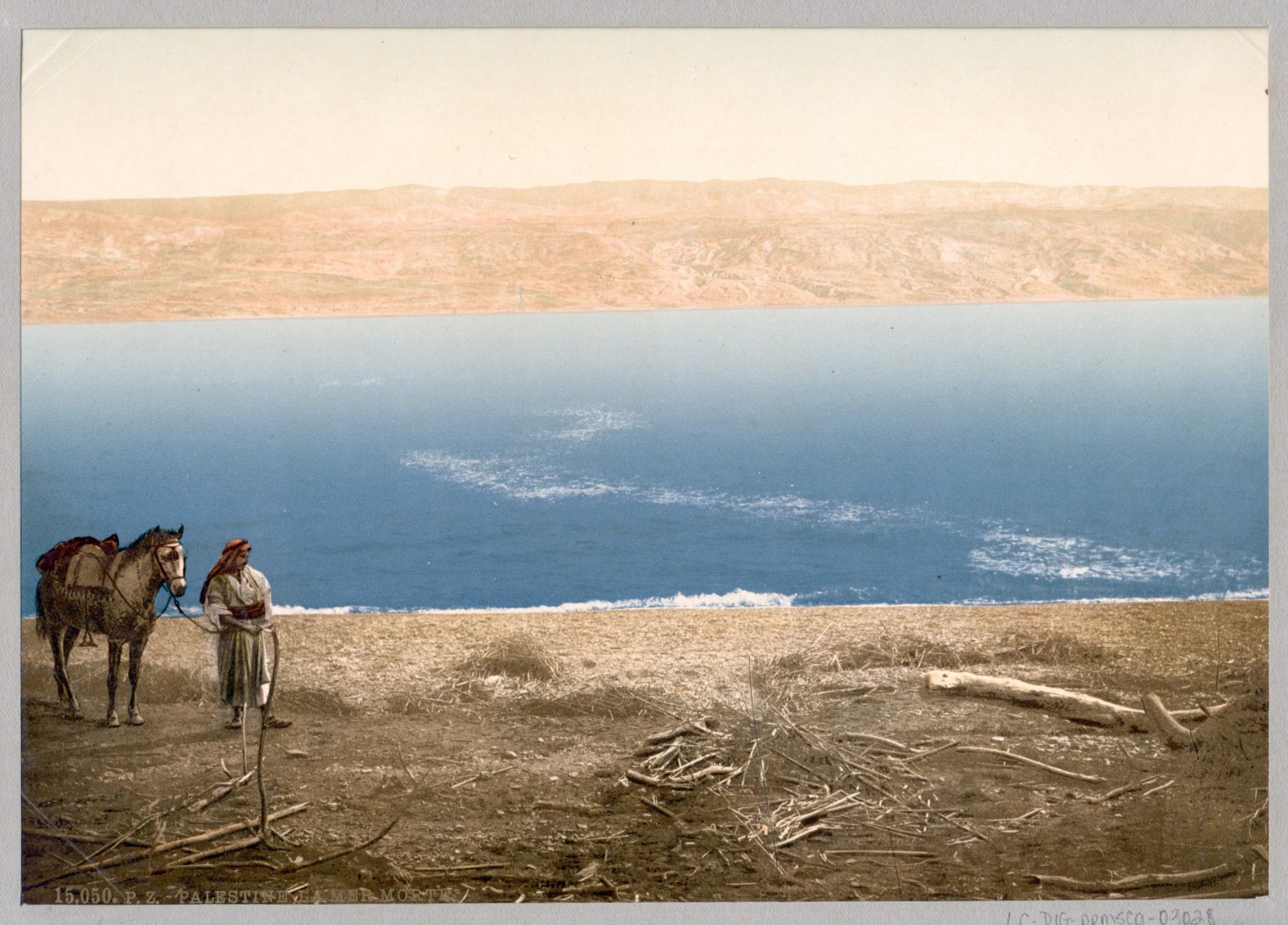
‘Man with horse standing near the Dead Sea.’ Courtesy of Library of Congress.
As time progressed and linguistic meanings evolved, water remained at the forefront of usage in love poems, as with the poet Ahmed Al-Kiwani in his sweet poem By that which intoxicates from the sweetness of the lips, describing his beloved’s hand as water that extinguishes the flames of longing:
Place your right hand on my chest
for water is best suited to extinguishing flames
Then Adonais says, in another context of the contrast between water and fire in a poem entitled The Colour of Water:
Your colour is the colour of water, O body of speech,
when water becomes leaven, or a lightning strike, or fire.
And the water blazes becoming a thunderbolt, becoming... leaven and fire.
In modern and contemporary Arabic poetry, water transcends its status as a natural element, transforming into a complex tapestry and a mirror reflecting the depths of the human soul.
Poets imbue it with rich existential, psychological, and even patriotic connotations, presenting through it an inner state in which they express the sorrow, longing, pain, and loss that stir within their hearts, as exemplified by Badr Shakir al Sayyab's words in his poem The Rain Song:
Do you know which sadness
the rain sends? How the gutters sob
when it falls? How it fills
the solitary with loss?
As for Mahmoud Darwish, in his poem A River Dies of Thirst, he evokes the suffering of people, exhausted by alienation and anxiety, through a painful paradox: the river, a symbol of fertility and life, dies of thirst in its own land as a result of the imbalance of justice. He says:
It was a river with two banks
and a heavenly mother who nursed it on drops from the clouds
But they kidnapped its mother
so it ran short of water
and died... slowly... of thirst
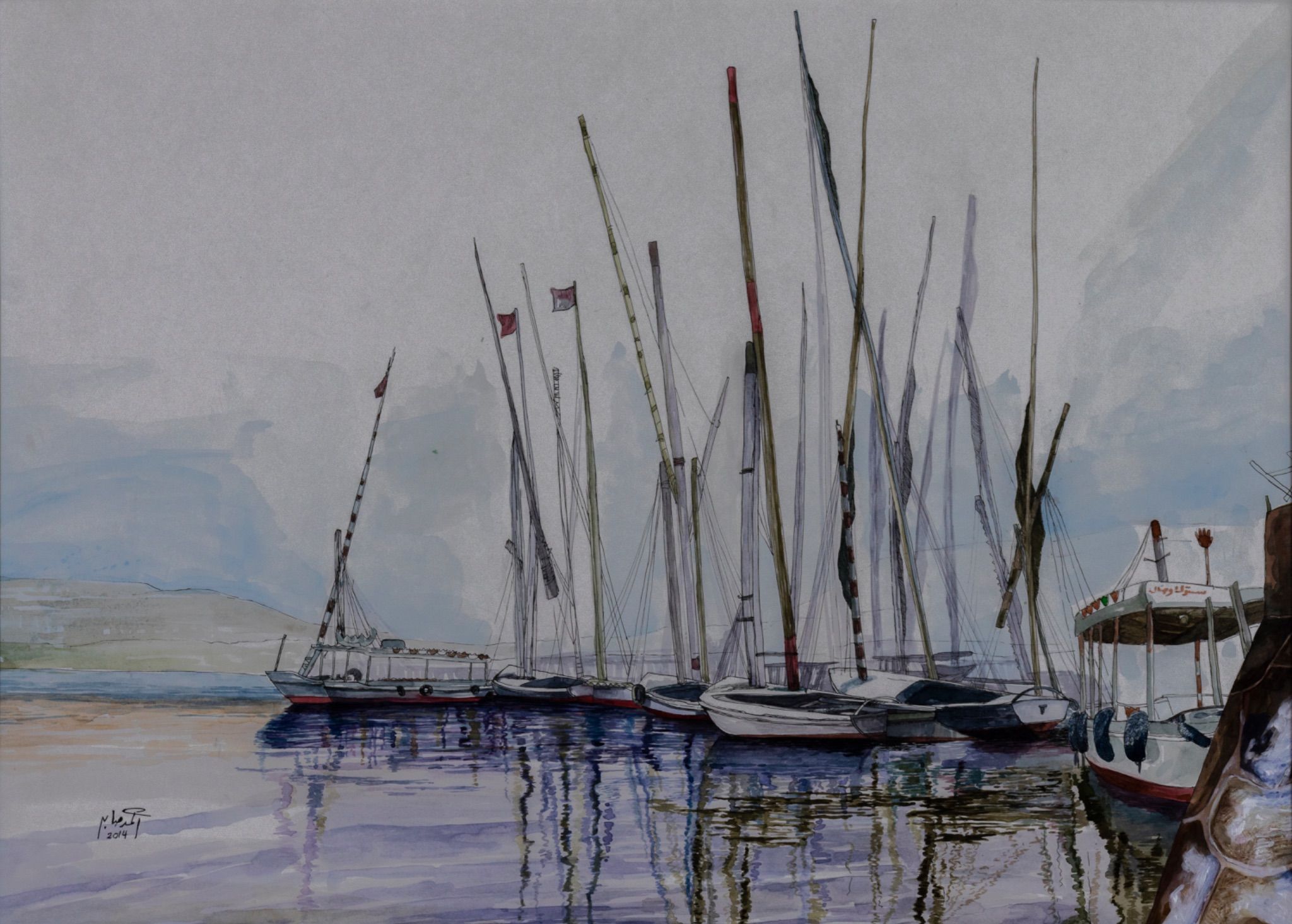
‘Nile.' Ahmed Saber, Egypt. 2014. Watercolor on paper. This artwork is from the permanent collection of Jordan National Gallery of Fine Arts.
And for Qasim Haddad, water becomes the title of a poem in which he embodies the absence that leaves him lost in the desert of waiting:
He leaned on the weariness of waiting. Neither rain nor river was his. A body more delicate than longing...
I leaned on water. I grew weary, I waited, and I grew weary. I grew weary... O master of wandering, I am lost.
Saadi Youssef surrenders to the water in his poem The Journey, where he says:
The water will take me... the sky will take me, as I wish. I will go where there is no end...
We find that the legendary Nizar Qabbani tries to resist the overwhelming current of love, which he portrays as drowning, in A Letter from Under the Water, saying:
If I had known that the sea was so deep, I would not have set sail... If I had known my ending, I would not have begun.
Water is just as prevalent in world poetry and among the Western poets. Here is the English poet Samuel Taylor Coleridge, in his epic poem The Rime of the Ancient Mariner, presenting a passage that expresses suffering amid abundance, as he says:
Water, water, everywhere
And all the boards did shrink
Water, water, everywhere
Nor any drop to drink.
Meanwhile, the American poet Ralph Waldo Emerson recalls his childhood and the features of the river along whose banks he used to play. The river has remained young, and the nature around it still fresh, while the people who knew it have grown old and passed on to their ends. In a poem titled The River he says at its opening:
And here I am, seeing once again… my old, familiar haunts; here is the blue river, the same blue wonder that dazzled my eyes in the cradle… and I ask, with a childlike wisdom: where has this traveller come from?
And then comes the poem The Waste Land by T. S. Eliot, in which the absence of water dominates as a metaphor for the spiritual barrenness suffered by modern humanity. It says:
Here is no water but only rock/ rock and no water and the sandy road
The winding road going up among the mountains which are mountains of rock without water
If there were water we should stop and drink… if there were water among the rock
The dead mountain mouth with decayed teeth cannot spit…
It is no exaggeration to say that water is a poetic being par excellence, transcending the limits of being a natural element, expanding into vast dimensions where meanings race to draw pictures of different colors and layers, making it present in the worlds of musical poetry, in the sound of rain, the breaking of ice, the rippling of streams, and the roar of the waves.
Abeer Al Deeb is a poet.
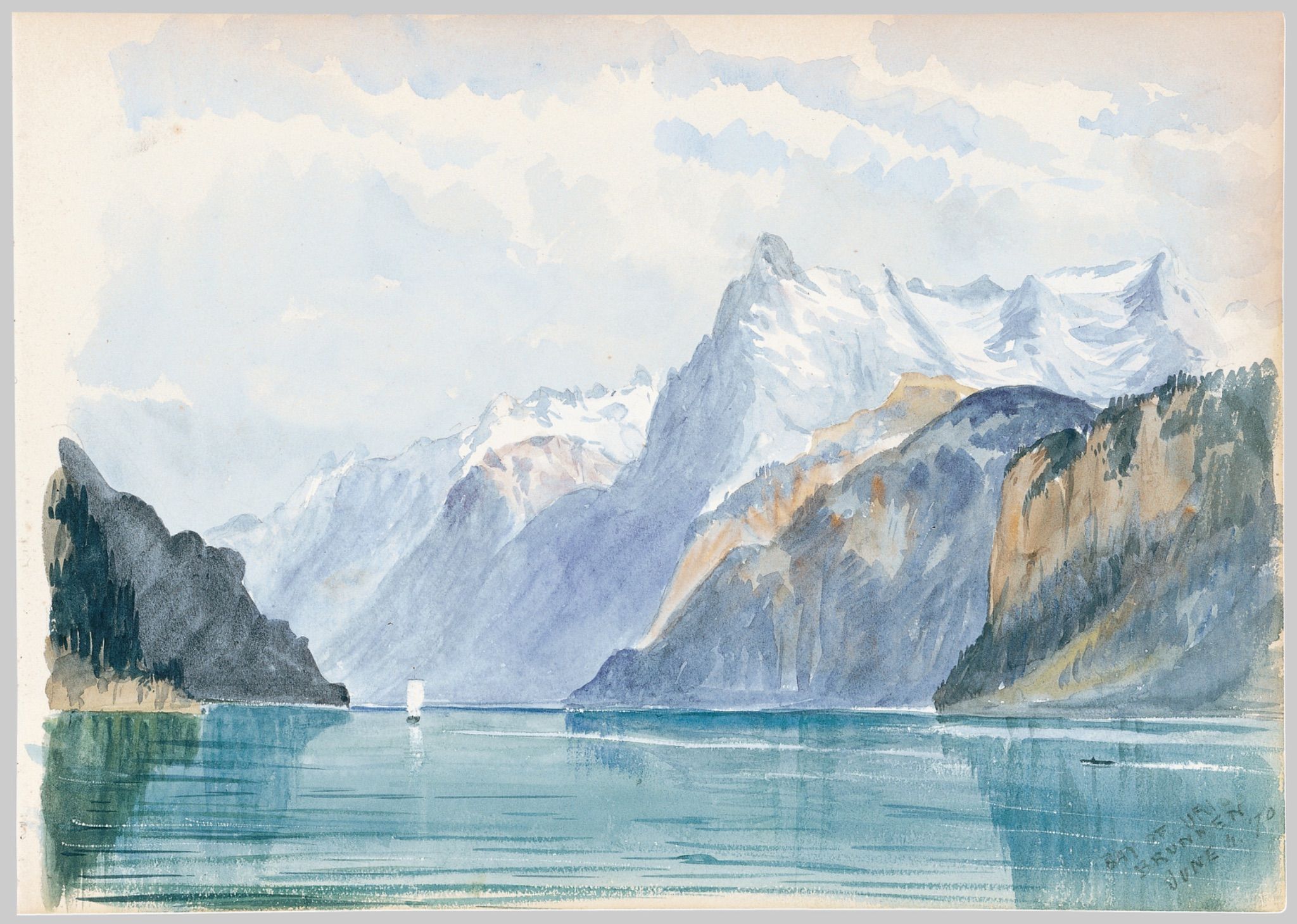
‘Bay of Uri, Brunnen.’ John Singer Sargent. 1870. Courtesy of the MET.